
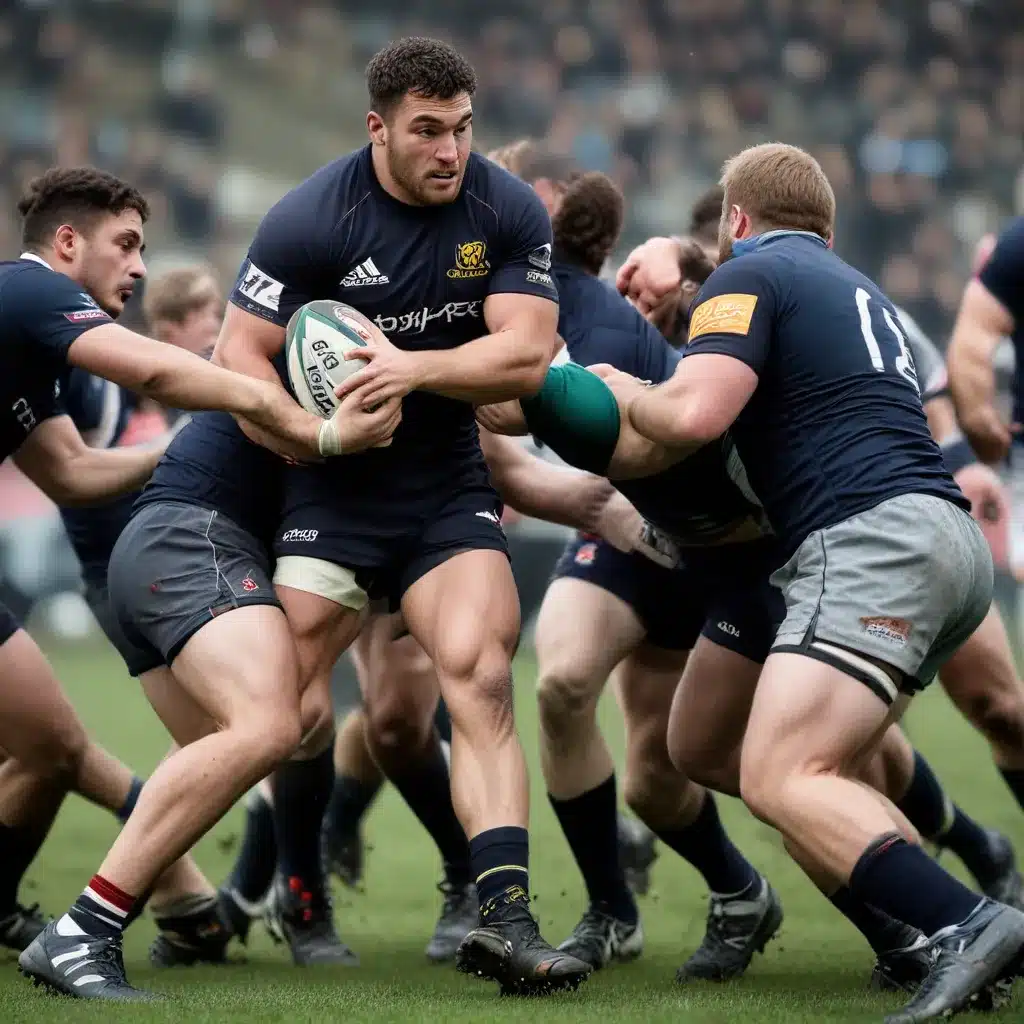
Strength and Power in Rugby: Maximizing Physical Dominance
As a seasoned rugby professional, I’ve seen firsthand the immense value of strength and power for players across all positions. In this comprehensive guide, we’ll explore how developing these physical attributes can give you a decisive edge on the pitch.
The Importance of Strength and Power in Rugby
Rugby is a uniquely demanding sport that requires an exceptional blend of physical abilities. While endurance, speed, and agility are all critical, it is the sheer strength and explosive power of players that so often prove the difference between victory and defeat.
Whether it’s a forward driving through the heart of the opposition’s defense, a back breaking the line with ferocious acceleration, or a specialist kicker launching the ball downfield, the underlying foundation is an athlete’s capacity to generate and transfer immense force. This physical dominance is what allows top-level rugby players to impose their will on the game.
Strength not only underpins the contact skills essential for winning the collision, but it also enhances a player’s resilience, durability, and ability to maintain optimal technique under duress. Meanwhile, explosive power is the key to dynamic play – sprinting, jumping, changing direction, and generating momentum through contact.
Ultimately, the team that can consistently win the battle of the gain line, secure prime field position, and impose their physicality on the opposition holds a clear advantage. As such, the development of strength and power must be a central pillar of any comprehensive rugby conditioning program.
Strength Training for Rugby Players
Developing muscular strength is a fundamental requirement for rugby success. Compound exercises that recruit multiple large muscle groups simultaneously, such as the squat, deadlift, and bench press, should form the foundation of a rugby player’s weight training regimen.
These exercises not only build raw strength, but also promote whole-body coordination, stability, and power production – all of which are vital in the high-intensity, collision-heavy demands of the sport. Supplementary lifts like the pull-up, shoulder press, and row further strengthen the upper body, core, and posterior chain.
Periodization is key to optimizing these strength-focused sessions. Structured progressions in volume, intensity, and exercise selection allow players to systematically overload the neuromuscular system and drive continual adaptation. A typical weekly schedule might feature a heavy strength day, a power-focused session, and a hypertrophy day – with the specific emphasis rotating on a 4-6 week cycle.
Crucially, loads must be managed carefully to balance the need for progressive overload with the demands of rugby training and match play. Monitoring tools such as rate of perceived exertion (RPE) and velocity-based training can help coaches and athletes adjust intensity and volume in real-time, ensuring players are peaking physically when it matters most.
Explosive Power Development in Rugby
While raw strength provides the foundation, the ability to rapidly produce and transfer force is the hallmark of the elite rugby player. Plyometric exercises like box jumps, hurdle hops, and medicine ball throws are invaluable for developing this explosive power.
These high-velocity, reactive movements challenge the stretch-shortening cycle, teaching the neuromuscular system to produce maximal force in the shortest possible time. Integrating them with technical skill work – such as sprinting drills or simulated tackle sequences – further reinforces the transfer of power production to on-field actions.
The Olympic lifts, particularly the clean and jerk, are also incredibly effective for building explosive power. These complex movements require a high degree of technical proficiency, but when mastered, they unlock the athlete’s ability to generate extreme amounts of force from the ground up.
Again, periodization is critical. Heavy, strength-focused blocks alternate with phases emphasizing power development and high-velocity training. This undulating approach ensures players are prepared to unleash their physical dominance at the most pivotal moments in a match.
Conditioning for Rugby: Balancing Strength, Power, and Endurance
Of course, rugby is not solely a test of strength and power – the grueling, 80-minute nature of the game demands exceptional cardiovascular fitness as well. Striking the right balance is essential for sustainable, high-level performance.
High-Intensity Interval Training (HIIT) is a particularly effective conditioning modality for rugby players. Short, all-out efforts interspersed with periods of active recovery mimic the intermittent, anaerobic demands of match play. Sessions might feature sprints, sled pushes, rowing intervals, or rugby-specific drills performed at maximal intensity.
Importantly, HIIT must be carefully integrated with the strength and power components of the training program. Proper recovery, nutrition, and management of overall training load are critical to avoid overtraining and ensure players are primed to dominate on game day.
Optimizing Player Roles through Strength and Power
While the general principles of strength and power development apply across the board, the specific physical attributes required can vary considerably based on a player’s position and role within the team.
For forwards, the ability to win the collision and gain ground through sheer physical force is paramount. Maximal strength in the squat, deadlift, and bench press, combined with explosive power from the Olympic lifts, is the foundation for these players. Developing the resilience to withstand repeated contact is also crucial.
Backs, on the other hand, need to prioritize attributes like speed, agility, and reactive power. Plyometric exercises, sprint training, and sport-specific conditioning drills take precedence, alongside a focus on maintaining optimal strength levels to support their dynamic movements.
Specialist positions, such as kickers and jumpers, require a unique blend of physical qualities. Targeted training to enhance force production in the targeted muscles, as well as holistic power development, can give these players a decisive edge.
Bridging the Gap: Translating Strength and Power to the Pitch
Of course, the ultimate goal is to ensure that all the hard work in the gym seamlessly translates to the playing field. Game-specific training drills that simulate match scenarios are essential for reinforcing the link between physical attributes and on-pitch performance.
Tackle technique work, controlled contact drills, and live scrimmaging allow players to ingrain the application of their strength and power within the flow of the game. Likewise, incorporating plyometric and sprint drills into skills sessions ensures that explosive movements are hardwired into a player’s muscle memory.
Ongoing monitoring and feedback are crucial for fine-tuning this integration. Tracking metrics like ball carry effectiveness, tackle completion rates, and kick distance can provide valuable insights into the real-world impact of a player’s physical development. Coaches can then make informed adjustments to training programs to optimize performance.
Ultimately, the pursuit of strength and power in rugby is not an end in itself, but rather a means to an end – enabling players to impose their will on the opposition, dominate the contact area, and ultimately, secure victory for their team. By embracing this holistic approach, you can unlock your full potential and become a true force to be reckoned with on the pitch.