
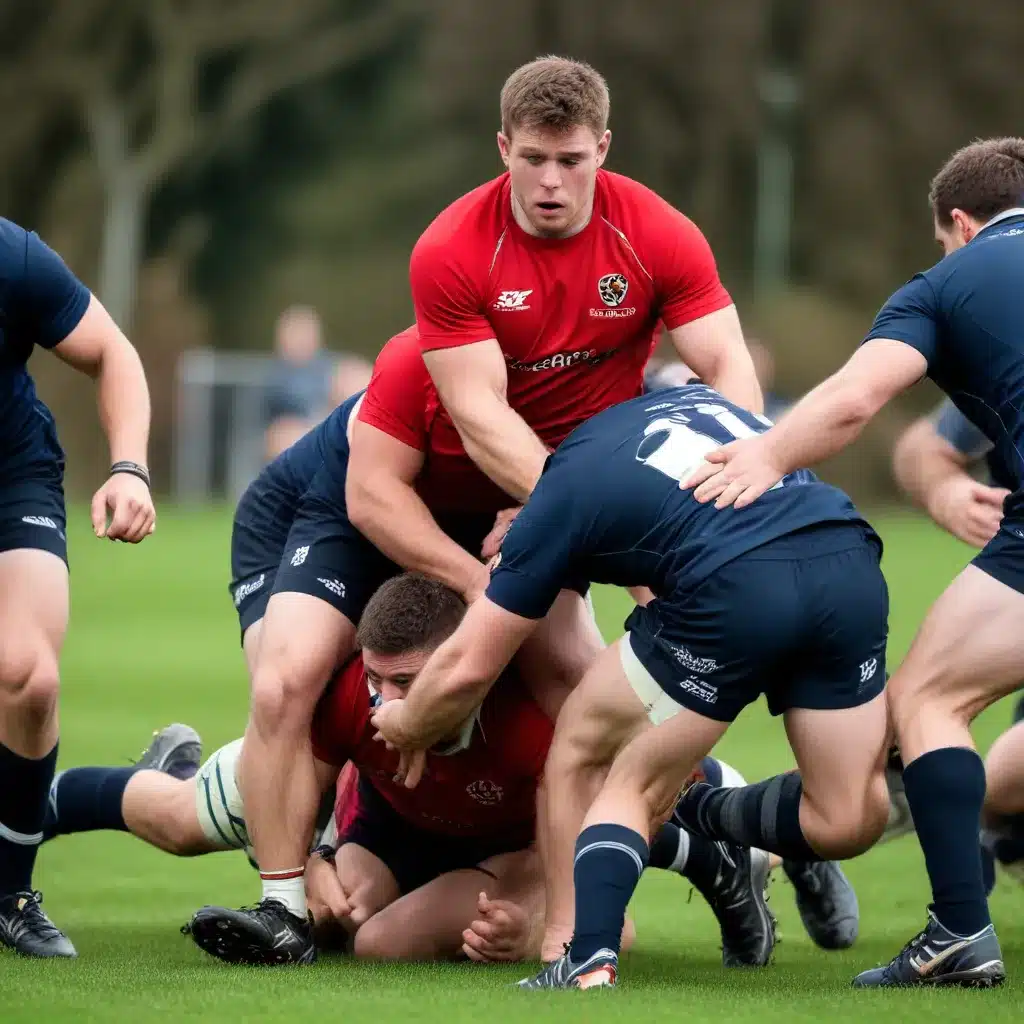
As a seasoned rugby professional, I’ve witnessed firsthand the profound impact that mobility and stability can have on an athlete’s performance and resilience. At the heart of any successful rugby program lies a comprehensive approach to physical preparation—one that not only builds strength and power but also enhances the body’s ability to move efficiently and withstand the rigors of the sport.
The Unique Demands of Rugby
Rugby is a physically punishing game that requires players to possess a rare blend of size, speed, and agility. Whether you’re a towering forward tasked with dominating in the set-piece or a fleet-footed back weaving through traffic, the sport places immense strain on the musculoskeletal system. From bone-crunching tackles to explosive sprints, rugby athletes must be able to generate and absorb immense forces while maintaining precise control over their movements.
Unsurprisingly, lower-body injuries are alarmingly common in rugby, with hamstring strains, knee ligament tears, and ankle sprains ranking among the most prevalent. These debilitating ailments not only sideline players for weeks or even months but can also increase the risk of future, often more severe, reinjuries.
The Mobility-Stability Connection
To combat this injury epidemic, we must understand the intricate relationship between mobility and stability—two essential components of athletic performance and injury resilience. Mobility, defined as the ability to move a joint or series of joints through a full range of motion, is crucial for rugby players. Adequate joint mobility allows for greater flexibility, shock absorption, and efficient force transmission through the kinetic chain.
Conversely, stability—the capacity to control movement and maintain proper alignment under load—is equally vital. Strong, well-coordinated stabilizing muscles around the core, hips, and shoulders help to protect vulnerable joints, enhance movement patterns, and optimize power production.
Integrating Mobility and Stability into Rugby Training
Effective rugby training programs must seamlessly integrate mobility and stability exercises to address the unique physical demands of the sport. This starts with a comprehensive warm-up routine that awakens the body and prepares players for the rigors of training or competition.
Mobility drills focusing on the hips, thoracic spine, and shoulders can help restore range of motion and improve movement quality. Exercises like deep squats, thoracic rotations, and arm circles not only increase flexibility but also heighten body awareness and neuromuscular control.
Complementing these mobility efforts are stability-focused exercises that challenge the core and surrounding musculature. Planks, side bridges, and single-leg balances require players to maintain proper alignment and posture, enhancing their ability to transfer force efficiently and resist injury-inducing forces.
As training progresses, it’s crucial to gradually increase the complexity and intensity of these mobility and stability exercises. Incorporating dynamic movements, unstable surfaces, and sport-specific patterns helps to prepare players for the unpredictable demands of the game.
Rehabilitating Injured Rugby Players
When injuries do occur, a thoughtful rehabilitation approach that prioritizes the restoration of mobility and stability is paramount. Too often, rugby players are rushed back to the pitch before their bodies are truly ready, leading to a high rate of recurrent injuries.
The rehabilitation process should begin with regaining full, pain-free range of motion through gentle stretching and mobilization techniques. As players progress, the focus shifts to rebuilding core and lower-body stability through a variety of exercises, from isometric holds to dynamic balance drills.
Importantly, the rehabilitation program should be tailored to the specific injury and the player’s individual needs. For example, a forward recovering from a shoulder injury may require more emphasis on thoracic and scapular mobility, while a backline player rehabilitating from an ankle sprain may benefit from enhanced single-leg stability training.
Enhancing Performance Through Mobility and Stability
The benefits of a well-designed mobility and stability program extend far beyond injury prevention. By improving the body’s ability to move efficiently and control movement under load, rugby players can unlock new levels of performance on the pitch.
Enhanced mobility allows for greater range of motion, which can translate to improved technique and power generation in skills like passing, kicking, and tackling. Conversely, superior stability helps players maintain proper form and posture, enabling them to transfer force more effectively and display greater agility and acceleration.
Moreover, a strong foundation of mobility and stability can help rugby athletes better withstand the cumulative toll of a long and grueling season. By mitigating the risk of overuse injuries and enhancing recovery, these training modalities can help players maintain peak performance throughout the year.
Monitoring and Assessing Mobility and Stability
Tracking the progress of mobility and stability training is crucial for ensuring the effectiveness of your rugby program. Regularly assessing players’ range of motion, core strength, and movement patterns can help identify areas of concern and guide the implementation of targeted interventions.
Simple screening tools, such as the Functional Movement Screen (FMS) and the Y-Balance Test, can provide valuable insights into an athlete’s movement competency and injury risk profile. Additionally, more sophisticated assessments, like isokinetic strength testing and dynamic postural stability evaluations, can help quantify specific deficits and monitor improvements over time.
Individualized Approach for Rugby Athletes
Ultimately, the most effective mobility and stability training programs are those that are tailored to the unique needs of each rugby player. Factors such as playing position, injury history, and individual strengths and weaknesses must all be taken into account when designing a comprehensive physical preparation plan.
For example, a prop forward may require greater emphasis on hip and thoracic mobility to enhance scrum engagement, while a flyhalf may benefit from enhanced shoulder and ankle stability to withstand the demands of kicking and change of direction. By adopting a personalized approach, you can ensure that your players are not only resilient but also primed to excel in their respective roles.
As a seasoned rugby professional, I firmly believe that the integration of mobility and stability training is essential for unlocking the full potential of your players and safeguarding them against the inherent risks of our sport. By empowering your athletes to move well, maintain proper alignment, and develop robust stabilizing abilities, you can forge a team that is not only physically dominant but also remarkably durable.
So, whether you’re working with elite internationals or promising youth, embrace the power of mobility and stability, and watch your rugby program reach new heights of success. After all, a resilient, high-performing team is the ultimate goal—and the path to achieving it starts with a deep understanding of the body’s fundamental needs.