
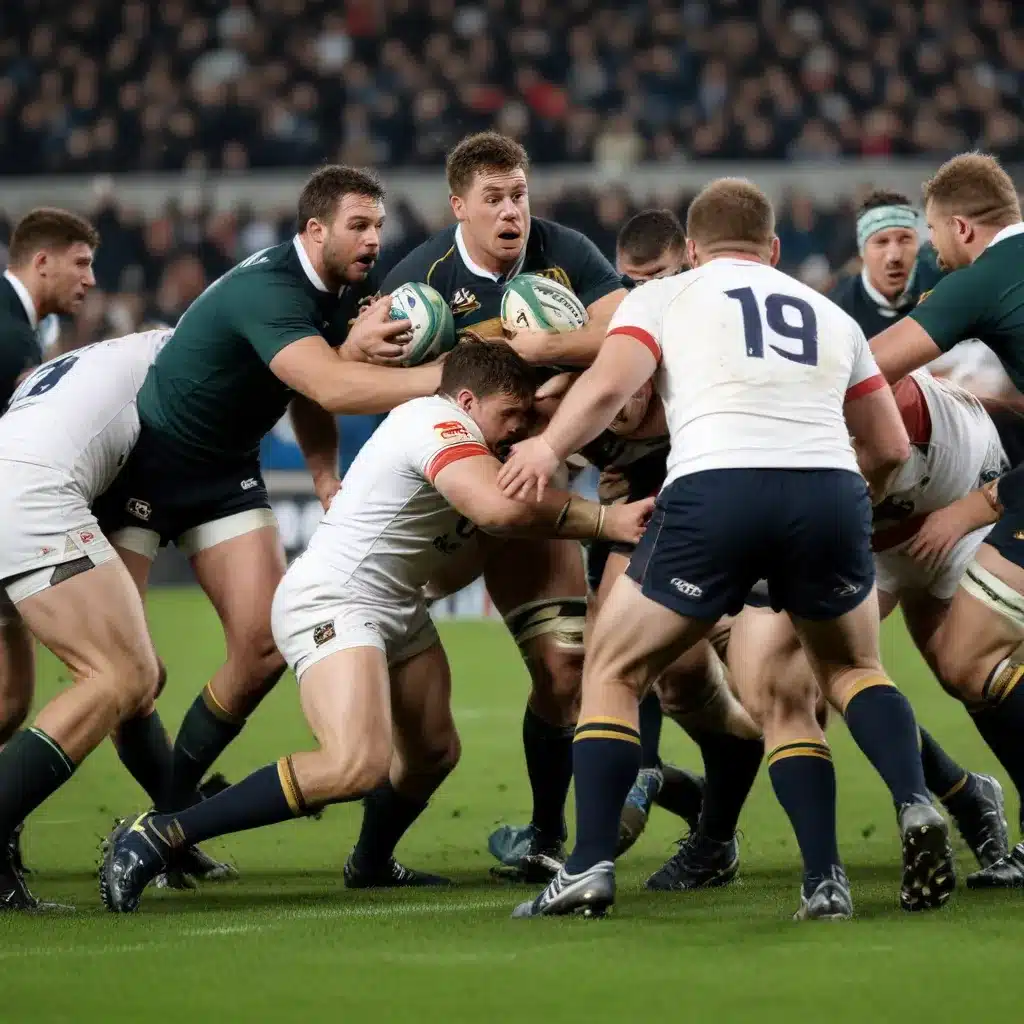
As a seasoned rugby professional, I’ve dedicated my career to mastering the intricacies of the game. One area that has always fascinated me is the strategic dominance of set-piece plays – the foundation upon which successful teams are built. In this comprehensive article, we’ll delve deep into the art of dominating the restart plays, exploring the nuances of scrum, lineout, maul, and ruck mastery.
Scrum Dominance
The scrum is often referred to as the “engine room” of rugby, and for good reason. Establishing scrum superiority can set the tone for the entire match, providing a platform for your team to launch devastating attacks or stifle the opposition’s momentum.
Scrum Technique Mastery
At the heart of a dominant scrum lies impeccable technique. Forwards must meticulously hone their skills, from the powerful binding and body positioning to the synchronized engagement and push. The loosehead prop, for example, needs to understand the subtle art of angling their bind to create an advantageous lever, while the tighthead must possess the raw strength to anchor the scrum and prevent backward movement.
The hooker, the linchpin of the front row, is responsible for the precise timing of the ‘hook’ – the action of pulling the ball back through the scrum. Mastering this skill requires split-second decision making, flawless coordination with the props, and the ability to read the opposition’s intentions.
Scrum Positioning Optimization
Effective scrum positioning is crucial for consistent dominance. Forwards must understand their individual roles and how they fit into the collective unit. The second-row jumpers, for instance, need to be positioned to provide the maximum lift and leverage, while the flankers must be ready to counter any opposition drives or attempts to disrupt the scrum.
Meticulous attention to detail, such as the angle of the bind and the alignment of the body, can make all the difference in the scrum battle. Coaches should work tirelessly with their forwards to fine-tune their positioning, ensuring that every player understands their responsibilities and executes them with precision.
Scrum Communication Effectiveness
Communication is the glue that holds a dominant scrum together. The front row must be in constant dialogue, anticipating each other’s movements and adjusting accordingly. The hooker, in particular, needs to be the vocal leader, coordinating the timing and providing clear instructions to the props.
Beyond the front row, the entire pack must be in sync, with the eighth man and flankers communicating seamlessly to counter any opposition tactics. Effective communication extends to the half-back, who must be able to read the scrum and provide the forwards with crucial information to exploit any weaknesses.
Lineout Superiority
The lineout is often the first point of possession for a team, and gaining the upper hand in this set-piece can set the tone for the entire match. Mastering the lineout strategy is essential for securing consistent ball and disrupting the opposition’s attacks.
Lineout Technique Refinement
Lineout technique is a fundamental skill for any rugby team, and the constant pursuit of perfection is the hallmark of a dominant lineout. Forwards must meticulously train their throwing, jumping, and lifting mechanics to ensure consistently accurate and reliable lineout execution.
The hooker, as the primary thrower, must develop the ability to deliver pinpoint throws under pressure, while the jumpers need to time their leaps to perfection, anticipating the opposition’s movements. The lifters, too, play a crucial role, exhibiting the strength and coordination to elevate their teammates to the height required to win the ball.
Lineout Positioning Precision
Positioning in the lineout is a delicate balance, with each player’s role contributing to the overall effectiveness of the set-piece. Locks, known for their towering stature, are often the primary targets, but the flankers and number eight must be positioned to provide vital support and counter-options.
Coaches should work tirelessly with their players to develop a deep understanding of lineout positioning, exploring different formations and strategies to keep the opposition guessing. The ability to adjust on the fly, reacting to the opposition’s tactics, is a hallmark of a truly dominant lineout.
Lineout Communication Synchronization
Seamless communication is the backbone of a well-executed lineout. The hooker, jumpers, and lifters must be in constant dialogue, anticipating each other’s movements and adjusting accordingly. The half-back, too, plays a crucial role, providing valuable information to the forwards and coordinating the overall lineout strategy.
Effective communication extends beyond the set-piece itself, with the entire team working in harmony to counter any opposition threats. Forwards must be able to recognize and respond to the opposition’s lineout calls, while the backs must be prepared to provide support or execute a counter-attack from a successful lineout turnover.
Maul Mastery
The maul, often described as the “chess match” of rugby, is a fascinating set-piece that requires a unique blend of technique, positioning, and communication. Dominating the maul can be a game-changer, allowing teams to grind out valuable yards or even score tries directly from this set-piece.
Maul Technique Enhancement
At the heart of a dominant maul is impeccable technique. Forwards must possess the strength, coordination, and body control to establish a powerful, cohesive driving unit. The ability to bind effectively, maintain a low center of gravity, and generate forward momentum is crucial.
The role of the “mauler” – the forward who provides the initial impetus to drive the maul forward – is particularly important. These players must be able to identify the optimal angle of attack, generate explosive power, and maintain their balance and body position throughout the maul.
Maul Positioning Coordination
Effective maul positioning is essential for sustained dominance. Forwards must understand their individual roles and how they contribute to the collective effort. The lifters, for instance, need to be positioned to provide the necessary elevation and support, while the “maulers” must be aligned to generate maximum forward thrust.
Coaches should work with their teams to develop a range of maul strategies, exploring different formations and tactics to keep the opposition guessing. The ability to adapt and adjust the maul on the fly, reacting to the opposition’s attempts to disrupt the set-piece, is a hallmark of a truly dominant team.
Maul Communication Cohesion
Communication is the heartbeat of a successful maul. Forwards must be in constant dialogue, anticipating each other’s movements and adjusting accordingly. The player at the back of the maul, often the number eight, must be the vocal leader, providing clear instructions and coordinating the collective effort.
Beyond the forwards, the half-back and fly-half play a crucial role in the maul, communicating the team’s strategic intentions and identifying opportunities to exploit. Effective communication also extends to the entire team, with the backs being ready to provide support or counter-attack from a successful maul turnover.
Ruck Domination
The ruck, often referred to as the “battleground” of rugby, is a critical set-piece that can make or break a team’s attacking momentum. Mastering the art of ruck dominance is essential for maintaining possession, slowing down the opposition’s ball, and creating opportunities for your own team.
Ruck Technique Proficiency
Ruck technique is a fundamental skill that every rugby player must possess. Forwards must develop the ability to cleanly enter the ruck, bind effectively, and generate forward momentum. The “jackaler” – the player who attempts to steal the ball at the ruck – must hone their technique to time their entries, secure the ball, and disrupt the opposition’s possession.
Coaches should place a strong emphasis on ruck technique, ensuring that their players understand the nuances of body position, leg drive, and hand placement. Drills and scenario-based training can help players develop the reflexes and decision-making skills required to dominate the ruck.
Ruck Positioning Awareness
Effective ruck positioning is critical for maintaining control and disrupting the opposition’s attack. Forwards must understand their individual roles and responsibilities, with the flankers and number eight often taking the lead in securing the ball or slowing down the opposition’s ball.
Positioning is not just about the forwards, however. The half-back and fly-half play a crucial role in directing the team’s ruck strategy, communicating with the forwards and providing valuable information to the entire team. The backs, too, must be positioned to provide support or counter-attack from a successful ruck turnover.
Ruck Communication Collaboration
Communication is the lifeblood of a dominant ruck. Forwards must be in constant dialogue, both verbally and through their body language, to coordinate their efforts and adapt to the constantly evolving situation. The player at the back of the ruck, often the number eight, must take on the role of the vocal leader, providing clear instructions and directing the team’s actions.
Beyond the forwards, the half-back and fly-half play a crucial role in the ruck, communicating the team’s strategic intentions and identifying opportunities to exploit. Effective communication also extends to the entire team, with the backs being ready to provide support or counter-attack from a successful ruck turnover.
Embracing the Challenge, Delivering Dominance
The pursuit of set-piece dominance is a never-ending journey, filled with challenges, triumphs, and a deep appreciation for the nuances of the game. As a seasoned rugby professional, I’ve witnessed the transformative power of a team that has mastered the art of controlling the restart plays.
When a team can consistently win the battle at the scrum, lineout, maul, and ruck, they gain a distinct advantage that ripples through every aspect of the game. Possession becomes more secure, momentum is more easily maintained, and opportunities to create scoring chances increase exponentially.
However, this level of dominance is not achieved overnight. It requires a relentless commitment to skill development, strategic planning, and a deep understanding of the game’s intricacies. Coaches must be willing to invest time and resources into refining their players’ techniques, optimizing positioning, and fostering effective communication.
For the players, the journey is one of constant growth, adaptation, and the pursuit of perfection. They must be willing to push the boundaries of their physical and mental capabilities, learning from their mistakes and continuously seeking ways to improve.
By embracing the challenge and committing to the pursuit of set-piece dominance, rugby teams can unlock their full potential and become a formidable force on the pitch. The rewards of this journey are immense – increased confidence, sustained momentum, and the ability to dictate the flow of the game.
As you embark on your own journey towards set-piece mastery, remember the words of the great Aberdeenshire RFC coach, who once said, “Dominating the restart plays is not just a strategy; it’s a way of life.” Embrace this mindset, and let the journey towards set-piece supremacy begin.