
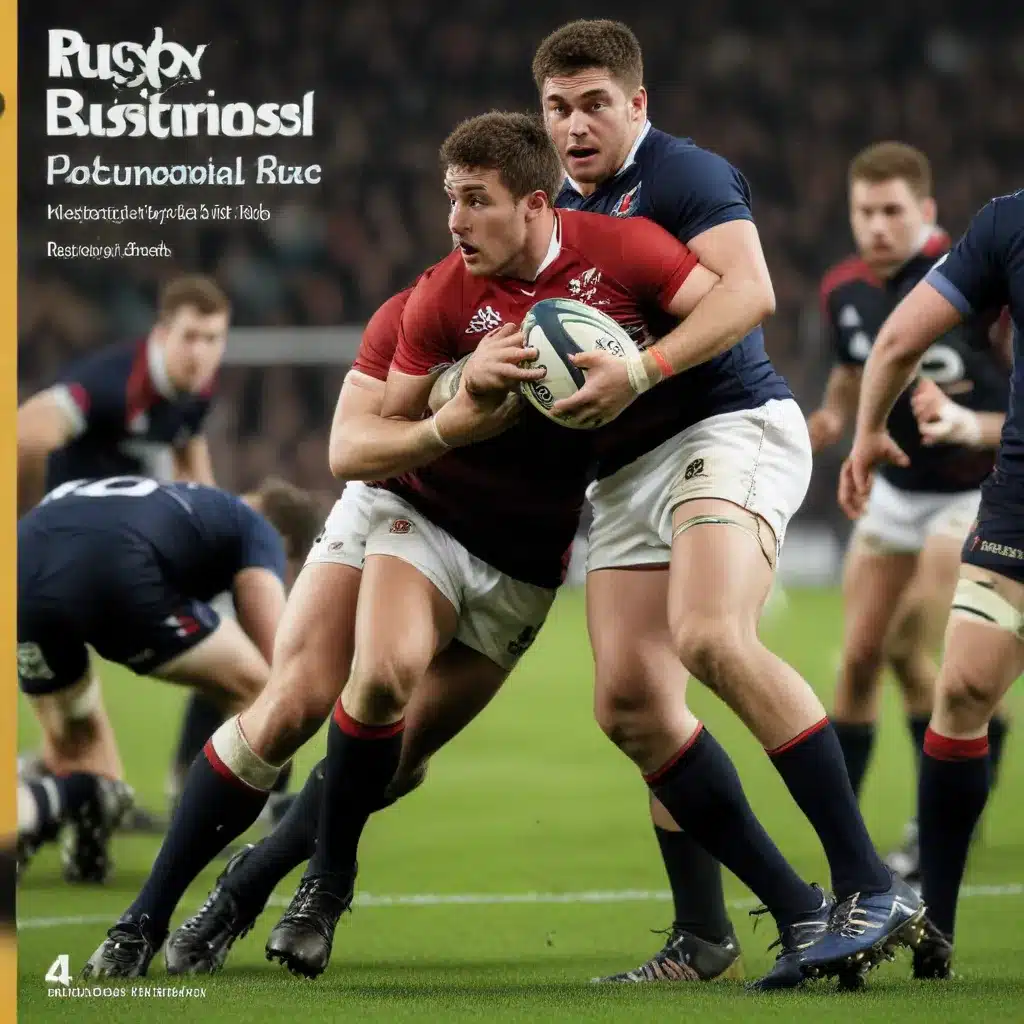
Forwards: Anchoring the Set Piece and Power of the Pack
As a seasoned rugby professional, I know the crucial role that the forward pack plays in determining the outcome of a match. These are the unsung heroes who toil tirelessly in the trenches, laying the foundation for their team’s success. Let’s dive into the distinct responsibilities and attributes of the key forward positions.
Prop: Providing a Solid Foundation
The props, both loosehead and tighthead, form the pillars of the scrum. These behemoths must possess exceptional upper body strength, neck power, and leg drive to anchor the set piece and prevent it from collapsing. While the loosehead may be slightly smaller and rely more on technique, the tighthead prop is the true cornerstone of the scrum, using brute force to dominate their opposite number.
Beyond the scrum, props are expected to contribute in open play as well, engaging in the breakdown, tackling, and even carrying the ball when the opportunity arises. Their versatility is a testament to the demanding nature of the position. As the old adage goes, “no scrum, no win” – and the props are the ones responsible for ensuring that foundation is rock solid.
Hooker: Linking the Set Piece and Phase Play
The hooker occupies a pivotal role, serving as the link between the forwards and the backline. Positioned at the heart of the scrum, the hooker’s primary responsibility is to coordinate the timing and technique to secure possession by hooking the ball back through the props’ legs.
But the hooker’s influence extends far beyond the set piece. They are expected to deliver accurate lineout throws, engage in the open play, and secure possession during rucks and mauls. A skilled hooker can be a destructive ball-carrier, using their low center of gravity and powerful frame to break the gain line.
Truly successful hookers possess a unique blend of technical proficiency, decision-making ability, and tenacity – qualities that make them indispensable assets on any rugby team.
Lock: Dominating the Line-out and Breakdown
The locks, or second-row forwards, are the towering giants of the pack, utilizing their impressive height and strength to dominate the lineout. Accurate binding, dynamic jumping, and the ability to disrupt the opposition’s lineout are essential skills for these players.
In the modern game, the role of the lock has evolved beyond the set piece. They are now expected to contribute significantly to the open play, with many locks displaying impressive ball-handling skills and the capacity to act as primary ball-carriers. Their tireless work in the rucks and mauls, as well as their ability to make crucial tackles, underscores their importance to the overall team performance.
Possessing the physical attributes and technical prowess to excel in the set piece and the phase play, the lock position is undoubtedly one of the most demanding in rugby union. Their ability to dominate the opposition at the lineout and breakdown can be the difference between victory and defeat.
Backs: Orchestrating Attack and Shaping the Game
While the forwards lay the foundation, it is the backs who orchestrate the attacking play and shape the overall direction of the game. From the nimble scrum-half to the ever-influential fly-half, each position in the backline brings a unique set of skills and responsibilities to the table.
Scrum-half: The Heartbeat of the Team
The scrum-half is often referred to as the “heartbeat” of the team, serving as the critical link between the forwards and the backs. Their role involves the precise timing and accurate release of the ball from the base of the scrum, lineouts, rucks, and mauls to the advancing backs.
To excel in this position, scrum-halves must possess exceptional vision, speed, awareness, and lightning-fast reactions. They must be able to interpret the movement of both the forwards and the backs, seamlessly communicating with both units to maintain possession and create scoring opportunities.
The scrum-half’s ability to quickly assess the defensive structure and exploit the smallest of gaps is a testament to their tactical acumen. They are the orchestrators of the team’s attacking strategy, constantly probing for weaknesses and directing the flow of the game.
Fly-half: The General Directing Operations
The fly-half is undoubtedly the most influential player position on the pitch, commonly referred to as the “heartbeat” of the team. As the team’s primary playmaker, the fly-half is responsible for making crucial decisions, be it passing the ball out to the centers or kicking for field position.
Fly-halves must possess a diverse skill set, encompassing excellent vision, decision-making, and the ability to execute precise passes and strategic kicks. They are the generals who direct the operations, orchestrating the backline’s attack and reacting to defensive gaps to launch effective offensive plays.
Furthermore, fly-halves are often entrusted with the team’s goal-kicking duties, converting tries, penalties, and drop-goals. Their ability to relieve pressure and score points from the boot is a valuable asset that can swing the momentum of a match.
In defense, fly-halves are expected to marshal the backline, ensuring effective coverage and possessing the tackling prowess to thwart opposition attacks. The fly-half’s influence on the game is so significant that they are often the highest-paid players in the professional ranks.
Centers: Creating Space and Exploiting Opportunities
The center positions, comprising the inside and outside centers, are the power hitters of the backline. These players are tasked with punching holes in the opposition’s defense, using their physicality and dynamic running skills to breach the gain line or draw in defenders to create space for their teammates.
The inside center, lining up closest to the fly-half, often showcases a blend of creativity and playmaking ability, similar to the fly-half. They possess excellent passing and kicking skills, allowing them to play a pivotal role in attacking play. In contrast, the outside center’s primary assets are their speed and the ability to offload the ball quickly to the wingers, exploiting the space created by their direct running.
Both centers must also be adept at the defensive side of the game, as they often find themselves engaged in head-to-head collisions with their opposite numbers. Their physical strength and tackling technique are essential in maintaining the team’s defensive integrity.
The centers’ ability to create and capitalize on opportunities, combined with their all-round skill set, make them crucial cogs in the backline’s machinery. Their performance can often be the difference between victory and defeat.
Positional Responsibilities: Excelling in All Aspects of the Game
While the distinct positions in rugby union have unique responsibilities, the modern game demands that every player contribute to the team’s success in all facets of play. From the set pieces to the phase play, and from attacking to defensive duties, each position has a critical role to fulfill.
Set Pieces: Winning the Battle for Possession
The set pieces, namely the scrum and the lineout, are the foundational elements of rugby union. The forward pack’s ability to dominate these set pieces is paramount, as possession is the key to controlling the ebb and flow of the game.
In the scrum, the props and hooker must work in unison to generate the necessary power and coordination to win the battle for the ball. The locks, meanwhile, play a vital role in ensuring the stability and cohesion of the scrum, providing the platform for the number 8 to secure possession.
At the lineout, the locks’ height and jumping ability, combined with the hooker’s accuracy in throwing, are crucial in securing their own throw-ins and disrupting the opposition’s lineout. Winning this aerial battle can provide the team with invaluable attacking opportunities.
Mastering the technical and tactical aspects of the set pieces is a non-negotiable requirement for any successful rugby team, as the ability to consistently win possession in these crucial moments can be the difference between triumph and defeat.
Phase Play: Controlling the Ebb and Flow of the Match
Beyond the set pieces, the ruck and maul are the lifeblood of rugby union’s phase play. Players from across the forward and backline must work in seamless coordination to secure possession, maintain continuity, and advance up the field.
At the breakdown, the flankers and number 8 play a pivotal role in “jackaling” for the ball, disrupting the opposition’s attack and slowing down their ball. The props and locks provide the muscle to clear out the ruck, while the scrum-half’s quick service is essential in maintaining the team’s momentum.
In maul situations, the forwards must display their brute strength and technique to drive the maul forward, often resulting in valuable territory gained or even the scoring of a try. The backline, in turn, must remain alert and ready to capitalize on any opportunities that arise from successful phase play.
Controlling the ebb and flow of the match through effective phase play is a hallmark of the world’s best rugby teams. Each player’s ability to execute their role within this phase of the game is crucial to the team’s success.
Attacking Play: Maximizing Opportunities and Scoring Points
While the forward pack establishes the foundation, it is the backline that is primarily responsible for the team’s attacking play and scoring of points. From the fly-half’s strategic decision-making to the wingers’ finishing ability, every position in the backline has a crucial role to play.
The scrum-half’s quick service and the fly-half’s playmaking skills are the catalysts that ignite the backline’s attacking potential. The centers’ direct running and offloading ability create space for the wingers to exploit, while the fullback’s aerial skills and counter-attacking prowess can turn defense into attack in the blink of an eye.
Effective attacking play requires a deep understanding of the game plan, superior decision-making, and the ability to execute under pressure. Players must be able to read the defensive structure, identify weak points, and make split-second decisions to capitalize on the opportunities that arise.
Ultimately, the team that is most adept at maximizing their attacking opportunities and converting them into points will often emerge victorious in the closely contested battles that define rugby union.
Defensive Play: Denying the Opposition and Protecting the Line
While the attacking play captures the imagination of the crowd, a team’s defensive resilience is often the foundation upon which success is built. Every player, regardless of position, must be committed to the team’s defensive effort, working tirelessly to deny the opposition opportunities and protect the try line.
In the backline, the centers and fullback must possess excellent tackle technique and the ability to make crucial interventions. The wingers, often the last line of defense, must be alert and disciplined, ready to cover any breakaways or counter-attacks.
The forward pack plays a crucial role in the defensive phase, with the flankers and number 8 leading the charge in the breakdown. The props, hooker, and locks must demonstrate their physicality and technique to dominate the collisions, slowing down the opposition’s momentum and regaining possession.
Effective defensive organization, communication, and discipline are hallmarks of the world’s best rugby teams. The ability to work in unison, read the game, and make decisive tackles can often be the difference between victory and defeat.
Skill Development: The Foundation for Success
While the distinct responsibilities of each position in rugby union are well-defined, the path to mastering one’s role on the pitch involves a comprehensive approach to skill development. Technical proficiency, tactical awareness, and physical attributes are the cornerstones of becoming a complete rugby player.
Technical Skills: Mastering the Fundamentals
Irrespective of one’s position, a strong command of the fundamental technical skills is paramount. From ball handling and passing to kicking and tackle technique, the players who have honed these core abilities are the ones who can consistently execute their roles at the highest level.
In the modern game, the ability to offload in the tackle, catch high balls, and execute pinpoint kicks has become increasingly important, as teams seek to create space and exploit defensive weaknesses. Players must be diligent in their pursuit of technical excellence, constantly refining their skills through dedicated practice.
Tactical Awareness: Reading the Game and Making the Right Decisions
While technical prowess is the foundation, it is a player’s tactical awareness and decision-making ability that truly sets them apart. The capacity to read the game, anticipate the play, and make split-second choices that align with the team’s strategy is a hallmark of the game’s elite performers.
Scrum-halves and fly-halves, in particular, must possess exceptional game management skills, orchestrating the team’s attacking plays and adapting to the ebb and flow of the match. However, every player, regardless of position, must develop a keen understanding of the game’s tactical nuances to contribute effectively to the team’s overall performance.
Physical Attributes: Optimizing Performance through Fitness and Conditioning
The physical demands of rugby union are unrelenting, with players required to engage in bone-crunching collisions, maintain high work rates, and possess the endurance to perform at their peak throughout the 80-minute contest.
Forwards must prioritize the development of their strength, power, and muscular endurance, while the backs must focus on building their speed, agility, and explosiveness. Underpinning these physical attributes is the need for a comprehensive conditioning program that addresses the specific demands of each position.
By committing to a holistic approach to skill development, players can unlock their true potential and become indispensable assets to their teams. The journey to mastering one’s role on the pitch is never-ending, but the rewards of such dedication are immeasurable.
As the dedicated coaching staff at Aberdeenshire RFC can attest, the path to individual and team success in rugby union is paved with a combination of technical proficiency, tactical awareness, and physical prowess. By embracing this comprehensive approach to skill development, players can maximize their impact on the pitch and contribute to the team’s overall success.
For more insights and guidance on the nuances of rugby union positional play, be sure to visit the Aberdeenshire RFC blog at aberdeenshirerfc.org.uk. Our team of experienced coaches and players is dedicated to sharing their expertise and helping rugby enthusiasts at all levels reach new heights in their understanding and performance of the game.