
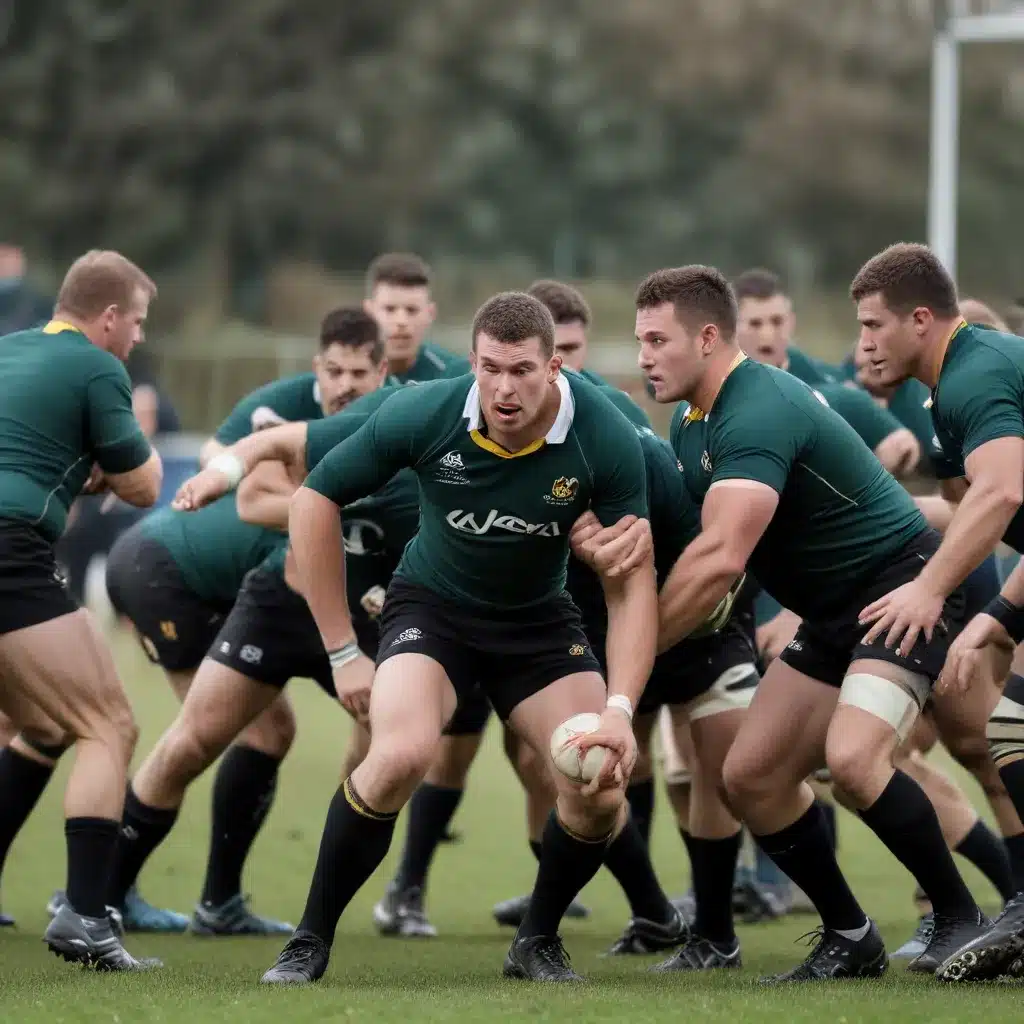
As a seasoned rugby professional, I’ve seen firsthand how a carefully structured periodized training program can unlock a player’s full potential. In this comprehensive article, we’ll dive deep into the principles of rugby union periodization, exploring how to design, implement, and refine your training to propel your athletes to new heights.
Periodized Training Approach
At the heart of any successful rugby program lies a well-conceived periodized training plan. Periodization is the strategic manipulation of training variables – such as volume, intensity, and exercise selection – to elicit specific physiological adaptations over time. Unlike a haphazard approach, periodization allows us to methodically build the physical, technical, and tactical capacities our players need to thrive.
The beauty of periodization lies in its flexibility. While classical linear models provide a predictable template, contemporary non-linear and block periodization schemes offer a more dynamic, athlete-centered solution. By being responsive to individual needs and the ever-changing demands of the sport, we can keep our players fresh, resilient, and primed for peak performance.
Macrocycle, Mesocycle, Microcycle
Periodization structures the training year into distinct phases, each with a specific emphasis and associated objectives. At the highest level, the macrocycle represents the overall annual plan, typically spanning 12 months. Within the macrocycle, we subdivide the training into mesocycles – medium-term blocks of 3-4 months – and even smaller microcycles of 1-4 weeks.
This hierarchical framework allows us to systematically build physical qualities, technical skills, and tactical awareness in a progressive, intelligent manner. Each mesocycle might focus on a particular theme, such as general physical preparation, sport-specific skill development, or competition-readiness. And the microcycles within can fine-tune the training load, recovery strategies, and performance indicators to keep players primed.
Strength and Conditioning Considerations
At the core of any rugby player’s physical development lies a robust strength and conditioning program. Periodization principles are essential here, as we must carefully manage the balance between building maximal strength, power, and speed, while also preserving the technical and tactical focus central to the sport.
I often start new players with an accumulation phase emphasizing general physical preparedness – building a foundation of strength, mobility, and work capacity. From there, we can transition into more specialized phases targeting rugby-specific qualities like explosive power and high-velocity movements. Crucially, we must monitor fatigue levels and adjust the program accordingly to avoid overtraining or plateaus.
Integrating strength and conditioning seamlessly with on-field rugby training is crucial. By aligning the physical development with the technical and tactical demands, we create a synergistic effect that elevates overall performance. It’s not enough to just build raw strength – we must ensure that strength is expressed in the unique movement patterns and game situations our players face.
Skill and Tactical Development
While physical qualities are the bedrock of rugby success, technical proficiency and tactical awareness are equally vital. Periodization principles can guide the systematic progression of these elements as well.
Within each mesocycle, we might emphasize different skill focus areas – ball handling, decision-making, breakdown work, etc. – and layer in increasing game-like constraints to mirror the complexities of match play. Similarly, the tactical components – defensive organization, set-piece execution, transition play – can be systematically built up through carefully sequenced training.
Crucially, skill and tactical development shouldn’t be isolated from the physical preparation. By integrating these elements, we create a more holistic, rugby-specific training environment that allows players to seamlessly transfer their abilities onto the pitch.
Monitoring and Evaluation
Periodization is not a set-and-forget system. Continuous monitoring and evaluation are essential to ensure our training program remains optimized and responsive to each player’s needs. This might involve regular performance assessments, wellness questionnaires, and objective data tracking (GPS, force plates, etc.).
By closely monitoring fatigue levels, adaptation rates, and even psychological state, we can make timely adjustments to the training load, recovery strategies, and even the overall periodization structure. This agility allows us to keep our players fresh, healthy, and consistently performing at their best.
Nutritional and Recovery Strategies
Underpinning the entire periodized training program are robust nutritional and recovery practices. Proper fueling, hydration, and regeneration are crucial for supporting the physiological and psychological demands our players face.
Within each mesocycle and microcycle, we’ll adjust our nutritional strategies to align with the training focus – emphasizing nutrients to support strength, power, or endurance, as needed. And our recovery modalities, from sleep hygiene to active restoration techniques, are carefully timed to maximize adaptation and readiness.
By integrating these holistic support systems, we create an environment that empowers our players to train hard, recover effectively, and ultimately deliver their best performances on game day.
Positional Demands and Periodization
Of course, no two rugby players are exactly alike. The physical, technical, and tactical requirements vary greatly between forwards and backs, as well as between specific positions. Periodization must account for these nuanced demands to ensure each player is optimally prepared.
Forwards, for example, may require a greater emphasis on maximal strength and collision-based power, while backs might focus more on high-velocity speed and agility. And the mesocycle and microcycle training plans can be tailored to address the unique skills and decision-making needs of each position group.
By respecting these positional differences, we can create a truly customized periodized program that brings out the best in each and every player.
Periodization Across the Rugby Calendar
Rugby is a year-round endeavor, with a calendar filled with pre-season preparation, in-season competition, and various offseason periods. Periodization must adapt to accommodate these distinct phases, with targeted training focuses and strategic planning.
During the pre-season, for instance, the emphasis might be on general physical preparation and skill refinement. As we approach the competitive season, the focus shifts toward power development, tactical integration, and peaking performance. And in the offseason, we can dedicate time to regeneration, technical innovation, and longer-term physical development.
Carefully navigating these calendar phases – and the associated training, recovery, and performance demands – is crucial for keeping our players fresh, resilient, and at their best when it matters most.
Conclusion
Periodized training is the foundation upon which rugby success is built. By systematically structuring our programs to develop physical qualities, technical skills, and tactical awareness, we empower our players to reach new heights. And by remaining responsive to individual needs and the ever-evolving demands of the sport, we can keep our teams primed for peak performance, year after year.
As a seasoned rugby professional, I’ve seen firsthand the transformative power of a well-designed periodized training program. By embracing the principles outlined in this article, you too can unlock your players’ potential and guide them to new levels of excellence on the pitch. So let’s get to work – the path to rugby union success awaits.