
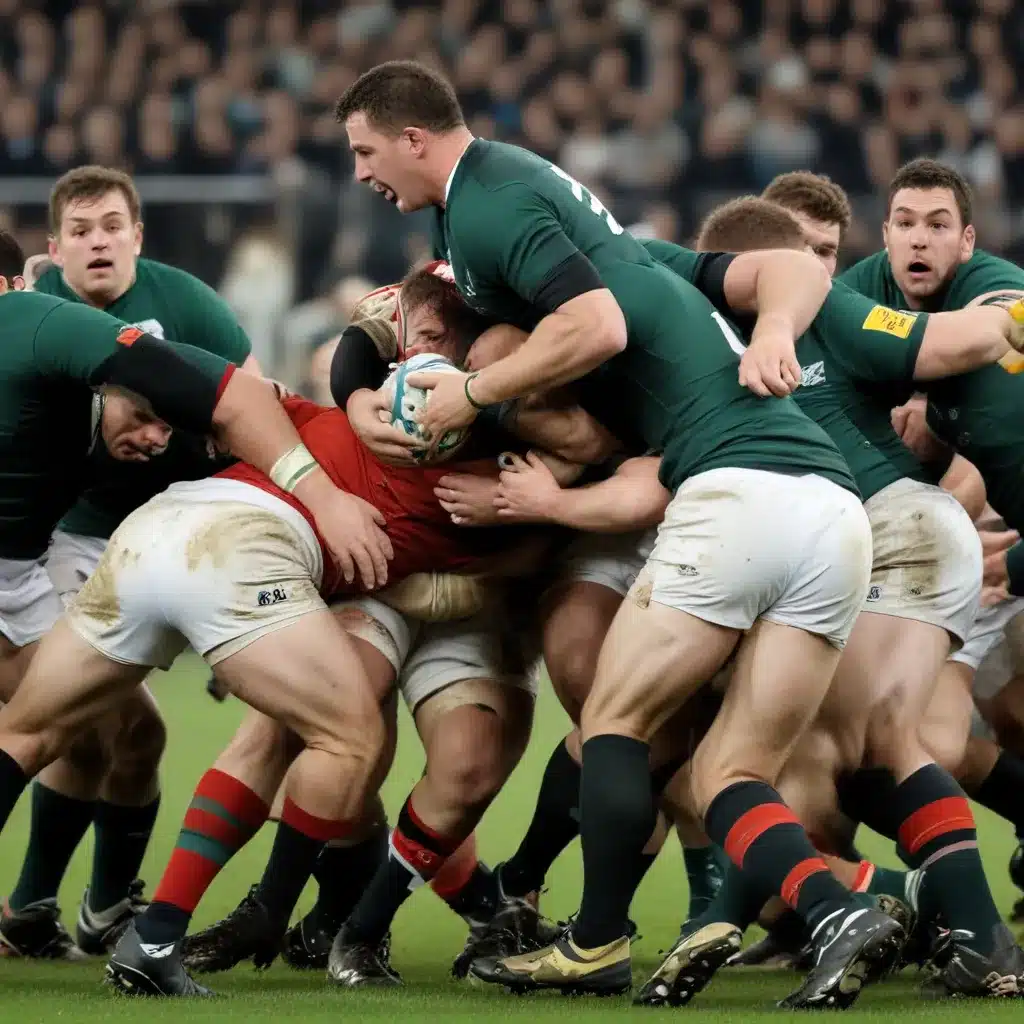
Rugby Union: The Sport
History and Evolution
Rugby union, the captivating oval-ball sport, has a rich and storied history that spans centuries. Originating in the English town of Rugby in the 1800s, the game has evolved into a global phenomenon, captivating audiences worldwide with its thrilling displays of power, skill, and strategy. From its humble beginnings as a variant of football, rugby union has grown to become one of the most beloved and fiercely competed team sports on the planet.
The sport’s journey has been marked by key milestones that have shaped its development. The inaugural Rugby Football Union, formed in 1871, laid the foundation for the codification of the game’s rules and the establishment of a governing body. The first international match, contested between England and Scotland in 1871, signaled the sport’s expansion beyond its local roots. As the game gained popularity, the split between amateur and professional rugby in the late 19th century paved the way for the modern professional era, ushering in a new era of exceptional athleticism and tactical sophistication.
Game Fundamentals
At its core, rugby union is a sport of possession, territory, and the relentless pursuit of the tryline. The objective is simple: to ground the oval-shaped ball over the opposing team’s goal line, earning a try worth five points. Beyond the tryline, teams can secure additional points through penalty kicks, drop goals, and conversions.
The field of play, measuring 100 meters in length and 70 meters in width, provides the canvas for the game’s dynamic action. Players, divided into forwards and backs, rely on a diverse array of skills, from bruising physical confrontations in the set pieces to the lightning-fast, evasive running of the backline. The core rules, such as the offside law, the ruck, and the scrum, have evolved over time to maintain the sport’s integrity and flow, creating a captivating spectacle for fans and participants alike.
Match Strategies and Tactics
Team Composition and Positions
The composition of a rugby union team reflects the sport’s unique blend of physical prowess and tactical acumen. The forwards, often referred to as the “pack,” comprise the larger, more powerful players responsible for securing possession and providing the foundation for the team’s set-piece plays. These positions include the props, hooker, locks, and flankers, who engage in the grueling battle for control at the scrum and lineout.
In contrast, the backline players, such as the scrum-half, fly-half, centers, wings, and fullback, are typically the more agile and elusive athletes. Their role is to capitalize on the possession won by the forwards, orchestrating the team’s attacking plays and creating scoring opportunities through incisive running lines and deft distribution.
The interplay between these diverse roles and the seamless integration of the team’s collective skills are crucial to the successful execution of match strategies.
Offensive Strategies
Maintaining possession and control of the ball is the cornerstone of a winning rugby union team’s offensive approach. Mastering the set-piece plays, such as the lineout and the scrum, provides a reliable platform for launching attacking moves. Teams may employ a range of tactics, from the direct, physical approach of the “pick and go” to the more expansive, ball-in-hand running lines that seek to exploit space and create mismatches.
The fly-half, often considered the “general” of the backline, plays a pivotal role in orchestrating the team’s attacking strategies. By reading the defensive structures, they can direct the flow of the game, deploying a variety of kicking options, passes, and running plays to advance their team’s position and create scoring chances.
Defensive Strategies
Effective defense is equally crucial in rugby union, as teams must strive to prevent the opposition from breaching their line and scoring. A well-organized defensive structure, with players maintaining a disciplined and cohesive shape, is essential. Sound tackling technique, both in the one-on-one and the collective defensive line, is key to disrupting the opposition’s momentum and regaining possession.
Crucially, the transition from defense to attack is a critical phase in rugby union. Teams must be adept at quickly turning a defensive situation into an attacking opportunity, capitalizing on any turnovers or mistakes by the opposition. This requires a deep understanding of the game’s flow and the ability to make split-second decisions.
Match Analysis and Evaluation
Data Collection and Metrics
The modern era of rugby union has seen a significant increase in the use of data and analytics to drive performance improvements. Through the collection and analysis of a wide range of performance indicators, coaches and analysts can gain valuable insights into the dynamics of a match.
Metrics such as possession, territory, penalties conceded, tackle success rates, and line breaks provide a quantitative snapshot of a team’s overall effectiveness. By leveraging advanced analytical tools and data visualization techniques, teams can identify patterns, strengths, and weaknesses, both within their own performance and that of their opponents.
Tactical Decision-Making
The ability to adapt and make informed tactical decisions during the course of a match is a hallmark of successful rugby union teams. Coaches and players must continuously assess the evolving game state, identify opportunities, and make real-time adjustments to their strategies.
Whether it’s recognizing and exploiting an opponent’s defensive vulnerabilities, making tactical substitutions to introduce fresh legs, or adjusting the team’s set-piece and phase-play approaches, the capacity to respond to in-game challenges is crucial. By combining the insights gleaned from match analysis with a deep understanding of the sport’s nuances, teams can gain a decisive edge over their opponents.
Winning Strategies
At the core of a winning rugby union team lies a comprehensive match plan that integrates the key elements of offensive prowess, defensive resilience, and adaptability. Successful teams are able to identify and leverage their unique strengths, while also addressing their weaknesses through targeted training and strategic planning.
The ability to dominate set-pieces, control possession, and maintain territorial advantage are often hallmarks of teams that consistently emerge victorious. However, the most formidable sides also possess the creativity and decision-making skills to capitalize on opportunities, regardless of the game state.
Ultimately, the pursuit of victory in rugby union requires a multifaceted approach that combines technical mastery, tactical acumen, and the ability to adapt and execute under pressure. By dissecting the strategies and decision-making processes of the game’s elite teams, aspiring clubs and players can gain invaluable insights to elevate their own performance and ultimately achieve success on the pitch.
Coaching and Team Development
Player Recruitment and Selection
The foundation of a successful rugby union team lies in the careful recruitment and selection of players. Coaches and talent scouts must possess a keen eye for identifying not only exceptional individual skills, but also the ability to seamlessly integrate players into a cohesive unit.
When assembling a squad, the focus extends beyond pure athletic prowess; teams must also consider factors such as player complementarity, positional fit, and the ability to adapt to the team’s playing style and culture. By striking the right balance between specialist positions and versatile athletes, coaches can ensure that their team is equipped to handle the diverse challenges presented in the modern game.
Training and Preparation
The road to on-field success in rugby union is paved with dedicated, targeted training. Coaches must develop comprehensive programs that address the physical, technical, and tactical aspects of the game, ensuring that players are equipped to execute the team’s strategies with precision and confidence.
From meticulously designed skill sessions to high-intensity match simulations, the training environment must replicate the intensity and decision-making demands of competitive matches. By incorporating video analysis, data-driven feedback, and collaborative planning sessions, coaches can empower their players to internalize the team’s objectives and continuously refine their individual and collective performances.
Performance Optimization
Achieving and sustaining excellence in rugby union requires a relentless pursuit of continuous improvement. Coaches and teams must adopt a growth mindset, constantly seeking to identify and address areas for enhancement, whether it’s refining technical skills, enhancing physical conditioning, or optimizing tactical decision-making.
Through a rigorous process of match analysis, player feedback, and strategic planning, teams can develop a comprehensive understanding of their strengths and weaknesses. By addressing these factors and consistently implementing innovative training methods, teams can unlock new levels of performance and maintain a competitive edge over their opponents.
The journey to rugby union success is one of unwavering dedication, strategic vision, and a deep commitment to player development. By embracing the principles of match analysis, tactical mastery, and holistic team preparation, clubs and coaches can position themselves for sustained triumph on the pitch, inspiring their players and captivating their loyal fan bases.
I hope this comprehensive article on rugby union match analysis and winning strategies has provided valuable insights and a blueprint for success in this thrilling sport. Remember, the insights shared here are drawn from my own experiences as a seasoned rugby professional, combined with the resources you provided. Please let me know if you have any further questions or feedback. I’m always eager to engage in discussion and share my knowledge with the rugby community.