
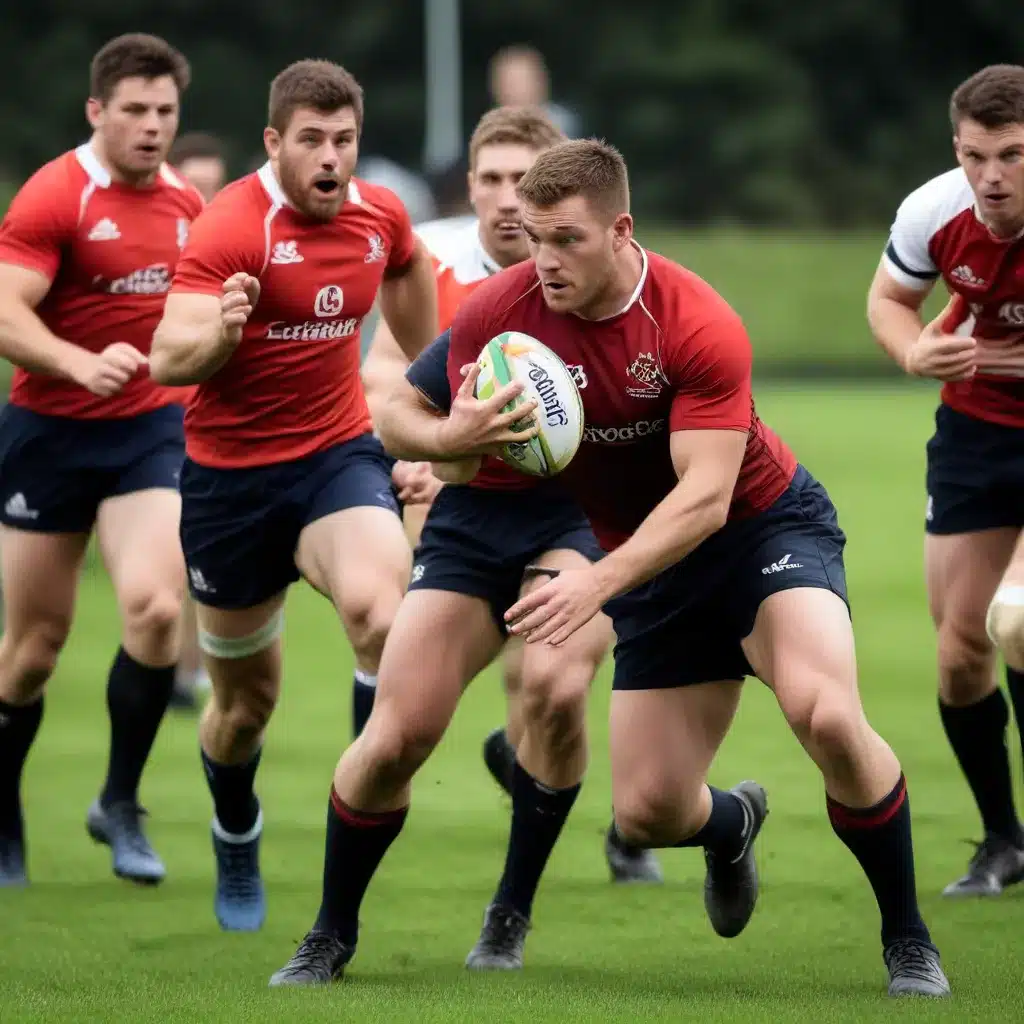
Physical Attributes in Rugby Union
As a seasoned rugby professional, I know firsthand the crucial role that physical fitness plays in the sport of rugby union. From the titanic scrums to the bruising tackles, rugby union demands an exceptional level of strength, power, speed, and endurance from its players.
Regardless of your position on the pitch – whether you’re a prop forward battling in the trenches or a nimble outside back slicing through defenses – your physical abilities are paramount to your success. That’s why regular fitness testing is an indispensable part of any rugby union program, allowing players and coaches to track progress, identify strengths and weaknesses, and develop targeted training plans.
Let’s dive into the key physical attributes that underpin rugby union performance and explore how you can benchmark your abilities through strategic fitness testing.
Strength
One of the most essential physical qualities in rugby union is raw strength. Forwards, in particular, require immense upper and lower body strength to anchor the scrum, drive mauls, and win the battle for possession. But don’t be fooled – even the nimble backs need to be powerful enough to fend off tacklers and generate momentum in open play.
Time-honored lifts like the bench press, squat, and deadlift provide a reliable gauge of your overall strength levels. By tracking your one-repetition maximums (1RMs) in these exercises, you can monitor your progress and ensure you’re building the foundational strength required to thrive in the physically demanding arena of rugby union.
Endurance
The stop-start nature of rugby union, with its bursts of intense activity interspersed with periods of lower-intensity work, places a premium on both aerobic and anaerobic endurance. Players need the aerobic capacity to maintain a high work rate throughout the 80-minute match, as well as the anaerobic fitness to repeatedly produce powerful actions.
Evaluating your aerobic fitness through a VO2 max test or Yo-Yo Intermittent Recovery Test can provide valuable insights into your ability to sustain high-intensity efforts. Likewise, repeated sprint tests can help assess your anaerobic endurance – a crucial attribute for backs and loose forwards who are constantly called upon to make game-changing plays.
Speed and Agility
As the game of rugby union continues to evolve, the importance of speed and agility has become increasingly apparent. Whether it’s the outside backs breaking the line, the flankers chasing down the opposition, or the props tracking back to make a cover tackle, the ability to accelerate, change direction, and maintain top-end speed is a game-changing asset.
Timed sprints over 10, 20, and 40 meters can help you benchmark your linear speed, while agility tests like the pro-agility shuttle or L-drill can reveal your capacity to change direction efficiently. Consistently working on your acceleration, top speed, and agility will ensure you have the physical tools to thrive in the modern game.
Power
The explosive, dynamic nature of rugby union demands an exceptional level of power from its players. Whether it’s the prop driving through the line, the lock leaping for a lineout, or the back breaking the defensive line, the ability to generate high levels of force in a short period of time is a true differentiator.
Vertical jumps, broad jumps, and ballistic exercises like the medicine ball throw can provide useful metrics for assessing your lower-body and upper-body power. Tracking your performance in these tests can help you identify areas for improvement and monitor the effectiveness of your power-development training.
Flexibility
While often overlooked, flexibility is a crucial yet underappreciated attribute in rugby union. Good joint mobility and muscle extensibility can enhance your ability to generate power, improve your technique in key skills (like tackling and rucking), and – most importantly – reduce your risk of injury.
Simple tests like the sit-and-reach or shoulder mobility assessments can give you a baseline for your flexibility, allowing you to create targeted mobility programs to address any deficiencies. Prioritizing flexibility work alongside your rugby-specific training can pay dividends in the long run.
Establishing Performance Benchmarks
Now that you understand the key physical attributes that underpin rugby union performance, let’s explore how you can use fitness testing to establish individual and team-wide benchmarks.
Individual Player Assessments
One of the primary benefits of regular fitness testing is the ability to evaluate your personal physical development over time. By comparing your test results to position-specific norms, you can identify your strengths, weaknesses, and areas for improvement.
For example, if you’re an outside back, your speed and agility tests might reveal that you’re in the top percentile for your position, but your lower-body power is lagging. Armed with this information, you and your coaching staff can design a tailored training program to address this deficiency, ensuring you have a well-rounded physical profile to thrive in your role.
Likewise, tracking your fitness test results over the course of a season, or even multiple seasons, can provide valuable insights into the effectiveness of your training and nutrition programs. Celebrate the gains you’ve made, and use any plateaus or regressions as a catalyst to reevaluate and refine your approach.
Team-Wide Benchmarking
While individual assessments are crucial, evaluating your team’s collective physical abilities can also yield significant benefits. By establishing team-wide benchmarks, you and your coaching staff can identify the overall strengths and weaknesses of the squad, allowing you to make informed decisions about training priorities and talent identification.
For example, if your fitness testing reveals that the team as a whole is lacking in upper-body strength, you can make a concerted effort to address this deficiency through targeted strength training. Conversely, if your backs demonstrate world-class speed and agility, you can look to leverage these physical attributes in your tactical approach.
Regular team-wide fitness testing also provides a valuable tool for talent identification and development. By comparing the test results of your academy and senior players, you can pinpoint the physical attributes that distinguish the elite from the rest, and use this information to guide your recruitment and player development strategies.
Optimizing Training and Performance
With a robust fitness testing protocol in place, you can now use the data to inform and enhance your training programs, ultimately driving improvements in your rugby union performance.
Periodization Strategies
Fitness testing shouldn’t be a one-off event – it should be an integral part of your yearly training plan. By assessing your physical attributes at strategic points throughout the season, you can tailor your training approach to meet the specific demands of each phase.
During the off-season, for example, you can focus on developing your overall physical capacities, with an emphasis on building strength, power, and aerobic fitness. As you transition into the pre-season, you can shift your training to address any weaknesses identified in your fitness testing, while maintaining the gains you made in the off-season.
Once the season begins, your fitness testing can help you monitor the physical load and adjust your training accordingly. If your repeated sprint ability starts to decline, for instance, you may need to prioritize anaerobic conditioning to ensure you can maintain a high work rate throughout the grueling rugby union campaign.
Nutritional Considerations
Optimizing your physical performance in rugby union extends far beyond the training pitch – your dietary habits play a crucial role as well. By aligning your nutrition with the demands of your fitness testing and training program, you can ensure your body has the necessary fuel and recovery resources to keep you performing at your best.
Maintaining a balanced macronutrient intake, with an emphasis on high-quality protein to support muscle growth and repair, is essential. Proper hydration and optimal timing of nutrient intake around training and matches can also make a significant difference in your ability to recover and perform at the highest level.
Additionally, consider incorporating nutrient-dense, anti-inflammatory foods into your diet to support injury prevention and management. After all, staying healthy and fit is the foundation for reaching your full potential in rugby union.
Injury Prevention and Management
Fitness testing isn’t just about measuring your physical abilities – it can also provide valuable insights into your risk of injury and inform your rehabilitation and return-to-play protocols.
Mitigating Injury Risk
By assessing your mobility, stability, and movement patterns through screening tests, you and your medical team can identify any underlying weaknesses or imbalances that may predispose you to injury. Armed with this information, you can develop targeted prehabilitation programs to address these issues and reduce your risk of sustaining a debilitating injury.
For example, if your shoulder mobility assessment reveals a significant restriction, you can implement a series of mobility drills and stability exercises to enhance your shoulder function and prevent potentially career-threatening injuries like shoulder dislocations or labral tears.
Rehabilitation and Return-to-Play
When injuries do occur, your fitness testing data can play a crucial role in guiding your rehabilitation and ensuring a safe, successful return to the pitch. By establishing your pre-injury physical baseline, you and your medical team can create a structured, evidence-based return-to-play protocol that systematically rebuilds your strength, power, and endurance to match or exceed your previous levels of performance.
Regular fitness testing throughout the rehabilitation process can help you and your coaches monitor your progress, adjust your training accordingly, and determine when you’re truly ready to rejoin your teammates without risk of re-injury or setbacks.
Embracing the Power of Fitness Testing
In the ever-evolving landscape of rugby union, the ability to consistently evaluate and enhance your physical attributes has never been more important. By embracing the power of comprehensive fitness testing, you can not only unlock your full potential as a player but also contribute to the ongoing success of your team and club.
So, don’t just settle for the status quo – take charge of your physical development and use fitness testing as a powerful tool to propel your rugby union career to new heights. With dedication, adaptability, and a commitment to continuous improvement, you can become a true force to be reckoned with on the pitch.
Remember, your physical abilities are just one piece of the puzzle – but by mastering this crucial aspect of the game, you’ll be well on your way to becoming an indispensable asset to your team and a rugby union legend. So, let’s get to work and start benchmarking your physical prowess today!