
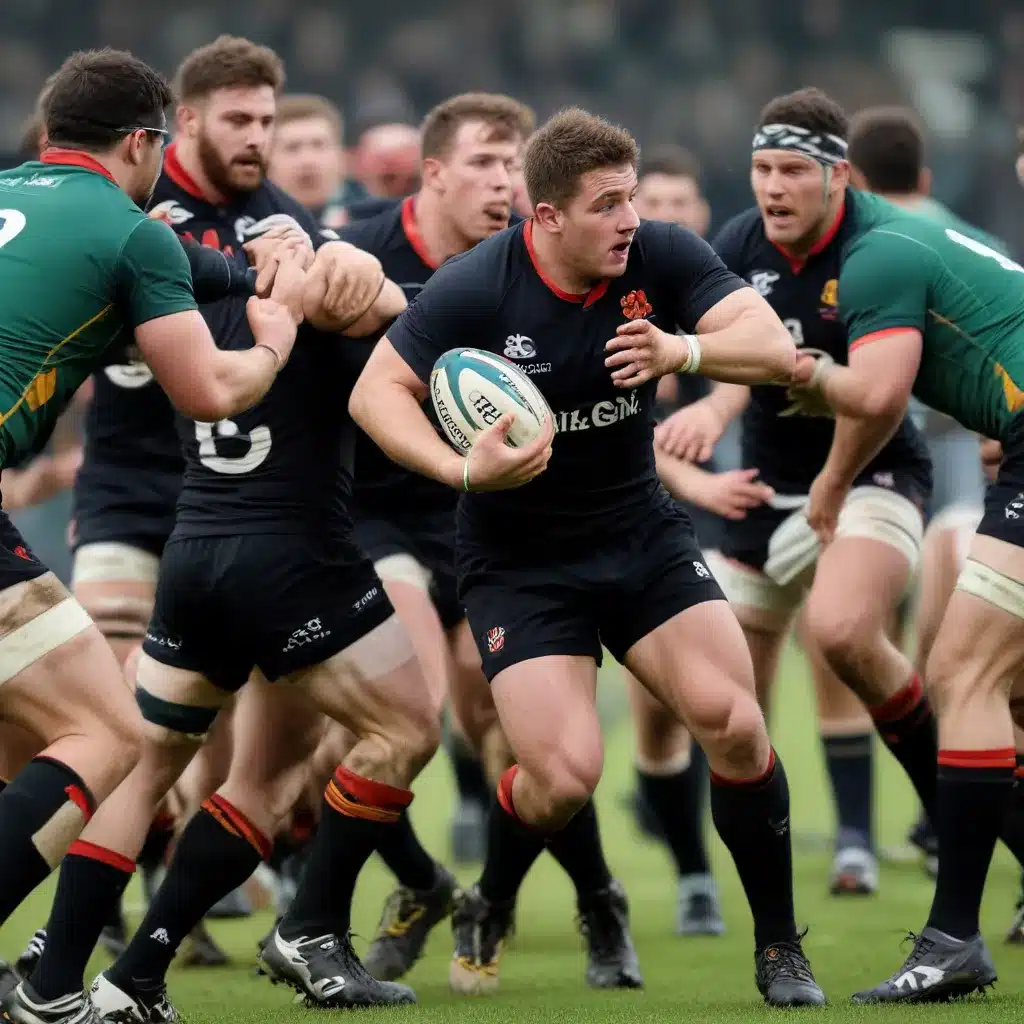
The Foundation of the Forward Pack
The forward pack is the backbone of any successful rugby union team. Within this powerhouse unit, the engine room – the props and locks – plays a pivotal role in driving the team forward, both metaphorically and physically. As a seasoned rugby coach, I’ve dedicated countless hours to honing the skills and mindset of these crucial position groups.
The props are the foundation upon which the scrum is built, providing the raw power and stability to win the battle at the set-piece. The locks, meanwhile, are the lineout generals, organizing the jumping and lifting, while also acting as the enforcers in the tight exchanges. Together, this dynamic duo forms the heart of the forward pack – the engine room that powers the team’s performance.
Coaching Strategies for Developing Forwards
Effective coaching for forwards requires a multifaceted approach, blending physical preparation, technical mastery, and mental toughness. It’s not enough to simply focus on brute strength and size – the modern game demands a well-rounded skillset and an adaptable mindset.
Assessing Player Potential
When working with young forward prospects, I always start by carefully assessing their physical attributes, technical abilities, and decision-making skills. This allows me to identify their strengths and weaknesses, and tailor their development plan accordingly. Some players may excel at the set-piece but struggle with carrying the ball, while others might be physical beasts but lack the necessary finesse.
Targeted Training
Once I’ve established a clear understanding of each player’s profile, I design targeted training sessions to address their unique needs. Prop forwards, for instance, will require extensive work on scrummaging technique, core strength, and body positioning. Locks, on the other hand, must hone their lineout skills, spatial awareness, and breakdown work.
Throughout these sessions, I emphasize the importance of positional specialization, ensuring that each forward understands their role and how it fits into the overall team strategy. By fostering this sense of purpose, I’ve found that players are more engaged, motivated, and able to make quicker decisions on the pitch.
Building Mental Resilience
Alongside the physical and technical aspects of the game, I place a strong emphasis on developing the mental resilience of my forward pack. Rugby is a sport that demands unwavering commitment, discipline, and the ability to thrive under pressure.
I often draw inspiration from the legendary All Blacks, whose uncompromising “no excuses” mentality has become the stuff of legend. Through targeted visualization exercises, team-building activities, and honest feedback, I work to instill this same level of mental toughness in my forwards.
Integrating with the Backline
While the forward pack may be the engine room, it’s essential that they seamlessly integrate with the backline to create a well-oiled machine. I encourage my forwards to develop an understanding of the backline’s patterns and strategies, so that they can anticipate and support their teammates’ movements. This level of cohesion and communication is crucial for executing complex plays and breaking down opposing defenses.
Fostering a Winning Mindset
Perhaps the most important aspect of coaching forwards is cultivating a winning mindset. These players are the heart and soul of the team, setting the tone with their physicality, aggression, and sheer determination. As a coach, I’ve found that when the forward pack is firing on all cylinders, the rest of the team is inspired to follow suit.
One of the ways I’ve been able to instill this winning mentality is by highlighting the rich history and traditions of the forward pack in rugby union. I share stories of legendary packs like the Springboks’ “Boerebees” or the fearsome Welsh “coal-face” forwards, who embodied the values of hard work, resilience, and uncompromising play. By connecting my players to this lineage of greatness, I’ve been able to tap into their competitive spirit and instill a deep sense of pride in their roles.
Monitoring and Evaluating Performance
Of course, coaching is an ongoing process, and it’s essential to continuously monitor and evaluate the performance of the forward pack. I track a range of key performance indicators, from set-piece success rates and breakdown turnovers to meters gained and tackle efficiencies. This data, combined with my own observations and feedback from the players, allows me to identify areas for improvement and make adjustments to our training and game plans.
Regular video analysis sessions are also a critical part of my coaching process. By reviewing game footage, I can provide detailed, constructive feedback to my forwards, highlighting both their strengths and areas that require further development. This feedback loop ensures that each player is constantly striving to enhance their skillset and contribute more effectively to the team’s overall success.
Conclusion
Developing a formidable forward pack is no easy task, but it’s a challenge that I relish as a rugby coach. By focusing on the fundamentals of the game, fostering a winning mindset, and constantly striving for improvement, I’ve been able to help forwards reach new heights and become the driving force behind their team’s success.
Whether you’re a seasoned coach or a passionate rugby enthusiast, I hope that the insights and strategies I’ve shared in this article will inspire you to invest in the growth and development of your own forward pack. After all, the engine room is the heartbeat of the team, and with the right guidance and support, these players can become the difference-makers that propel their clubs and communities to glory.