
Navigating the Complexities of Rugby Rules: A Guide for Players and Fans
Rugby Fundamentals
The game of rugby has long captivated players and spectators alike with its dynamic physicality, intricate strategy, and rich heritage. At the heart of this captivating sport lie the rules, which guide the flow of the game and shape the experiences of all who step onto the pitch. As a seasoned rugby professional, I’m honored to share my insights and expertise to help you, the passionate player or devoted fan, navigate the nuances of rugby’s rule book.
Let’s start with the fundamentals. The objective in rugby is simple – to advance the oval-shaped ball down the field and score points by grounding the ball over the opposing team’s goal line. Players can run with the ball, pass it laterally or backward, and kick it forward to gain ground. The field of play is a rectangular pitch, 100 meters long and 70 meters wide, with two try zones at either end. The players don their specialized positions, each with unique roles and responsibilities, and the game begins.
Core Rugby Rules
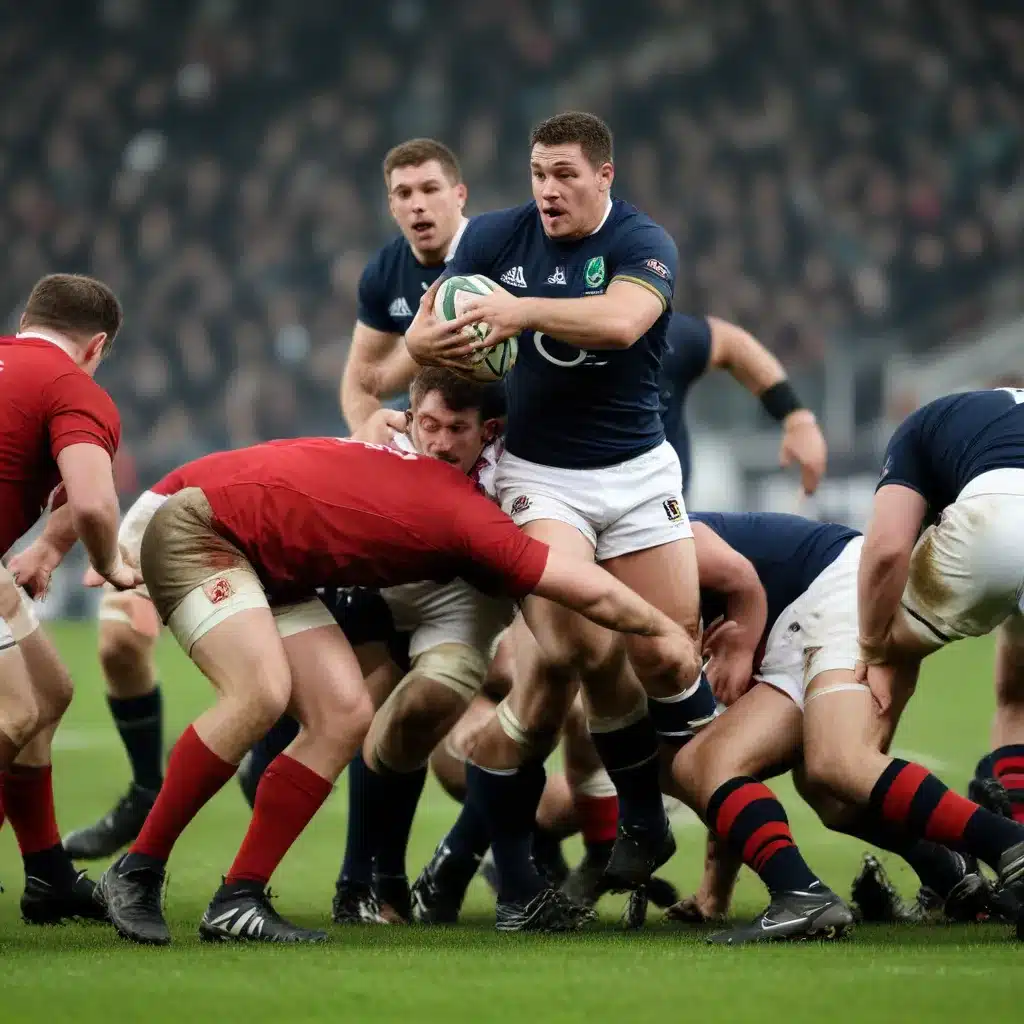
Now, let’s delve into the core rules that govern the game. Ball handling and passing are central to rugby’s dynamic flow. Players can only pass the ball laterally or backward, never forward – this restriction adds an element of challenge and strategy to each possession. The ruck, maul, and scrum are integral set-piece moments, where players compete for the ball and maintain possession. In a ruck, players from both teams bind together over a downed player, while a maul involves carrying the ball as a united group. Scrums, those iconic formations of eight players on each side, are used to restart play after certain infringements.
Lineouts and kickoffs are also crucial aspects of the game. When the ball goes out of bounds, a lineout is formed, with players from both teams competing to regain possession. Kickoffs, usually after a score, are used to restart play, with the kicking team attempting to retain or regain the ball. And of course, the ultimate objective – scoring points. Players can do this by grounding the ball over the try line (worth 5 points), kicking it through the uprights (3 points for a penalty kick, 2 points for a conversion), or dropping the ball through the posts (3 points for a drop goal).
Player Positions and Roles
Rugby is a game of specialists, with each player occupying a distinct position on the field, each with its own unique responsibilities. The forwards, the hulking pack of players, are responsible for winning and maintaining possession through set pieces and close-quarter battles. The backline, the speedsters and playmakers, utilize their agility and vision to create scoring opportunities. From the powerful props and sturdy locks to the nimble flyhalves and elusive wingers, every player has a vital part to play in the overall team effort.
Rugby Game Phases and Progression
The game of rugby unfolds through a series of distinct phases, each with its own strategic considerations. Open play, where the ball is in hand and players run, pass, and kick to advance, is where the game’s breathtaking moments often unfold. Set pieces, such as scrums, lineouts, and restarts, provide opportunities to regain or retain possession. The progression of the game is marked by the back-and-forth battle for territory and the constant struggle to maintain continuity of possession.
Penalties and Disciplinary Matters
Inevitably, in the heat of battle, players will infringe on the rules. Penalties are awarded for a variety of offenses, ranging from technical breaches to dangerous play. A yellow card signifies a temporary suspension, while a red card results in a player’s dismissal from the match. Referees are tasked with the challenging role of interpreting and enforcing these rules, ensuring the game is played safely and fairly.
Refereeing and Officiating
Speaking of referees, their role is absolutely crucial in the game of rugby. The referee is the sole arbiter of the rules, making split-second decisions that can significantly impact the outcome of a match. Assisted by touch judges and, in some cases, video officials, the referee is responsible for overseeing the game’s flow, managing player conduct, and ensuring the safety of all participants. Maintaining a delicate balance between enforcing the laws and allowing the game to progress naturally is no easy feat, and the best referees are those who can navigate these complexities with skill and authority.
Differences Between Rugby Codes
While the core objective of rugby remains the same across its various codes, there are notable differences between Rugby Union and Rugby League. Rugby Union, the focus of our discussion, is known for its emphasis on set-piece play, the presence of a full-back, and the ability to kick the ball into touch to regain possession. Rugby League, on the other hand, features a faster-paced game with a focus on running, passing, and a limited number of tackles before possession changes hands. These distinctions shape the overall strategy, gameplay, and player roles within each code.
Rugby History and Evolution
The game of rugby has a rich and storied history, stretching back to its origins in the early 19th century at Rugby School in England. Over time, the sport has evolved, with rule changes and adaptations reflecting the changing needs of the game. From the introduction of line-outs and scrums to the incorporation of video technology, rugby has continually adapted to maintain its captivating appeal while upholding its core values of sportsmanship, camaraderie, and physical prowess.
Player Safety and Equipment
As the game has evolved, so too has the focus on player safety. The introduction of protective equipment, such as mouthguards, headgear, and padded shorts, has helped mitigate the risk of injury. Additionally, rule changes, such as the banning of dangerous tackles and the increased powers of the TMO (Television Match Official), have prioritized the well-being of players at all levels of the game.
Rugby Spectator Culture
No discussion of rugby would be complete without acknowledging the vibrant and passionate spectator culture that surrounds the sport. From the roar of the crowd during a hard-fought match to the post-game camaraderie shared over a pint, the rugby community is renowned for its unwavering support and dedication. Traditions such as the singing of anthems, the respectful applause for both teams, and the shared appreciation for the sacrifices made on the field all contribute to the unique atmosphere that envelops the game.
In conclusion, the rules of rugby are a complex tapestry, woven together to create a game that captivates players and spectators alike. As a seasoned rugby professional, I hope this comprehensive guide has provided you with a deeper understanding of the sport’s intricacies, from the fundamental mechanics to the nuances of officiating and the rich history that underpins it all. Whether you’re a passionate player lacing up your boots or a devoted fan cheering from the stands, embracing the complexities of rugby’s rule book will only enhance your appreciation for this magnificent game.
And remember, while the rules may seem daunting at first, the true essence of rugby lies in its spirit of camaraderie, sportsmanship, and the unwavering pursuit of excellence. So, the next time you step onto the pitch or find yourself in the midst of a heated match, remember to trust the referee, respect your opponents, and above all, enjoy the beauty of this truly remarkable sport. Aberdeenshire RFC is proud to be a part of this vibrant rugby community, and we welcome you to join us in our shared love for the game.