
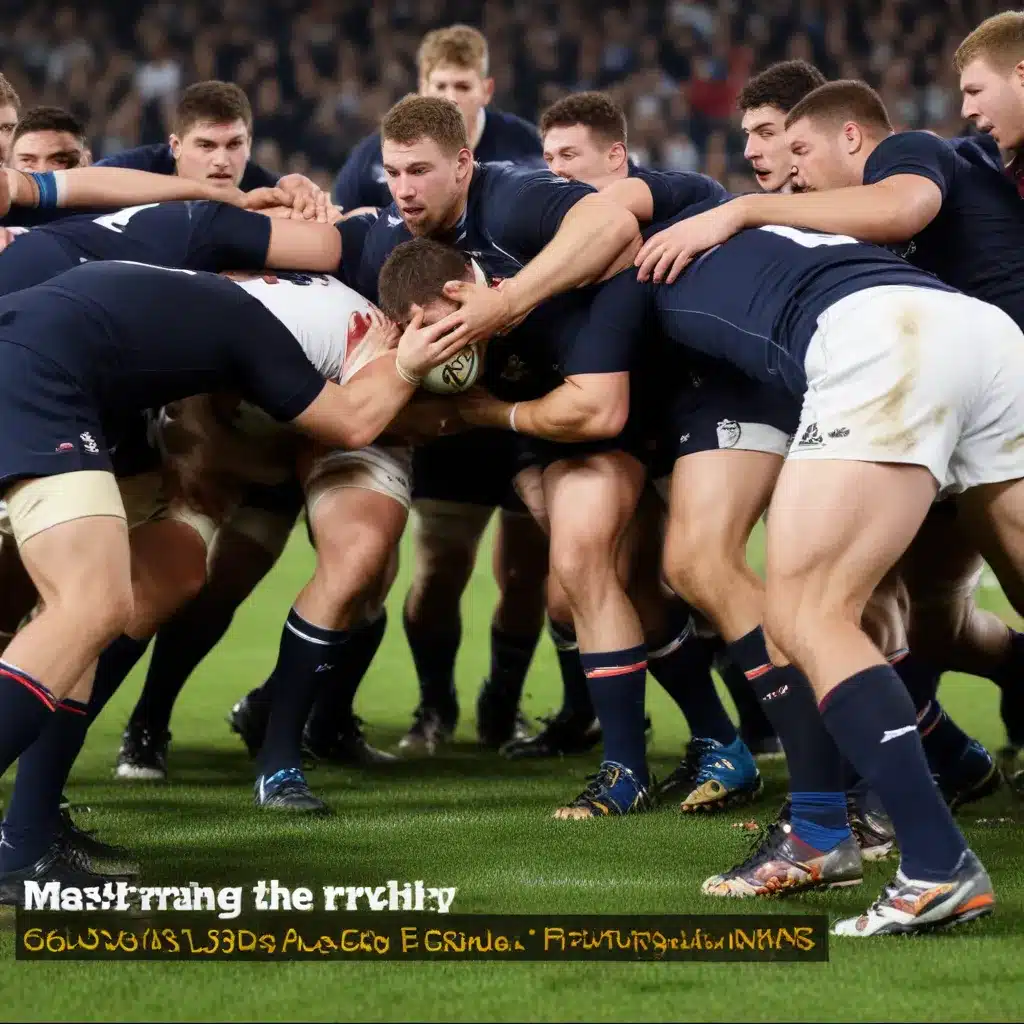
Scrum Fundamentals
As a seasoned rugby professional, I’ve seen firsthand the pivotal role the scrum plays in determining the outcome of matches. The scrum is where the battle for forward dominance is fought, and mastering its intricate techniques can be the difference between victory and defeat.
At the heart of the scrum lies a symbiotic relationship between raw power, tactical coordination, and an unwavering commitment to teamwork. Whether you’re a seasoned prop, a skilled hooker, or a towering lock, understanding the fundamentals of scrum play is essential for any aspiring forward.
Scrum Composition and Roles
The scrum is a unique set-piece in rugby, bringing together eight players from each team in a highly choreographed contest for possession. The front row, consisting of the two props and the hooker, provides the initial impact and drive. The second row locks add height and stability, while the back row – the number 8 and the two flankers – provide the extra power and dynamism.
Each player has a specific role to play, and it’s the combination of these individual contributions that makes a scrum successful. The props must establish a strong base, the hooker must strike for the ball, and the locks and back row must coordinate their efforts to push the opposition back.
The Importance of Scrum in Rugby
The scrum is more than just a set-piece; it’s a microcosm of the larger game. Winning the battle at the scrum can set the tone for the entire match, providing a critical platform for attack or a sturdy foundation for defense. A dominant scrum can disrupt the opposition’s momentum, win crucial penalties, or even secure turnovers, giving your team the upper hand.
Moreover, the scrum is a testament to the core values of rugby – teamwork, discipline, and physical prowess. Mastering the scrum requires a deep understanding of technique, an innate sense of timing, and an unwavering commitment to your teammates. It’s a true test of character, where individual brilliance is secondary to the collective effort.
Scrum Technique: Mastering the Basics
At the heart of a successful scrum lies impeccable technique. From the initial bind to the final push, every movement and adjustment must be executed with precision and purpose. Let’s delve into the key elements of scrum technique that every forward should strive to perfect.
Proper Body Positioning
One of the most crucial aspects of scrum technique is maintaining a solid, stable body position. The front row players, in particular, must take on a low, compact stance, with their shins parallel to the ground and their thighs forming a right angle with their torso. This position, known as the “engagement” or “hit” position, allows them to generate maximum force and resist the opposing pack.
The locks and back row must also adopt a similar body shape, with their shoulders square to the opposition and their weight evenly distributed on the balls of their feet. This ensures that the entire pack is aligned and ready to drive forward in a coordinated manner.
Driving and Pushing Mechanics
Once the scrum is engaged, the focus shifts to the all-important task of driving and pushing the opposition backwards. This requires a seamless blend of leg drive, weight transfer, and upper body strength.
The props must drive forward with their legs, maintaining a powerful, sustained push throughout the duration of the scrum. Meanwhile, the hooker and locks must use their upper body strength to maintain a tight bind and provide the necessary stability and leverage.
Equally important is the timing and coordination of the entire pack. As the front row initiates the drive, the locks and back row must synchronize their efforts, pushing in unison to maximize the scrum’s overall power and momentum.
Hooker’s Pivotal Role
At the heart of the scrum, the hooker plays a pivotal role in its success. This position requires a unique blend of technical skill, lightning-fast reactions, and an unwavering commitment to the team.
The hooker’s primary responsibility is to strike for the ball at the moment of engagement, securing possession for their side. This task demands exceptional hand-eye coordination, split-second timing, and the ability to read the opposition’s intentions.
But the hooker’s role extends far beyond the initial strike. They must also maintain a tight bind, providing the necessary stability and leverage for the front row to drive effectively. Additionally, the hooker is often the communicator and organizer, coordinating the scrum’s efforts and ensuring that the entire pack is working in harmony.
Scrum Coordination and Teamwork
While individual technique is essential, the true power of the scrum lies in the seamless coordination and teamwork of the entire forward pack. It is this collective effort that can turn a good scrum into a dominant, unstoppable force.
Communication and Timing
Effective communication is the cornerstone of a well-drilled scrum. The pack leader, often the hooker or a vocal prop, must take charge, issuing clear, concise instructions that resonate with every member of the unit.
Timing is equally crucial. The scrum engagement must be perfectly synchronized, with each player binding and driving at the precise moment to create a unified, irresistible force. This level of coordination requires constant practice, as well as a deep understanding of each player’s role and responsibilities.
Binding and Engagement Strategies
The binding process, where the players lock into each other, is a critical aspect of scrum technique. The tighter and more secure the bind, the more stable and effective the scrum will be.
Experienced teams often develop specialized binding strategies, such as the “crouch, bind, set” sequence, to ensure a consistent and legal engagement. These pre-planned rituals not only establish the initial bind but also help to maintain it throughout the scrum.
Adapting to Changing Scrum Scenarios
The scrum is a dynamic, ever-changing battle, and the best forward packs are those that can adapt to different match situations. This might involve adjusting the weight distribution, altering the driving angle, or even executing a planned “wheel” to disrupt the opposition’s momentum.
Mastering these tactical adaptations requires a deep understanding of scrum mechanics, as well as the ability to read the game and anticipate the opposition’s moves. It’s a testament to the forward pack’s decision-making skills and their ability to execute under pressure.
Scrum Dominance: Achieving Supremacy
Ultimately, the goal of any forward pack is to achieve scrum dominance – the ability to consistently outmatch and overpower the opposition. This is where the combination of technical mastery, physical prowess, and tactical nous come together to create a truly formidable scrum.
Leveraging Weight and Leg Drive
One of the key factors in scrum dominance is the ability to generate and sustain a powerful push. This requires a combination of size, strength, and explosive leg drive. The front row, in particular, must be able to use their weight and leverage to drive the opposition backwards, creating space and opportunity for their team.
Equally important is the ability to maintain this drive over an extended period. Scrum contests can often last for multiple phases, and the pack that can outlast and overpower the opposition will usually come out on top.
Counter-Rucking and Scrum Disruption
While a dominant scrum is a valuable asset, the best forward packs also understand the importance of disrupting the opposition’s scrum. This might involve counter-rucking, where the pack aggressively challenges the opposition’s ball, or executing a well-timed “wheel” to disrupt their momentum.
These tactics require a deep understanding of scrum mechanics, as well as the ability to anticipate the opposition’s moves and react accordingly. It’s a game of chess, where the team that can out-think and out-maneuver their opponents will ultimately emerge victorious.
Exploiting Opposing Scrum Weaknesses
Finally, the path to scrum dominance often involves identifying and exploiting the opposition’s weaknesses. This might involve targeting a specific player or area of the scrum, or executing a carefully planned set-piece move to catch the opposition off guard.
The key is to gather as much intelligence as possible on the opposition’s scrum, studying their tendencies, strengths, and vulnerabilities. Armed with this knowledge, the forward pack can then devise a game plan that maximizes their own strengths while minimizing the impact of the opposition’s.
Scrum Tactics and Match Strategies
Beyond the technical and physical aspects of the scrum, the most successful forward packs are those that can integrate their scrum dominance into a cohesive match strategy. This involves the strategic deployment of set-piece variations, contingency planning, and the ability to capitalize on scrum-derived advantages.
Set-Piece Variation and Surprise
One of the hallmarks of a well-coached forward pack is the ability to execute a diverse range of set-piece plays. This might involve unexpected scrum variations, such as a “wheeled” scrum or a “push-over” try, designed to catch the opposition off guard and create scoring opportunities.
The key is to develop a comprehensive playbook of scrum-based set pieces, each with its own unique tactical purpose. By constantly surprising the opposition with new looks and adaptations, the forward pack can maintain an edge and keep the opposition guessing.
Scrum Contingency Planning
In the high-intensity world of rugby, the ability to adapt and respond to changing match situations is crucial. The best forward packs are those that have a clear contingency plan for potential scrum disruptions, such as collapses, penalties, or yellow cards.
This contingency planning might involve rehearsed strategies for scrummaging with a man down, executing a controlled scrum reset, or even adjusting the overall game plan to minimize the impact of scrum-related setbacks. By anticipating potential challenges, the forward pack can maintain their composure and continue to exert their influence on the match.
Maximizing Scrum Advantage
When the forward pack is able to establish scrum dominance, it’s essential to capitalize on this advantage to the fullest. This might involve executing set-piece moves that leverage the scrum’s power, or using the scrum as a springboard for dynamic, attacking play.
The key is to have a clear understanding of how to translate scrum success into tangible points on the scoreboard. This might involve directing the attacking play towards the dominant side of the scrum, or even exploiting the opposition’s defensive weaknesses that have been exposed by the forward pack’s dominance.
Scrum Training and Development
Mastering the scrum is a never-ending journey, and the most successful forward packs are those that are constantly refining their skills, exploring new techniques, and pushing the boundaries of what’s possible. Here are some essential elements of scrum-focused training and development.
Drills and Exercises for Technique
Regular, targeted drills are essential for honing scrum technique. This might involve working on body positioning, binding, and engagement drills, as well as more complex, game-like scenarios that challenge the pack to adapt and respond.
One particularly effective drill is the “three-man scrum,” where two players engage and drive against a single opposing player. This allows for focused feedback and individual technique refinement, as well as the development of crucial coordination skills.
Developing Scrum-Specific Fitness
Scrum dominance requires more than just technical mastery; it also demands unparalleled physical fitness and conditioning. Forward packs must focus on developing explosive power, sustained leg drive, and the ability to maintain their intensity over the course of an entire match.
This might involve incorporating specific strength and conditioning exercises, such as sled pulls, leg presses, and core stability drills. Additionally, incorporating scrum-specific plyometric and agility work can help to enhance the pack’s reactivity and dynamic capabilities.
Coaching Strategies for Scrum Mastery
At the heart of any successful forward pack is a knowledgeable, experienced coach who can guide the players’ development and unlock their full potential. These coaches must possess a deep understanding of scrum mechanics, as well as the ability to effectively communicate and implement their strategies.
Effective coaching might involve providing detailed technical feedback, designing innovative drill progressions, and fostering a collaborative, team-focused environment. Additionally, the best scrum coaches are adept at integrating scrum-based tactics and strategies into the overall match plan, ensuring that the forward pack’s dominance is fully leveraged.
By embracing a holistic approach to scrum training and development, forward packs can elevate their game to new heights, consistently delivering dominant scrum performances that give their team a decisive edge on the pitch.
As a seasoned rugby professional, I’ve witnessed the transformative power of a well-drilled, technically proficient scrum. It’s a sight to behold – eight players moving as one, generating unstoppable power and momentum that can turn the tide of any match. By mastering the fundamentals, cultivating seamless coordination, and developing scrum-specific tactics and strategies, forward packs can become the foundation upon which championship teams are built.
So, whether you’re a seasoned prop, an aspiring hooker, or a towering lock, I encourage you to embrace the challenge of scrum mastery. Immerse yourself in the technical nuances, hone your physical capabilities, and foster a deep sense of teamwork and communication within your pack. The rewards, both individual and collective, will be truly transformative.
Remember, the scrum is not just a set-piece – it’s a microcosm of the game itself, where the values of rugby are distilled into a single, decisive moment. So, take pride in your role, embrace the challenge, and let your scrum dominance be the driving force that propels your team to greatness. The Aberdeenshire RFC faithful are waiting to witness your mastery of the rugby scrum.