
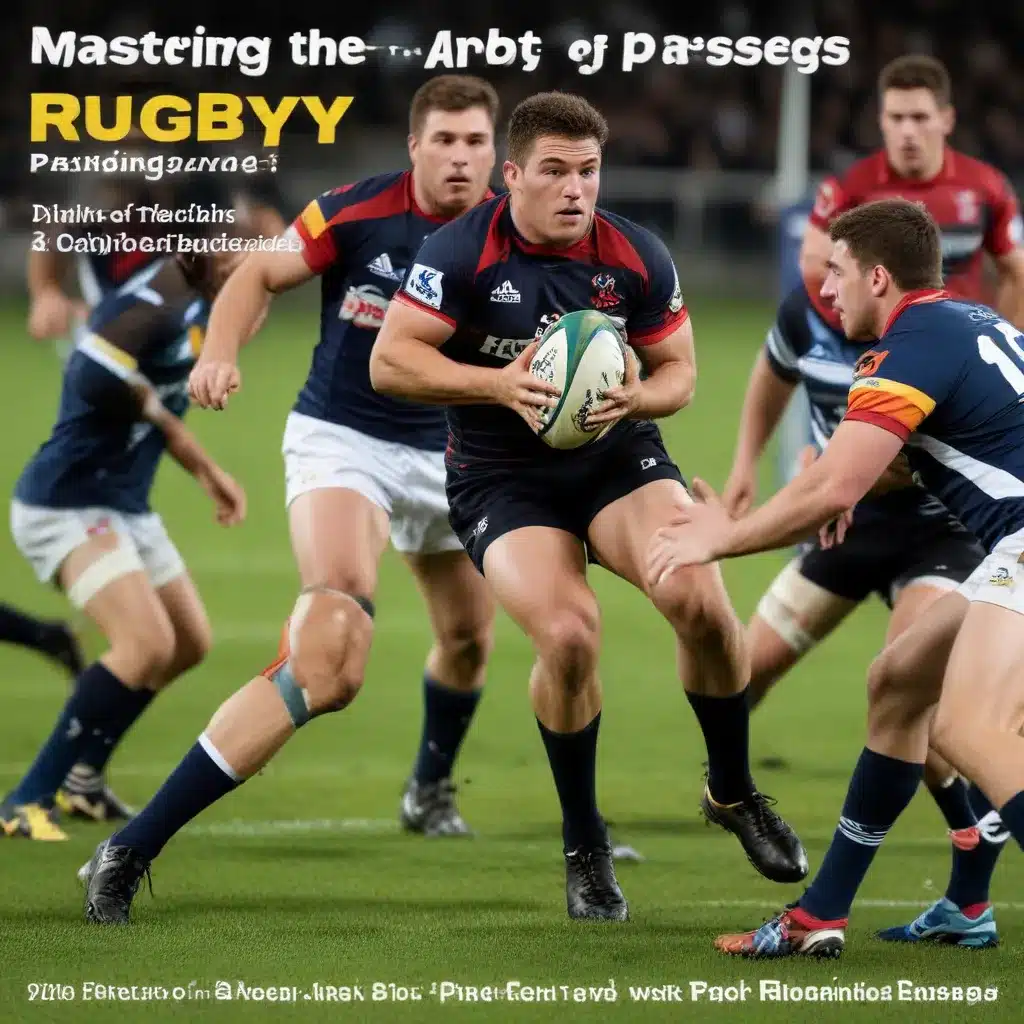
As a seasoned rugby professional, I’ve dedicated my career to honing the fundamental skills that underpin the beautiful game. And when it comes to the art of rugby passing, there is no more crucial technique to master. The ability to deliver crisp, accurate passes is the lifeblood of any successful team – the catalyst that ignites devastating backline moves and creates try-scoring opportunities.
In this comprehensive guide, I’ll share my insights on the essential passing techniques, the mechanics behind efficient passing, and the drills you can use to develop this crucial skill. Whether you’re a young up-and-coming player or an experienced pro looking to refine your game, the strategies and exercises I’m about to outline will help you take your passing prowess to new heights.
Passing Techniques
The foundation of effective passing in rugby lies in a handful of core techniques. Let’s dive into the key passing styles you need to have in your arsenal.
Backhand Pass
The backhand pass is a versatile option that allows you to quickly change the point of attack and stretch the defense. To execute it, rotate your shoulders and hips away from the target, keeping the ball in front of your body. Flick your wrists to impart backspin on the pass, and use your peripheral vision to identify the receiver. This pass is particularly useful when you need to quickly release the ball under pressure.
Spin Pass
The spin pass is a powerful weapon in the modern game. By imparting rotation on the ball, you can generate incredible pace and accuracy, allowing you to thread the needle through tight spaces. To master the spin pass, grip the ball high on the laces and use a whipping motion from your core to spin the ball as you release it. Focus on keeping your elbow tucked and maintaining a squared-up body position.
Pop Pass
The pop pass is an essential tool for creating quick-strike opportunities. By lifting the ball vertically off the ground, you can get the ball into the hands of your support runners in a flash. To perform the pop pass, bend your knees, keep the ball close to your body, and use a short, sharp upward thrust of your arms to lift the ball. This pass is invaluable for keeping the defense off-balance.
Offload
The offload is a game-changing technique that allows you to keep the attack alive even when under pressure. By using quick hands and spatial awareness, you can slip an offload pass to a teammate in the tackle. This not only preserves forward momentum but also forces the defense to react and adjust on the fly. Master the offload by keeping your eyes up, anticipating contact, and timing your release to perfection.
Passing Mechanics
Developing the proper mechanics is crucial for consistent, accurate passing. Let’s examine the key elements that underpin efficient rugby passing.
Grip Positioning
Your grip on the ball is the foundation for effective passing. Position your fingers spread wide across the laces, with your thumbs pointing towards the target. This hand position gives you maximum control and stability, allowing you to impart spin and direction on the pass.
Proper Body Alignment
Maintaining a squared-up body position is essential for generating power and accuracy in your passing. Keep your shoulders parallel to your target, your hips facing the receiver, and your weight evenly distributed. This foundation of stability will enable you to smoothly transfer energy from your core to the ball.
Footwork Patterns
Efficient footwork is the unsung hero of passing proficiency. Develop a repertoire of passing footwork patterns, such as the step-and-pass, pivot-and-pass, and split-step-and-pass. These movements will help you generate momentum, shift your weight, and ensure your body is properly aligned to deliver the perfect pass.
Passing Drills for Skill Development
Now that we’ve covered the technical aspects of passing, let’s explore the drills you can use to hone your skills and translate them to the game.
Stationary Passing Drills
Start with simple stationary passing drills to ingrain the proper mechanics. Set up a line of players facing each other and practice short, accurate passes, focusing on your grip, body position, and follow-through. Gradually increase the distance and incorporate additional movements, such as pivots and evasions.
Moving Passing Drills
Take your passing practice to the next level by incorporating movement. Set up a zigzag or “snake” drill, where players move laterally while executing passes. Add in change-of-direction steps and acceleration to mimic game scenarios. This will help you develop the ability to pass effectively on the move.
Combination Passing Drills
Challenge your decision-making and spatial awareness with combination passing drills. Organize players into small groups and have them execute a sequence of passes, with options to offload, pop, or spin the ball. Vary the starting positions, passing distances, and speed of the drill to recreate the dynamic nature of a rugby match.
Evasion Drills
Incorporate evasion skills into your passing practice to prepare for real-game situations. Set up a gauntlet-style drill with defenders positioned along the passing lane. As you advance down the line, execute a series of passes while evading the defenders. This will sharpen your ability to identify and exploit passing opportunities under pressure.
Rugby Ball Handling and Decision Making
Mastering the technical aspects of passing is only half the battle. To truly excel as a rugby player, you must also develop exceptional ball-handling skills and sound decision-making abilities.
Ball Carrying Techniques
Prioritize maintaining a strong grip on the ball, with your fingers spread wide and your thumbs pointing up. Keep the ball close to your body, using your core to stabilize it, and be mindful of your body position to protect the ball in contact.
Spatial Awareness and Vision
Developing your spatial awareness and peripheral vision is crucial for identifying passing lanes and anticipating your teammates’ movements. Constantly scan the field, keep your head up, and learn to “see” the game unfolding around you. This enhanced situational awareness will allow you to make split-second decisions and deliver the perfect pass.
Teamwork and Passing Cohesion
Finally, no discussion of passing mastery would be complete without acknowledging the importance of teamwork and passing cohesion. Rugby is a fundamentally team-oriented sport, and your ability to seamlessly integrate with your teammates will be a key determinant of your success.
Communicating with Teammates
Effective communication is the glue that holds a team together. Use clear, concise verbal cues to signal your intentions and ensure your teammates are on the same page. Complement this with non-verbal signals, such as eye contact and hand gestures, to enhance your coordination.
Developing Passing Rhythm and Timing
Cultivate a deep understanding of your teammates’ movements and tendencies. Anticipate their next actions, and develop a rhythm and timing in your passing that allows you to deliver the ball to them in stride. This level of synchronization will enable you to catch the defense off-guard and create scoring opportunities.
As you continue your journey as a rugby player, I encourage you to embrace the art of passing with the same passion and dedication that I’ve devoted to it over the years. By mastering the techniques, mechanics, and decision-making skills outlined in this guide, you’ll not only elevate your individual performance but also become a vital cog in your team’s success.
Remember, the true beauty of rugby lies in the team’s collective brilliance. So, take these insights, hit the training pitch, and start weaving your magic. Who knows, perhaps one day you’ll be gracing the hallowed turf of Aberdeenshire RFC and inspiring the next generation of rugby enthusiasts. The possibilities are endless when you command the art of the pass.