
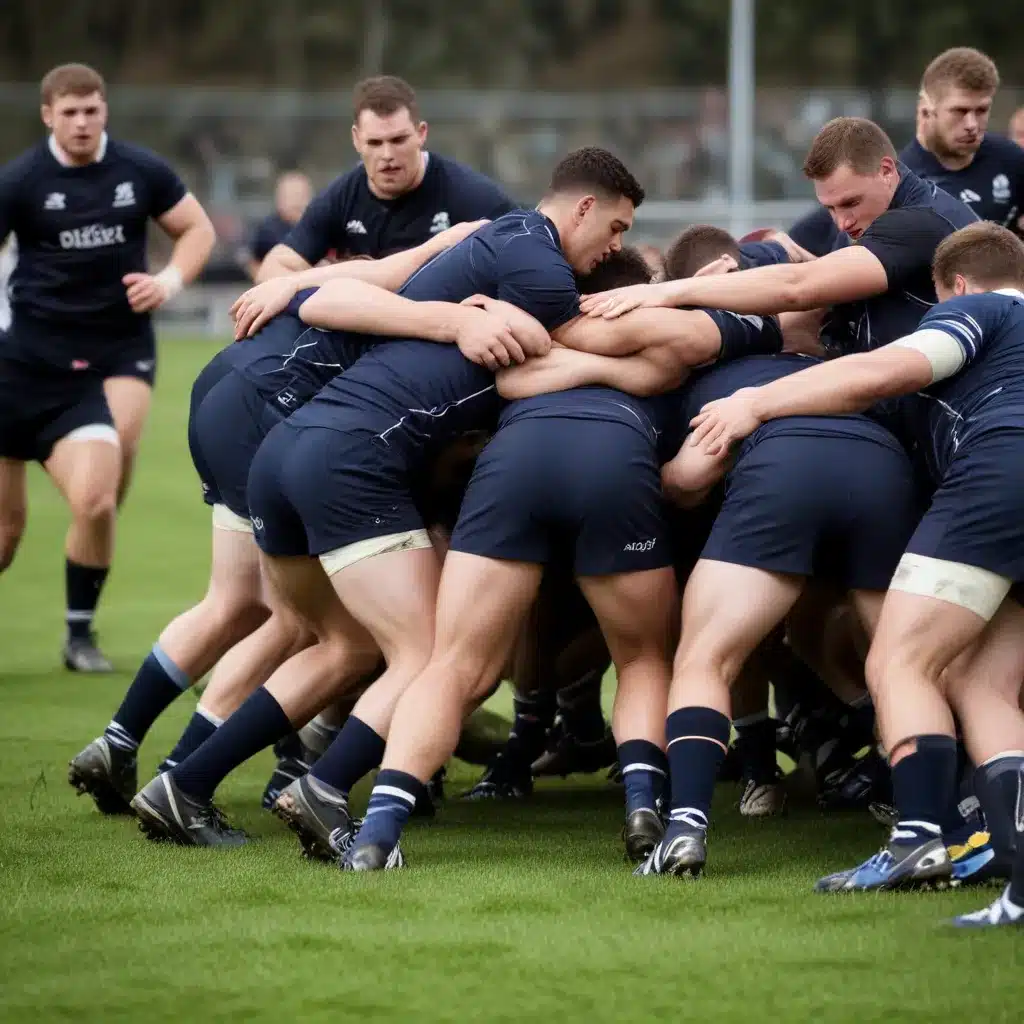
Unlocking the Secrets of Scrum Technique
As a seasoned rugby professional, I’ve seen firsthand the immense impact that scrum technique can have on a team’s fortunes. The scrum is not just a physical contest; it’s a battle of strategy, coordination, and sheer force of will. To truly excel in this crucial aspect of the game, players and coaches must delve deep into the mechanics, biomechanics, and tactical nuances that underpin a dominant scrum.
In this article, we’ll explore the key elements that separate the contenders from the pretenders when it comes to scrum dominance. From perfecting your body positioning and binding techniques to developing the explosive power and muscular endurance required, we’ll leave no stone unturned in our quest to help you and your team reach new heights in the scrum.
Mastering the Fundamentals of Scrum Engagement
The foundation of a successful scrum lies in the engagement phase, where the opposing packs collide in a burst of raw power and technical precision. Proper body positioning is paramount, as it not only allows you to generate maximum force but also helps maintain stability and balance throughout the contest.
As the NCBI review suggests, the ideal scrum position features the head, trunk, and legs aligned parallel to the direction of force. Additionally, a greater angle between the trunk and legs (hip angle) can result in increased force production. This alignment allows players to transmit power efficiently through their kinetic chain, maximizing the impact of their efforts.
When it comes to binding, the front row players play a crucial role. The Counter Scrum Machine highlights the importance of proper binding techniques, as the loose-head prop’s single contact point with the opposing tight-head prop allows for greater range of motion and the potential to generate larger lateral and vertical forces.
Foot placement is another crucial element of scrum engagement. While research has shown that foot position may not significantly impact force generation, a subtle offset between the feet can lead to increased lateral forces, causing the scrum to wheel. Maintaining a parallel foot stance is generally the most effective approach, providing a stable foundation for the players to exert their power.
Generating Explosive Power for the Scrum
Successful scrummaging is not just about technique; it also requires immense physical power and strength. As the NCBI review indicates, scrum force magnitudes increase with playing level, suggesting that the top players and teams possess a distinct physical advantage.
To develop the explosive power needed to dominate in the scrum, a comprehensive strength and conditioning program is essential. This should include exercises that target the primary muscle groups involved, such as the lower back, hips, and legs.
Heavy compound lifts like squats, deadlifts, and power cleans can help build the raw strength required, while plyometric exercises like box jumps and explosive push-presses can develop the necessary power and speed. Incorporating rugby-specific movements, such as sled pushes and scrum machine drills, can also help players transfer their gains in the gym to the playing field.
Equally important is the development of muscular endurance. The NCBI review highlights that scrum contests can last up to 3-4 seconds, with multiple scrum engagements occurring throughout a match. Building the capacity to maintain high levels of force output over this duration is crucial for sustained scrum dominance.
Coordinating the Scrum: Synergy and Timing
While individual power and technique are essential, the scrum is ultimately a team effort. Achieving scrum dominance requires seamless coordination and synchronization between the eight players in the pack.
“Effective scrummaging is a key determinant of team performance,” as noted in the NCBI review. Scrum dominance provides a platform for launching attacking play and disrupting the opponent’s game plan. This underscores the importance of developing strong communication and decision-making within the pack.
Drills that focus on pack cohesion and timing, such as those offered by the Rhino Rugby Scrum Machines, can be invaluable in this regard. By simulating real-game scenarios and encouraging players to anticipate and react to their opponents’ moves, these training tools help develop the crucial instincts and spatial awareness needed to excel in the scrum.
Equally important is the ability to adapt to the dynamic nature of the scrum contest. As the NCBI review highlights, the scrum is a constantly evolving battle, with players required to make constant adjustments to their body positions in response to the increasing forces and changing conditions. Developing this adaptability and decision-making under pressure is a hallmark of the best scrummaging teams.
Enhancing Core Stability for Scrum Dominance
While the lower body may be the primary driver of scrum power, the importance of a strong core cannot be overstated. As the NCBI review notes, the muscles of the back and neck play a crucial role in stabilizing the trunk and transmitting forces through the kinetic chain.
Exercises that target the core, including planks, ab wheel rollouts, and anti-rotation exercises, can help players maintain a strong, stable platform from which to exert their force. Additionally, improving balance and proprioception through single-leg exercises and dynamic stability drills can enhance a player’s ability to maintain optimal body positioning throughout the scrum.
By prioritizing core strength and stability, players can not only generate more power but also reduce the risk of injury. As the NCBI review highlights, the highly active erector spinae group during scrummaging suggests the need for adequate spinal stabilization to prevent potential neck and back issues.
Scrum Technique in Action: Practical Drills and Strategies
Mastering the scrum requires a blend of technical, physical, and tactical prowess. While the fundamentals we’ve discussed are essential, it’s crucial to apply them in a game-realistic context through targeted drills and scenario-based training.
The Rhino Rugby Scrum Machines provide an excellent platform for this, allowing players to practice their engagement techniques, driving mechanics, and team coordination in a controlled, yet challenging environment. By simulating the intense physical demands of a live scrum, these training tools help players develop the muscle memory and decision-making skills needed to dominate on match day.
Complementing this machine-based work with live scrum drills and scrimmage sessions is also crucial. These more dynamic training scenarios teach players to adapt to the constantly evolving nature of the scrum, responding to the shifts in force, body position, and opponent strategies.
Coaches should also consider tailoring their approach to the specific strengths and roles of each player position. As the NCBI review highlights, the front row, second row, and back row players all contribute to the scrum in distinct ways, with the front row generating the most force and the loose forwards providing stability and lateral force.
By addressing these nuances and empowering each player to excel in their specific role, coaches can cultivate a scrum unit that is greater than the sum of its parts, capable of dominating their opponents through a combination of individual excellence and collective synergy.
Embracing the Challenge of Scrum Dominance
The scrum is the heart of rugby union, a physical contest that tests the limits of a player’s technique, strength, and resilience. By mastering the fundamentals, developing explosive power, honing coordination, and enhancing core stability, you and your team can elevate your scrum performance to new heights.
Remember, the path to scrum dominance is not an easy one, but the rewards are immense. A dominant scrum not only provides a platform for attacking play and territorial gain but also instills a sense of confidence and momentum that can propel a team to greatness.
So embrace the challenge, commit to the process, and watch as your scrum becomes the cornerstone of your team’s success. The Aberdeenshire RFC is always on the lookout for players and teams who embody the spirit of excellence in the scrum. If you’re ready to take your game to the next level, we’d be honored to have you join our family of rugby enthusiasts.