
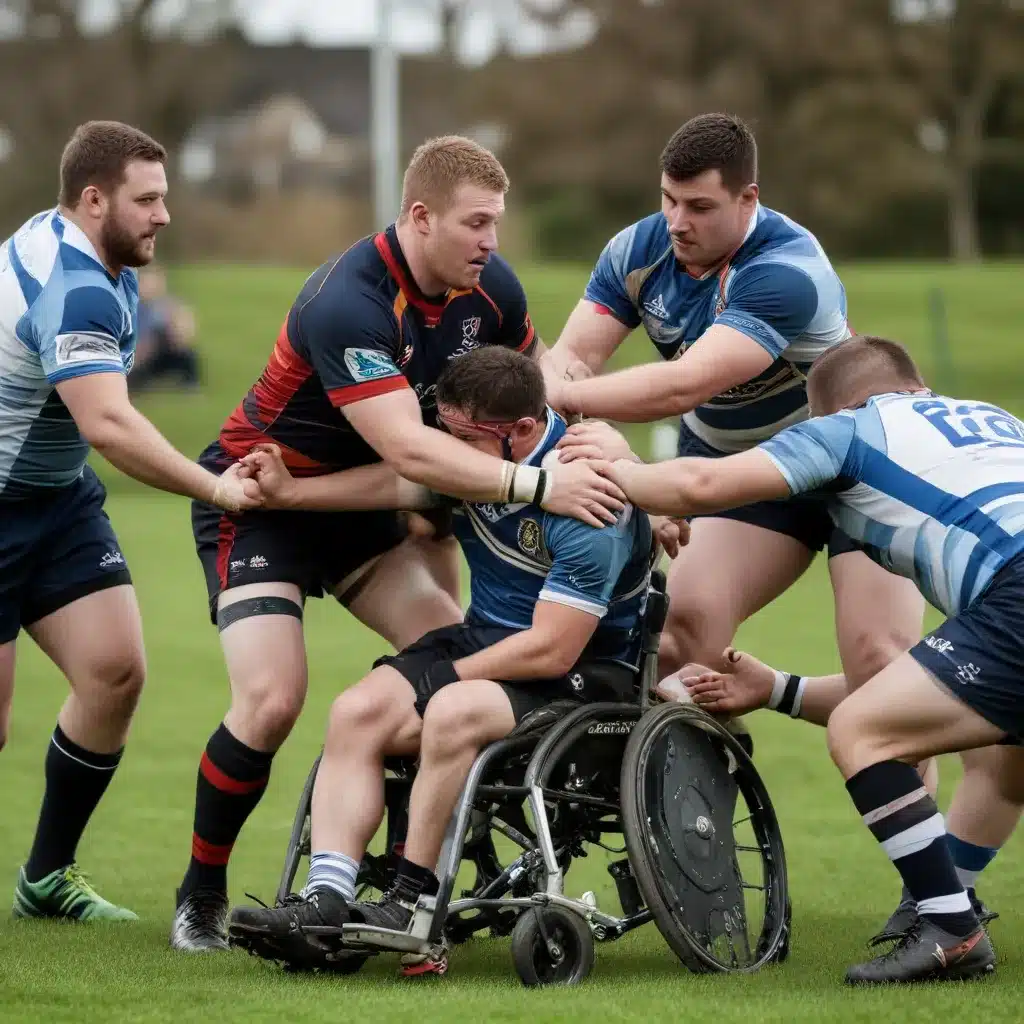
Bridging the Gap: Partnerships for Inclusive Participation
Rugby clubs have long been pillars of their local communities, serving as hubs for fitness, camaraderie, and personal growth. But in recent years, these sports organizations have taken their commitment to community outreach and inclusion to new heights by forging powerful partnerships with disability support organizations. By harnessing the synergies between their respective areas of expertise, rugby clubs and disability advocates are transforming the landscape of accessible and equitable sports participation.
The power of these collaborative endeavors lies in the complementary strengths that each partner brings to the table. Rugby clubs possess deep-rooted connections within their communities, as well as invaluable experience in training, coaching, and facilitating inclusive sports programs. Meanwhile, disability support organizations bring a wealth of knowledge and resources tailored to the unique needs and abilities of individuals with diverse disabilities. Together, they are well-equipped to tackle the multifaceted challenges that have historically prevented widespread disability participation in rugby and other sports.
Disability-Inclusive Sports Initiatives
One of the primary focus areas of these partnerships is addressing accessibility barriers that have long hindered the participation of individuals with disabilities in rugby and other sports. By working closely with disability support organizations, rugby clubs are identifying and removing physical, attitudinal, and systemic obstacles that have excluded this vital segment of the community.
“The collaboration with our local disability support organization has been instrumental in making our rugby club truly accessible,” shares James, the community engagement manager at Aberdeenshire RFC. “We’ve been able to invest in adaptive equipment, redesign our facilities, and train our coaches to deliver specialized, inclusive coaching sessions. The transformation has been remarkable, and we’re seeing more and more individuals with disabilities join our ranks and thrive on the pitch.”
Through these partnerships, rugby clubs are not only enhancing physical accessibility but also fostering a culture of inclusivity and belonging. Disability support organizations provide valuable guidance on inclusive language, sensitivity training, and strategies for creating welcoming, stigma-free environments. By embedding these best practices into their operations, rugby clubs are ensuring that individuals with disabilities feel empowered, respected, and celebrated as integral members of the team.
Empowering Individuals with Disabilities
Community-Driven Outreach
At the heart of these collaborative efforts are the local disability communities themselves. Rugby clubs, in partnership with disability support organizations, are actively engaging with these communities, listening to their needs, and co-designing programs that address their unique challenges and aspirations.
“When we first started this partnership, we realized that many individuals with disabilities in our area were simply unaware of the opportunities available to them in sports like rugby,” explains Sarah, the director of a local disability support organization. “So, we launched a comprehensive outreach campaign, connecting with schools, community centers, and advocacy groups to spread the word and invite people to try our inclusive rugby programs.”
These community-driven initiatives have had a transformative impact, not only in expanding participation but also in fostering a sense of empowerment and self-advocacy among individuals with disabilities. By amplifying diverse voices and centering the perspectives of those with lived experiences, rugby clubs and their partners are challenging deeply ingrained societal biases and paving the way for true inclusion.
Fostering Social Integration
Beyond the playing field, these collaborative efforts are also addressing the broader challenges of social isolation and marginalization faced by many individuals with disabilities. By creating inclusive social and recreational spaces within the rugby club environment, partners are helping to break down stigmas, facilitate meaningful connections, and integrate disabled community members into the fabric of local sports and social networks.
“It’s not just about the rugby itself,” says Tom, a longtime member of the Aberdeenshire RFC. “The real magic happens when we see our players with disabilities forging friendships, supporting each other on and off the pitch, and becoming integral parts of our close-knit rugby family. That sense of belonging and community is truly transformative, both for the individuals and for our club as a whole.”
Disability Advocacy and Representation in Sports
Championing Equity and Diversity
At the core of these collaborative endeavors lies a deep commitment to championing equity and diversity in sports. Rugby clubs and disability support organizations are working in tandem to challenge ableist attitudes, elevate the visibility of disabled athletes, and advocate for systemic changes that foster greater representation and inclusion.
“It’s not enough to simply offer inclusive programs; we need to fundamentally transform the way society views and values the capabilities of individuals with disabilities,” asserts Sarah. “That’s why we’re collaborating with our rugby club partners to spearhead awareness campaigns, challenge outdated stereotypes, and celebrate the remarkable achievements of our disabled athletes.”
Through these joint efforts, rugby clubs are helping to shift the narrative, ensuring that individuals with disabilities are recognized not as passive recipients of support, but as empowered, skilled, and competitive sportspeople who are integral to the fabric of the game.
Grassroots Movements for Change
Alongside their partnerships with disability support organizations, rugby clubs are also actively engaging with grassroots advocacy groups and disability rights movements to amplify their collective voice for change. By aligning their efforts with the broader disability community, these sports organizations are contributing to a groundswell of momentum that is challenging systemic barriers and driving lasting, transformative impact.
“We understand that our work is just one piece of a much larger puzzle,” says James. “That’s why we’re proud to collaborate with local and national disability advocacy groups, pooling our resources and expertise to advocate for more inclusive policies, increased funding for adaptive equipment, and greater representation of disabled athletes in sports leadership roles.”
Sustainable Impact: Measuring Success and Expanding Reach
Evaluating Outcomes
As these collaborative partnerships continue to evolve, rugby clubs and their disability support organization partners are committed to rigorously evaluating their efforts and measuring their tangible impact. By tracking participation rates, collecting feedback from players and community members, and assessing broader social outcomes, they are able to fine-tune their approaches and ensure that their initiatives are truly meeting the needs of the individuals they serve.
“It’s not enough to simply offer inclusive programs; we need to continually assess their effectiveness and look for ways to enhance their reach and impact,” explains Sarah. “That’s why we’ve developed a comprehensive monitoring and evaluation framework, one that allows us to celebrate our successes, identify areas for improvement, and make data-driven decisions about the future of our collaborative efforts.”
Scalable Partnerships
With the proven success of these collaborative initiatives, rugby clubs and disability support organizations are now exploring ways to scale their impact and replicate their models in other communities. By fostering nationwide partnerships, sharing best practices, and advocating for systemic change, they are working to ensure that the transformative power of inclusive sports is accessible to individuals with disabilities across the country.
“Our partnership with the Aberdeenshire RFC has been a game-changer, both for our organization and for the broader disability community,” says Sarah. “Now, we’re in conversation with rugby clubs in other regions, exploring ways to adapt and expand our collaborative approach to create more opportunities for inclusive participation in sports. It’s an exciting and ambitious journey, but one that we’re committed to pursuing with passion and determination.”
As rugby clubs continue to forge these powerful partnerships with disability support organizations, the future of inclusive sports participation looks brighter than ever. Through their shared dedication to empowerment, equity, and community-driven change, these organizations are not only transforming lives on the pitch but also paving the way for a more just, inclusive, and accessible world.