
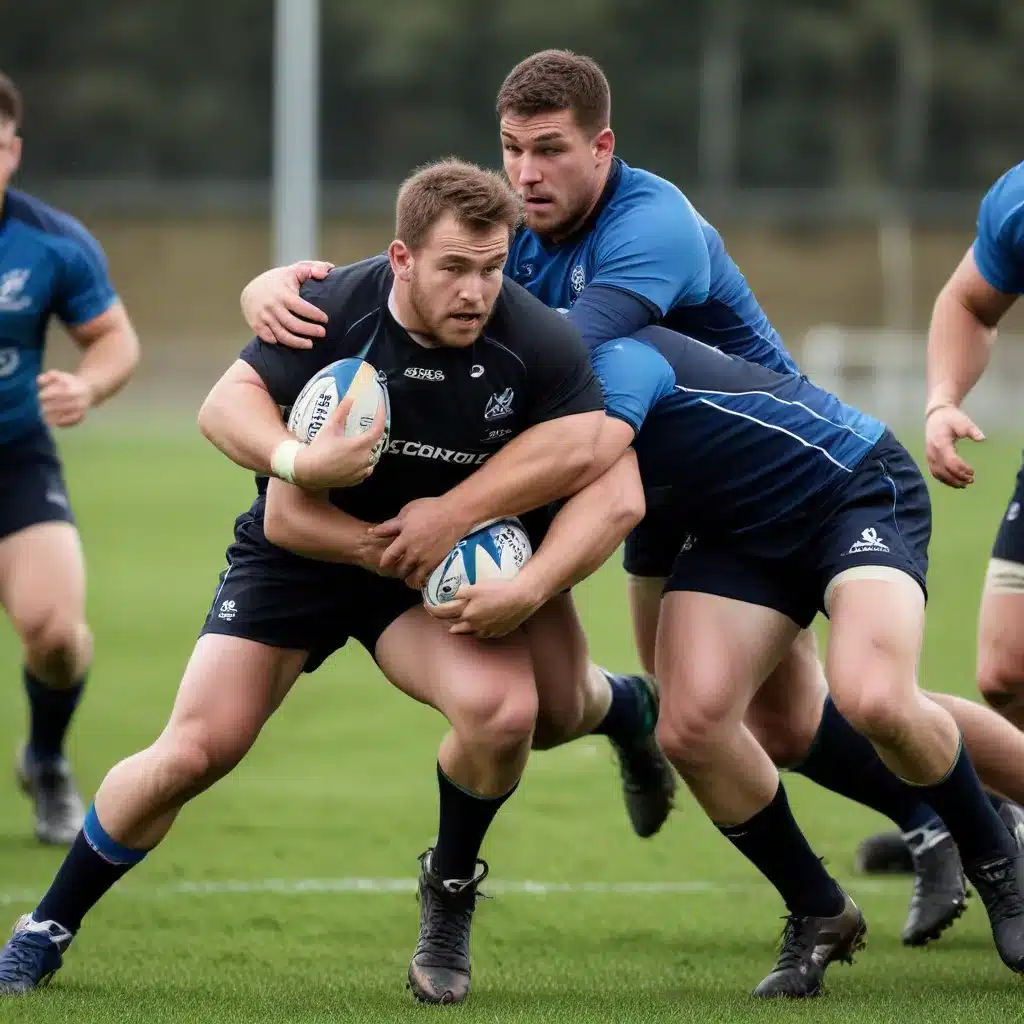
Tackle Biomechanics and Technique
As a seasoned rugby professional, I understand that proper tackle technique is the foundation for effective defense and, crucially, player safety. The biomechanics of a tackle involve a complex interplay of body positioning, force distribution, and momentum management – all of which must be mastered to minimize the risk of injury.
At the core of a safe tackle is maintaining the right body position. The tackler should stay low, with their head up and eyes focused on the target. This allows them to generate power from their legs and hips, rather than relying solely on upper body strength. Keeping the head behind the ball carrier is also essential, as it protects the neck and prevents the tackler from leading with their head.
Force distribution is key to reducing the impact on both players. By using the shoulder as the primary point of contact, rather than the head, the tackler can disperse the force more evenly. This is where technique becomes paramount – the tackler must time their approach, brace their core, and use proper leverage to deliver an effective yet controlled hit.
Momentum management is the final piece of the puzzle. Ideally, the tackler should aim to stop the ball carrier’s forward progress, rather than trying to knock them backwards. This is achieved by driving through the contact with powerful leg drive, while simultaneously wrapping the arms to secure the tackle. The rolling motion at the end of the tackle also helps to dissipate the forces involved.
Player Training and Coaching
Developing effective tackle technique requires a multi-faceted approach to training and coaching. At Aberdeenshire RFC, we believe in tailoring our programs to the individual needs of each player, as no two athletes are exactly the same.
Our training sessions often start with fundamental drills that focus on body positioning, shoulder placement, and timing. We might have players practice tracking the ball carrier, approaching with the correct angle, and executing a controlled shoulder-first contact. These basic skills form the foundation for more complex tackle scenarios.
As players progress, we introduce game-like situations that challenge them to think and react quickly. We might set up a narrow channel, for example, forcing the tackler to make a decisive move and maintain their technique under pressure. Or we might have the ball carrier employ various evasion tactics, requiring the tackler to adjust accordingly.
Throughout this process, our coaching staff provides constant feedback and guidance. We use video analysis to pinpoint areas for improvement, and work closely with each player to develop personalized drills and techniques. The goal is to ingrain the proper mechanics so that they become second nature, even in the heat of a match.
Importantly, we also emphasize the importance of technique over pure physicality. While size and strength are certainly assets, they are no substitute for sound fundamentals. A smaller, technically proficient tackler can often be more effective and safer than a larger player who relies on brute force.
Equipment and Rule Considerations
In recent years, there has been a growing emphasis on the role of equipment and rules in enhancing rugby safety. At Aberdeenshire RFC, we stay up-to-date with the latest developments in this area and work closely with our players to ensure they are using the right gear and abiding by the appropriate regulations.
One key area of focus is protective equipment, such as rugby helmets and shoulder pads. While these can provide an extra layer of cushioning, it’s important to remember that they do not make the game completely safe. In fact, some research suggests that the presence of protective gear can actually encourage riskier behavior, as players may feel more invincible.
As such, we emphasize the importance of proper technique above all else. We work with our players to ensure they are using their equipment correctly and not relying on it as a crutch. We also closely monitor any rule changes or updates, such as adjustments to the legal tackle height, and ensure our players understand and adhere to them.
Interestingly, some of the most promising developments in this space have come from technological advancements. For example, some teams are experimenting with wearable sensors that can track impact forces and provide real-time feedback to coaches and medical staff. This kind of data-driven approach can help us identify high-risk scenarios and tailor our training and rehabilitation protocols accordingly.
Injury Epidemiology and Risk Factors
While the tackle is a fundamental part of rugby, it also carries a significant risk of injury. At Aberdeenshire RFC, we closely monitor the latest research on tackle-related injuries and work to identify the key risk factors that our players need to be aware of.
One of the most common and concerning injuries in rugby is concussion. Studies have shown that the tackler is actually at a higher risk of sustaining a concussion than the ball carrier, often due to the position of their head and the forces involved. Factors like an upright body position, high tackle height, and head-to-head contact can all significantly increase the likelihood of a concussion.
Other common tackle-related injuries include shoulder dislocations, knee ligament sprains, and neck strains. These can occur when players are unable to maintain proper technique and control during the contact phase of the tackle.
To mitigate these risks, we work closely with our sports medicine team to develop comprehensive injury prevention strategies. This might involve a combination of targeted training, rule enforcement, and equipment modifications. For example, we might focus on drills that reinforce the importance of keeping the head behind the ball carrier, or we might advocate for stricter penalties on high tackles.
Importantly, we also recognize that injury risk can vary depending on the player’s position, experience level, and physical attributes. As such, our approach is highly individualized, with each athlete receiving a tailored program to address their specific needs and vulnerabilities.
Sports Medicine and Rehabilitation Approaches
When an injury does occur, the team at Aberdeenshire RFC is well-equipped to provide the necessary sports medicine and rehabilitation support. Our multidisciplinary staff, which includes physicians, physiotherapists, and athletic trainers, work closely to ensure a seamless and effective recovery process.
The first step is a comprehensive assessment to determine the nature and severity of the injury. This might involve diagnostic imaging, functional testing, and a thorough evaluation of the player’s symptoms. Based on these findings, our team can develop a personalized treatment plan that addresses the specific needs of the individual.
In the case of a concussion, for example, our protocol involves a gradual, step-wise return to play. This starts with complete cognitive and physical rest, followed by a carefully monitored progression of light exercise, contact drills, and ultimately, full participation in training and matches. Throughout this process, we closely monitor the player’s symptoms and work to ensure a safe and successful return to the field.
For other tackle-related injuries, such as shoulder dislocations or knee sprains, our rehabilitation programs focus on restoring full range of motion, strength, and functional stability. This might involve a combination of manual therapy, targeted exercises, and sport-specific drills. We also work closely with the player to ensure they understand the importance of adhering to the rehabilitation plan and gradually reintegrating into team activities.
Importantly, our approach is not just about treating the immediate injury, but also about identifying and addressing any underlying factors that may have contributed to the problem. This might involve addressing muscular imbalances, improving movement patterns, or optimizing the player’s overall physical conditioning.
Collaboration and Multidisciplinary Efforts
At Aberdeenshire RFC, we firmly believe that enhancing rugby tackle technique and reducing injury risk is a collaborative effort, requiring the expertise and engagement of a diverse range of stakeholders.
First and foremost, we work closely with our players, fostering a culture of open communication and trust. We encourage our athletes to provide feedback on their experiences, share their concerns, and actively participate in the development of our safety protocols. After all, they are the ones who are directly impacted by the decisions we make.
We also maintain strong partnerships with sports medicine professionals, including physicians, physiotherapists, and athletic trainers. These experts provide invaluable insights into the latest research, treatment modalities, and rehabilitation strategies. By integrating their knowledge and expertise into our training and coaching programs, we can ensure that our players are receiving the highest level of care and support.
But our efforts don’t stop there. We also collaborate closely with rugby governing bodies, such as the Scottish Rugby Union, to stay informed about rule changes, equipment regulations, and emerging trends in the sport. This allows us to proactively adapt our approach and ensure that our players are always operating within the appropriate guidelines.
Additionally, we actively engage with the broader rugby community, sharing our insights and best practices with other clubs and coaches. Through initiatives like workshops, webinars, and mentorship programs, we strive to elevate the standard of tackle technique and safety across the sport.
Ultimately, our goal is to foster a holistic, multidisciplinary approach to player safety and performance. By bringing together experts from various fields, we can develop comprehensive, evidence-based strategies that address the complex challenges facing rugby players at all levels of the game.
Conclusion
As a seasoned rugby professional, I understand the critical importance of enhancing tackle technique to improve player safety and reduce the risk of injury. By focusing on the biomechanics of a safe and effective tackle, implementing comprehensive training and coaching programs, and staying informed about the latest developments in equipment and regulations, we can create a culture of safety that empowers our players to perform at their best while prioritizing their well-being.
At Aberdeenshire RFC, we are committed to leading the way in this endeavor, collaborating with a diverse team of experts and stakeholders to develop innovative, evidence-based solutions. Through our multidisciplinary approach, we strive to not only protect our own players, but to also serve as a model for the broader rugby community, helping to elevate the standard of safety and performance across the sport.
So, whether you’re a player, coach, or rugby enthusiast, I encourage you to join us in this pursuit of excellence. Together, we can redefine the way rugby is played, ensuring that the thrill of the game is matched by a steadfast commitment to player safety and well-being. By mastering the art of the tackle, we can unlock the full potential of our sport and inspire the next generation of rugby heroes.