
Rugby Line Break Fundamentals
As a seasoned rugby professional, I’ve witnessed firsthand the transformative impact of effective line breaks on the outcome of matches. The ability to consistently create and exploit gaps in the defensive line is a hallmark of the world’s best attacking teams. After all, as the old rugby adage goes, “try-scoring is the currency of the game.”
Importance of Line Breaks in Rugby
Line breaks are the catalyst for generating clean, quick ball and establishing momentum. Teams that excel at this fundamental skill are far more likely to dominate possession, territory, and ultimately, the scoreboard. Analyze the statistics of any top-tier rugby team, and you’ll find a clear correlation between their line break success and their overall try-scoring prowess.
Factors Influencing Line Break Success
While raw physical attributes like pace, power, and agility certainly play a role, the true mastery of line break ability stems from the seamless integration of footwork, timing, and decision-making. It’s the culmination of these technical and cognitive skills that allows players to identify and exploit defensive vulnerabilities, creating the space and time necessary to cross the gain line.
Footwork Essentials for Line Breaks
Footwork Techniques
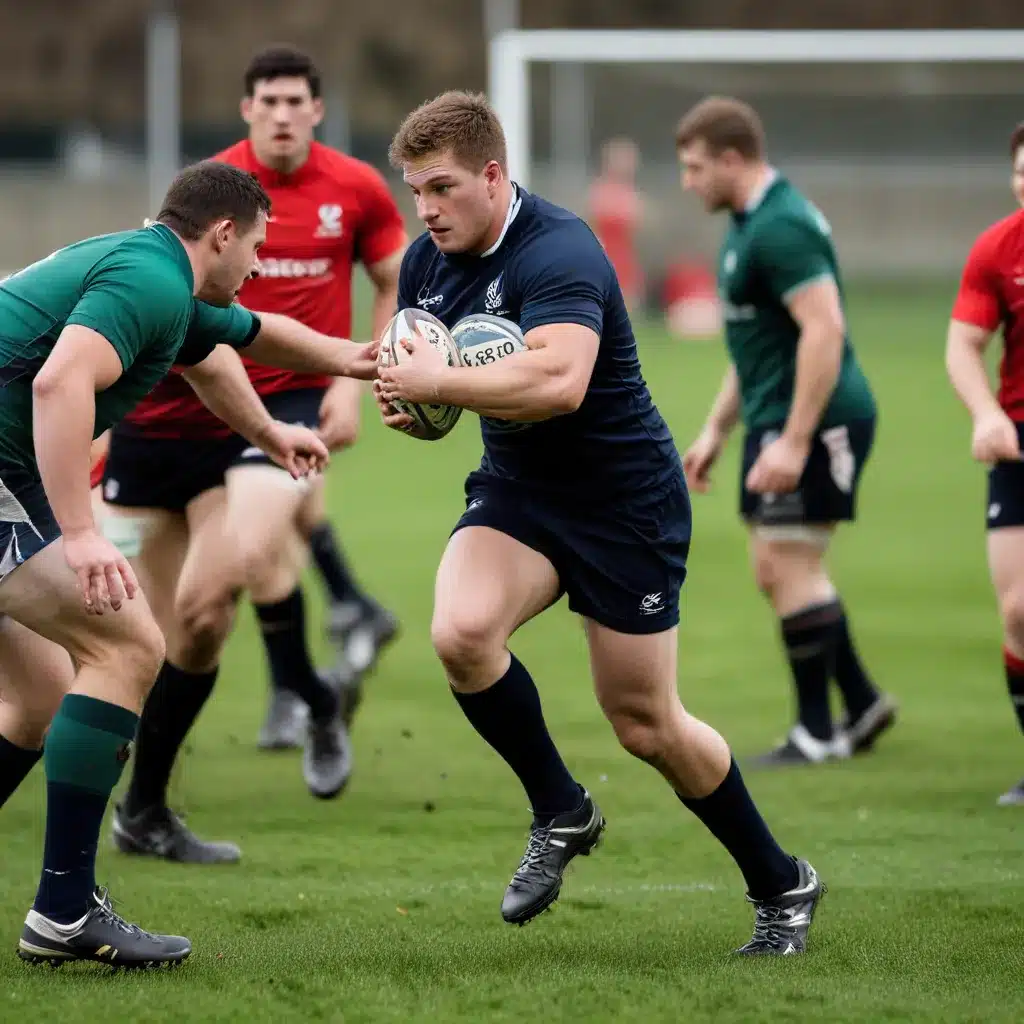
Effective footwork is the foundation upon which dynamic line breaks are built. Players must develop a comprehensive understanding of various footwork techniques, from the classic step-and-go to the more deceptive double-step or shoulder-fake. The ability to shift weight, change direction, and accelerate explosively is critical to evading would-be tacklers.
Foot Positioning and Weight Transfer
Equally important is the player’s awareness of their foot positioning and weight distribution. Maintaining a balanced, athletic stance with the feet shoulder-width apart and the weight evenly distributed allows for rapid changes of direction and the generation of explosive power. Subtle adjustments in foot placement and weight shift can spell the difference between a successful line break and a stifled attack.
Timing and Rhythm for Line Breaks
Recognizing Defensive Cues
Mastering the timing of a line break is a nuanced skill that separates the good from the great. Players must develop an acute awareness of defensive patterns, body language, and positional cues. By accurately reading the defense, they can time their acceleration and evasive maneuvers to coincide with moments of vulnerability, catching the opposition off guard.
Coordinating Footwork and Ball Handling
Equally crucial is the player’s ability to seamlessly coordinate their footwork with their ball handling. The rhythm and flow of a line break is greatly influenced by the player’s capacity to maintain control of the ball while executing dynamic movements. Synchronized foot and hand movements allow for a more natural, fluid progression of the attacking play.
Decision-Making for Line Breaks
Identifying Defensive Weaknesses
The ability to make split-second decisions is perhaps the most challenging aspect of line break execution. Players must quickly scan the defense, identify potential gaps or mismatches, and select the optimal path of attack. This requires an innate understanding of defensive systems and the ability to anticipate how the opposition will react to the developing situation.
Selecting the Optimal Line Break Option
Once a vulnerability has been identified, the player must then decide whether to exploit it themselves or create an opportunity for a supporting runner. This decision-making process is further complicated by factors such as the positioning of teammates, the defensive alignment, and the game’s tactical demands. The most effective line breakers are those who can seamlessly integrate their personal skill set with the team’s overall attacking strategy.
Spatial Awareness and Field Vision
Scanning the Defensive Line
Peripheral vision and field awareness are critical components of successful line break creation. Players must develop the ability to scan the defensive line, identifying potential gaps and opportunities before they materialize. This allows them to time their movements and decision-making with precision, staying one step ahead of the defense.
Anticipating Defensive Adjustments
An equally important skill is the capacity to anticipate how the defense will react to the developing situation. Experienced line breakers can often predict how the opposition will adjust their positioning and alignment in response to the attacking play, enabling them to exploit those adjustments for maximum gain.
Attacking Evasion and Acceleration
Changing Pace and Direction
The most effective line breakers possess the ability to seamlessly change pace and direction, keeping the defense off balance. This might involve a subtle shift in weight, a sudden acceleration, or an unexpected change of angle. By varying their running lines and tempo, players can create space and force the defense to make split-second decisions.
Explosive First-Step Acceleration
Explosive first-step acceleration is a hallmark of the world’s best line breakers. The capacity to rapidly shift from a static or slow-moving position to a full-speed sprint can create immediate separation from would-be tacklers. This explosive power, combined with agile footwork, allows players to burst through gaps and maintain momentum.
Skill Integration and Practice
Drills for Footwork, Timing, and Decision-Making
Developing the intricate skills required for effective line breaks demands a comprehensive and multifaceted training approach. Coaches should incorporate a variety of drills that challenge players’ footwork, timing, and decision-making abilities. From cone drills and ladder work to live, game-like scenarios, the goal is to build muscle memory and instinctive reactions.
Game-Specific Line Break Scenarios
Ultimately, the true test of a player’s line break abilities comes in the heat of match play. Coaches should design training sessions that closely mirror the pressures and variables of the live game environment. This might include conditioned games, positional play, or set-piece rehearsals that challenge players to identify and exploit defensive weaknesses in a dynamic, realistic context.
Psychological Aspects of Line Breaks
Confidence and Composure
In addition to the technical and tactical aspects of line break execution, the psychological dimension cannot be overlooked. The most successful line breakers possess a steadfast confidence in their abilities, coupled with the composure to make clear-headed decisions under intense pressure. Developing this mental resilience is just as crucial as honing physical skills.
Adapting to Defensive Pressure
The ability to remain calm and composed in the face of staunch defensive pressure is a hallmark of the game’s elite. Line breakers must be able to maintain their focus, trust their training, and adapt their approach as the opposition adjusts. This mental agility, combined with their technical mastery, allows them to consistently create and capitalize on opportunities.
At the end of the day, the creation of effective line breaks is a multifaceted endeavor that requires a deep understanding of the game’s nuances, tireless dedication to skill development, and the mental fortitude to execute under intense pressure. By embracing this holistic approach, players and teams can unlock the true potential of their attacking prowess and dominate the gain line. As the old rugby saying goes, “attack wins matches, but defense wins championships.” The Aberdeenshire RFC is committed to developing well-rounded, technically proficient players who can consistently make the difference with their line break ability. Our comprehensive training program, rooted in the principles outlined above, is designed to give our players the competitive edge they need to succeed at the highest levels of the game.