
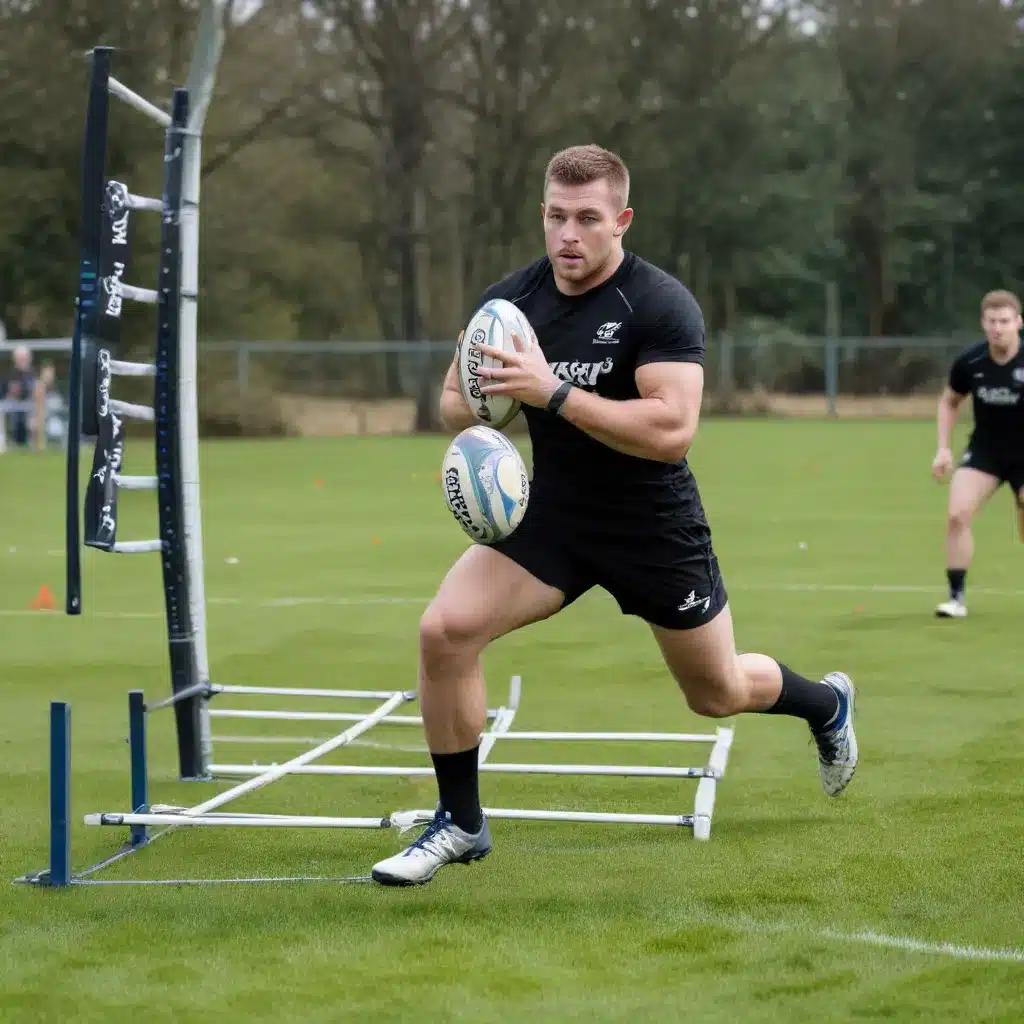
Rugby Agility: The Foundation for Competitive Edge
As a seasoned rugby professional, I can confidently say that agility is a cornerstone of the sport. Whether you’re a forward powering through the opposition’s defense or a nimble back weaving through traffic, the ability to change direction, accelerate, and react quickly is essential for success on the pitch. In this comprehensive guide, we’ll delve into the world of ladder drills and footwork, two powerful tools that can elevate your team’s agility and give you a competitive edge.
Importance of Agility in Rugby
Agility is not just about speed; it’s about the dynamic interplay of coordination, quickness, and the ability to change direction with precision. A player who can anticipate the flow of the game, make split-second decisions, and execute sharp movements is a true asset to any rugby squad. Agile players can create space, evade tackles, and seamlessly transition between attack and defense. In a game where split-second reactions and unpredictable scenarios are the norm, agility is the foundation upon which elite performance is built.
Understanding Agility Components
At the heart of agility are three key elements: coordination, quickness, and speed. Coordination refers to the ability to smoothly and efficiently execute complex movements, while quickness encompasses the rapidity of those movements. Speed, of course, is the raw physical capacity to cover ground quickly. These components work in harmony, and developing them through targeted training can unlock a player’s true agility potential.
Ladder Drills: Unlocking Explosive Footwork
One of the most effective tools for enhancing rugby agility is the humble agility ladder. These versatile training aids can help players cultivate the coordination, quickness, and footwork necessary to thrive in the dynamic environment of the game.
Ladder Drill Fundamentals
Ladder drills come in a variety of forms, each with its own unique benefits. From classic in-and-out patterns to lateral shuffles and zig-zag movements, these drills challenge players to precisely place their feet within the rungs of the ladder, developing rapid, coordinated footwork. The key to effective ladder work lies in maintaining proper technique – keep the body low, the core engaged, and the steps quick and crisp. Focusing on these fundamentals will help players build a solid foundation for more advanced agility exercises.
Ladder Drill Variations
As players progress, incorporating more complex ladder drill variations can further refine their agility. Lateral movements, such as side-to-side shuffles, challenge players to shift their weight and change direction seamlessly. Forward and backward drills cultivate the ability to accelerate, decelerate, and react on the fly. Combining these movements into dynamic, multi-directional drills can simulate the unpredictable nature of rugby, preparing players to adapt and thrive in the heat of competition.
Integrating Ladder Drills into Rugby Training
Ladder drills should be a regular part of any rugby training regimen, but their integration requires a thoughtful approach. Incorporate them into warm-ups to activate the nervous system and prepare the body for more intense activities. As players become more adept, gradually increase the complexity and intensity of the drills, challenging them to push the boundaries of their agility. Remember, the ladder is not a magic solution, but rather a valuable tool in the broader pursuit of developing well-rounded, agile rugby players.
Footwork Mastery: The Secret to Agile Rugby
While ladder drills provide an excellent foundation for agility, the true secret to unlocking peak performance lies in the mastery of rugby-specific footwork. By honing their foot positioning, weight distribution, and balance, players can develop the necessary foundation to execute dynamic, game-changing movements.
Footwork Fundamentals
Proper foot positioning is essential for agile rugby play. Players should maintain a balanced, athletic stance, with their feet shoulder-width apart and their weight evenly distributed. This solid foundation allows for smooth lateral movements, rapid acceleration, and efficient deceleration. Developing a keen awareness of weight transfer and balance is also crucial, as players must be able to seamlessly shift their weight and maintain stability during high-intensity maneuvers.
Footwork Drills and Exercises
Incorporating dedicated footwork drills into your training regimen can significantly enhance a player’s agility. Cone drills that require lateral shuffles, zig-zags, and change of direction movements challenge players to be nimble and responsive. Hop and skip drills, on the other hand, develop explosive power and the ability to change pace quickly. By consistently practicing these exercises, players can ingrain the fundamental footwork patterns that will serve them well on the rugby pitch.
Enhancing Footwork for Rugby-Specific Movements
While the fundamentals of footwork are essential, it’s crucial to apply them to rugby-specific movements and scenarios. Mastering the art of the sidestep, for example, allows players to evade defenders and create space. Honing the ability to rapidly accelerate and decelerate is equally important, enabling players to change direction and burst through gaps in the defense. By tailoring footwork drills to replicate the demands of the game, players can develop the agility and decision-making skills required to thrive in the dynamic, high-stakes environment of rugby.
Optimizing Rugby Agility: Combining Ladder Drills and Footwork
The true power of agility training in rugby lies in the synergistic integration of ladder drills and footwork-focused exercises. By blending these complementary approaches, players can develop a comprehensive set of skills that translate directly to improved performance on the field.
Integrating Ladder Drills and Footwork
Designing drills that seamlessly combine ladder work and footwork-based movements can create a highly effective training experience. For example, players might start by navigating a ladder with quick, precise steps, then transition into a series of lateral shuffles, sidesteps, and change of direction maneuvers. This type of integrated training not only develops coordination and quickness but also reinforces the application of these skills in game-like scenarios. By gradually increasing the complexity and intensity of these combined drills, players can build a robust agility foundation that will serve them well throughout their rugby careers.
Tailoring Training to Player Positions
It’s important to recognize that the specific agility requirements for each rugby position may vary. Forwards, for instance, may need to focus more on powerful, explosive movements, while backs might require greater emphasis on rapid acceleration and change of direction. By tailoring the ladder drills and footwork exercises to the demands of each position, coaches can ensure that their players are developing the agility skills most relevant to their roles on the pitch. This targeted approach allows for more efficient and effective training, ultimately leading to enhanced individual and team performance.
The Aberdeenshire RFC coaching staff is committed to empowering our players with the tools and knowledge necessary to excel. By embracing the power of ladder drills and footwork mastery, we can unlock the full potential of our team’s agility, giving us a decisive edge in the highly competitive world of rugby. Remember, agility is not just a physical attribute – it’s a mindset, a way of thinking and moving that can transform a good player into a great one. Embrace the challenges, trust the process, and watch as your team’s agility soars to new heights.