
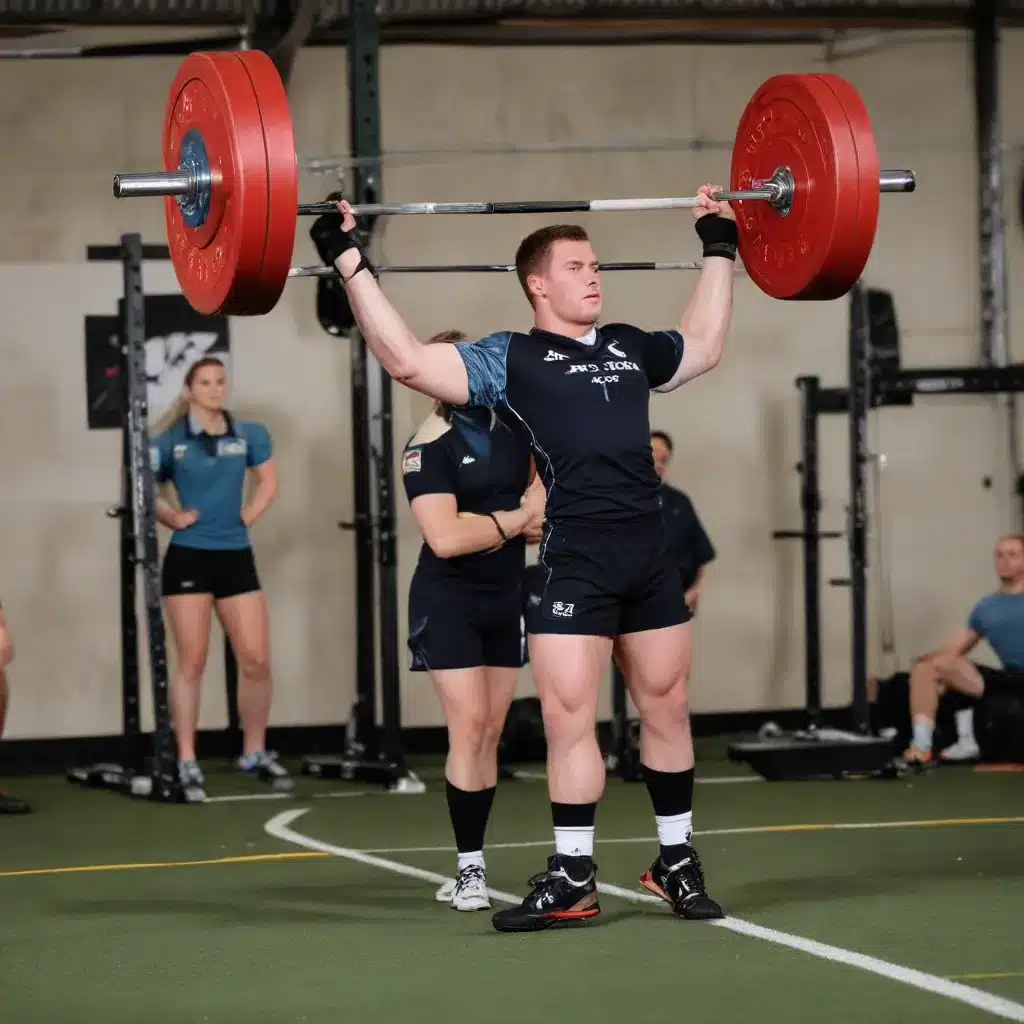
Developing Rugby-Specific Power with Olympic Lifting Variations
As a seasoned rugby professional, I’ve seen firsthand the importance of developing sport-specific power for optimal performance on the pitch. While the classic Olympic lifts – the snatch and clean and jerk – garner plenty of attention in the strength and conditioning world, their direct applicability to rugby is often overemphasized. Instead, I believe carefully selected variations and derivatives of these movements can be far more effective for enhancing the explosive qualities needed to excel in our beloved sport.
The Importance of Power in Rugby
Rugby is a physically demanding game that requires players to generate immense amounts of force, often in short bursts. Whether it’s driving through contact, exploding off the line, or propelling yourself into a tackle, the ability to rapidly produce high levels of power is paramount. Simply being strong isn’t enough – we need to be able to translate that strength into dynamic, rugby-specific movement patterns.
The best rugby players are not necessarily the biggest or the most muscular; rather, they possess an exceptional capacity to produce force quickly and efficiently. This power output underpins essential skills like sprinting, changing direction, and winning collisions. It’s the foundation that allows us to dominate the gain line, outpace our opponents, and impose our will on the game.
Translating Olympic Lifts to Rugby-Specific Movements
While the snatch, clean, and jerk are impressive displays of total-body power, the mechanical demands of these lifts don’t always align perfectly with the movement patterns required in rugby. The vertical orientation and high velocity of the classic Olympic lifts, while phenomenal for developing general strength and power, don’t necessarily carry over in a direct way to the more horizontal, rugby-specific efforts we need to excel.
Instead, I believe we should focus on variations and derivatives of the Olympic lifts that more closely mimic the physical qualities and movement demands of our sport. Exercises like power cleans, hang cleans, and split jerks allow us to develop explosive strength and power while maintaining a more rugby-specific body position and force application.
Olympic Lifting Variations for Rugby
Power Cleans: The power clean is a fantastic exercise for developing lower-body power and triple extension – critical attributes for accelerating, changing direction, and winning collisions. Unlike the full clean, the power clean limits the range of motion and allows the athlete to maintain a more upright torso position, better simulating the body positioning required in rugby.
Hang Cleans: Starting the clean from the hang position, rather than the floor, places a greater emphasis on the second pull and absorption phase of the lift. This trains the athlete to rapidly apply force and receive the bar in a strong, stable athletic stance – a key requirement for many rugby-specific movements.
Split Jerks: While the overhead squat of the traditional clean and jerk is less applicable to rugby, the split jerk allows us to develop explosive triple extension and overhead stability without the demanding front rack position. The split stance also more closely mirrors the body positioning required for many rugby skills.
Integrating Olympic Lifts into Rugby Training
When integrating these Olympic lifting variations into a rugby training program, it’s important to thoughtfully consider the periodization and programming. We want to ensure we’re developing the appropriate physical qualities at the right times to support the tactical and technical demands of the sport.
During the off-season or pre-season period, the focus may be on building a strong foundational base of strength and power. This is where we can really emphasize the classic Olympic lifts and their derivatives, progressively overloading the athletes and allowing them to master the necessary technique.
As we transition closer to the competitive season, the training emphasis should shift more toward power development and rugby-specific application. Here, we might reduce the overall volume of Olympic lifting while maintaining or even increasing the intensity. Variations like power cleans, hang cleans, and split jerks become the primary focus, allowing us to translate that raw power into the dynamic movements required on the pitch.
Throughout this process, meticulous attention to technique is critical. The Olympic lifts and their derivatives are complex, multi-joint movements that require substantial skill development. Coaches must ensure athletes demonstrate mastery of the fundamental positions and patterns before progressively increasing the load or intensity.
Supplementary Exercises for Rugby Power
While the Olympic lifting variations are a cornerstone of our rugby power development, they shouldn’t exist in isolation. We also need to incorporate complementary exercises that target other crucial physical attributes.
Plyometrics: Explosive, reactive exercises like box jumps, hurdle hops, and bounding drills help develop the rapid force production and stretch-shortening cycle capabilities that translate directly to rugby performance.
Ballistic Exercises: Exercises like medicine ball throws, kettlebell swings, and explosive push presses build powerful, rugby-specific movement patterns without the overhead complexity of the Olympic lifts.
Core and Stability Work: Developing a robust core and efficient movement patterns is essential for transmitting force through the kinetic chain and maintaining structural integrity during the physical demands of rugby. Exercises like anti-rotational holds, pallof presses, and single-leg variations should be staples in the program.
Monitoring and Evaluating Rugby-Specific Power
To ensure our rugby power development efforts are paying dividends, we need to implement a comprehensive monitoring and evaluation system. Regular performance testing, such as vertical jumps, broad jumps, and sprints, can provide valuable insights into the athlete’s physical capabilities and guide future programming.
Additionally, we should consider more rugby-specific assessments, like tackle or contact power testing, to directly measure the transfer of our training to on-field performance. Tracking metrics like ball-carry distance, tackle completion rates, and line-break statistics can also help us quantify the real-world impact of our power development initiatives.
By closely monitoring our athletes’ progress and making data-driven adjustments to the training plan, we can optimize the development of rugby-specific power and ensure our players are performing at their absolute best when it matters most.
Injury Prevention and Recovery Strategies
Of course, as we push our athletes to new heights of power and performance, we must also be diligent in managing their physical well-being. Comprehensive mobility, flexibility, and recovery protocols are essential to mitigate the risk of injury and support long-term athletic development.
Dedicating time to thorough warm-ups, cool-downs, and active recovery sessions can help our players maintain optimal joint range of motion, muscle balance, and neuromuscular coordination. Incorporating modalities like foam rolling, targeted stretching, and light aerobic work can also enhance the body’s ability to adapt and recover between training sessions and matches.
By striking the right balance between training stimulus and recovery, we can help our rugby players reach new levels of power and performance while keeping them healthy, durable, and ready to dominate on the pitch.
As a seasoned rugby professional, I’ve seen firsthand the transformative impact that targeted power development can have on an athlete’s game. By thoughtfully integrating Olympic lifting variations, complementary exercises, and comprehensive monitoring and recovery strategies, we can empower our players to become the most explosive, dynamic, and unstoppable versions of themselves. It’s an ongoing journey, but one that is truly rewarding to witness and be a part of. I encourage all rugby coaches and athletes to embrace this approach and unlock the full potential of their rugby-specific power.