
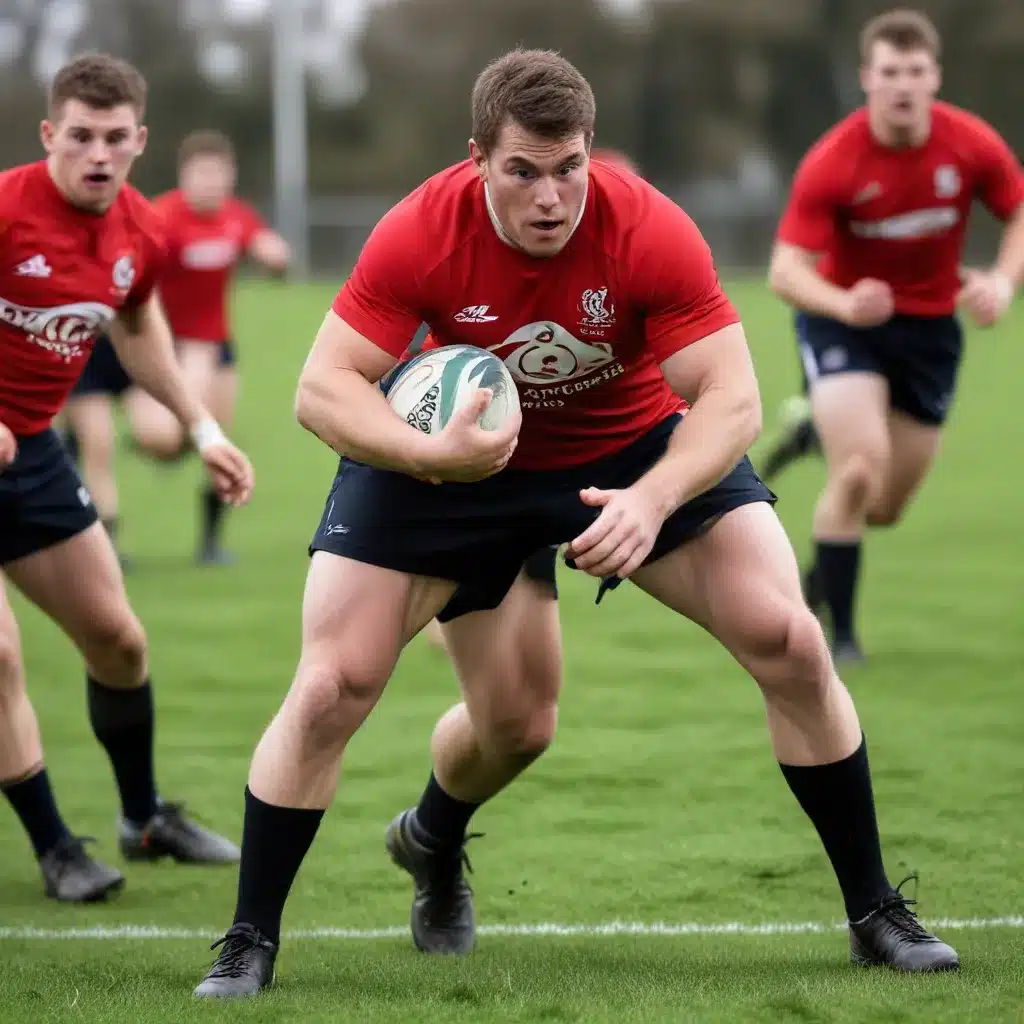
Rugby Player Attributes
As a seasoned rugby professional, I’ve spent years honing my understanding of the physical demands placed on elite players. To optimize performance, we must develop a well-rounded athletic profile anchored in key attributes like muscular power, speed, and high-intensity intermittent fitness.
The modern game of rugby union is a captivating blend of strength, speed, and skill. Top-level players possess an impressive combination of physical characteristics – explosive power for dominant ball carries and thunderous tackles, rapid acceleration for breaking the defensive line, and robust aerobic capacity to sustain intense bursts of activity throughout 80 minutes of grueling action. Developing this rugby-specific athleticism is a central tenet of any successful strength and conditioning program.
Physical Demands of Rugby
The intermittent, high-intensity nature of rugby places substantial neuromuscular and metabolic stress on the body. Players are frequently required to rapidly accelerate, decelerate, change direction, and engage in forceful collisions and grappling situations. These game-defining moments rely heavily on the expression of muscular power – the ability to generate high levels of force at high velocities.
In addition to power development, rugby players must also possess a robust capacity for repeated high-intensity efforts. The repeated bouts of sprinting, tackling, and rucking, often with limited recovery, demand a well-developed aerobic engine and resilient muscle fibers capable of delaying the onset of fatigue. Optimizing this rugby-specific fitness profile is crucial for enhancing match-day performance and resilience.
Compound Exercises for Power Development
To efficiently develop the physical qualities required for rugby success, I’ve found great value in compound training methodologies that integrate resistance training, plyometrics, and sport-specific movements. By coupling multi-joint exercises like the squat, deadlift, and power clean with explosive plyometric actions, we can elicit powerful neuromuscular adaptations that translate directly to rugby performance.
The synergistic nature of these complex training techniques allows us to simultaneously target muscular strength, rate of force development, and sport-specific power. For example, pairing heavy back squats with countermovement jumps or combining hang cleans with hurdle hops creates a potent stimulus for enhancing rugby-specific power output.
Contrast Training Strategies
Another effective approach I’ve utilized is contrast training, which involves alternating heavy resistance exercises with lighter, more explosive movements. This method aims to take advantage of post-activation potentiation (PAP) – the phenomenon where a heavy muscle contraction can temporarily enhance the power-producing capabilities of the neuromuscular system.
By strategically sequencing a heavy lift (e.g., back squat) with an explosive plyometric exercise (e.g., box jump), we can prime the athletes’ nervous system and optimize their ability to express high levels of power output. This contrast between the two training modes creates a compelling synergy that ultimately enhances rugby-specific physical performance.
Plyometric Training Considerations
Plyometric exercises, such as depth jumps, hurdle hops, and bounds, are an essential component of any rugby power development program. These fast stretch-shortening cycle activities target the muscle’s ability to rapidly produce force, a crucial quality for explosive actions like sprinting, change of direction, and high-impact collisions.
When programming plyometrics, I’ve found it critical to carefully monitor and progress the exercise intensity, volume, and recovery periods to ensure an optimal training stimulus. Beginner athletes may struggle to achieve the rapid ground contact times required for true fast stretch-shortening cycle actions, so technical proficiency is paramount. Gradually increasing the difficulty of plyometric exercises while managing fatigue is key to unlocking the full power potential of rugby players.
Muscular Power Assessment
Accurately measuring and monitoring muscular power output is a vital part of my training process. Tools like force plates, linear position transducers, and velocity-based training systems allow me to assess and track the power-generating capabilities of my athletes in real-time.
By analyzing variables like peak power, rate of force development, and velocity-based metrics, I can better understand the underlying physical qualities that contribute to rugby performance. This data-driven approach informs my programming decisions and enables me to target specific areas for improvement, whether it’s enhancing maximal strength, optimizing force-velocity profiles, or developing rugby-specific power.
Periodization of Power-Focused Programs
Developing rugby-specific power requires a thoughtful, periodized approach to training. At the macro level, I structure my annual plan to ensure a systematic progression from general physical preparation to more sport-specific power development. This might involve dedicating early training blocks to foundational strength building, followed by phases focused on power-oriented complex training and plyometrics as the competitive season approaches.
Within the meso- and micro-cycles, I meticulously manipulate variables like training volume, intensity, and recovery to maximize adaptation and mitigate the risk of overtraining or injury. By integrating complex, contrast, and plyometric methods at strategic points throughout the training cycle, I can optimize the transfer of physical qualities to the rugby field.
Integrating Complex Training Methodologies
When incorporating complex training approaches into my rugby programs, I strive to find the perfect balance between strength development, power expression, and sport-specific skill execution. It’s not enough to simply add heavy resistance exercises and plyometric drills – I must carefully consider the specific neuromuscular, metabolic, and technical demands of the rugby game and design my training accordingly.
Thoughtful monitoring and adjustment of training loads are crucial, as individual responses to complex stimuli can vary greatly. By closely tracking athletes’ physical and perceptual markers, I can make informed decisions about when to push the training intensity, when to emphasize recovery, and how to best sequence the various power-focused methods for optimal performance.
The rugby pitch is a dynamic, unforgiving environment that demands a high level of physical prowess. By leveraging complex training methodologies to develop rugby-specific power, I can empower my athletes to dominate the collisions, accelerate through gaps, and impose their will on the opposition. It’s a constantly evolving process, but one that I’m deeply passionate about as I strive to unlock the full potential of my players.
I encourage you, as fellow rugby professionals, to explore the power of complex training and to continually refine your approach based on the unique needs and responses of your athletes. By staying on the cutting edge of performance enhancement, we can collectively drive the sport of rugby union to new heights. For more insights and resources, I invite you to visit the Aberdeenshire RFC website, where we’re committed to sharing our expertise and helping players and coaches reach their full potential.