
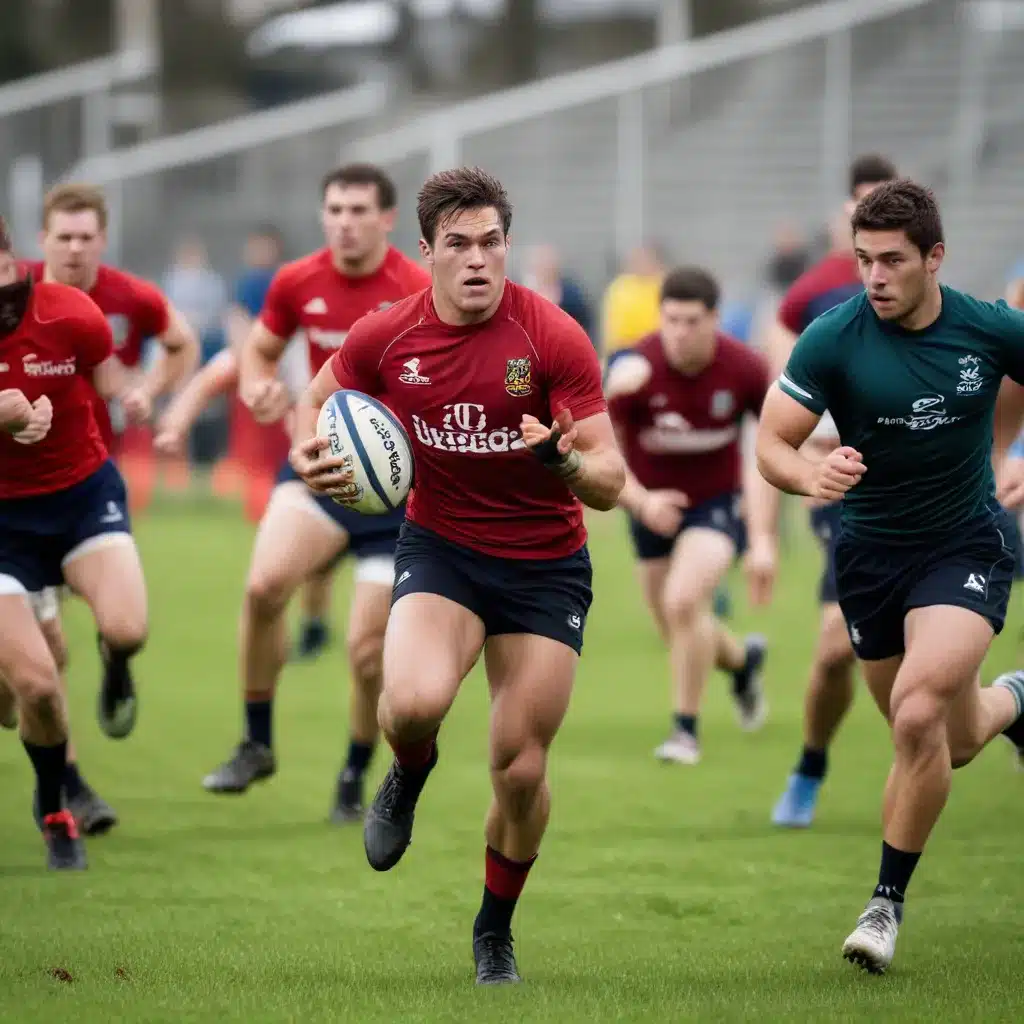
Rugby-Specific Physiological Demands
As a seasoned rugby professional, I’ve seen firsthand the grueling physical demands of the game. Rugby is a high-intensity intermittent sport that places tremendous cardiovascular and metabolic strain on players. During an 80-minute match, the ball is typically in play for only 30-40 minutes, but the repeated cycles of sprinting, tackling, rucking, and scrummaging push players to their physiological limits.
To excel at the elite level, rugby players must possess a well-rounded physical profile, with exceptional aerobic fitness, muscular endurance, and the ability to repeatedly produce powerful bursts of speed and force. The physiological characteristics of the best rugby performers reflect this – world-class players often have VO2max values over 60 ml/kg/min and can sustain high-intensity efforts for prolonged periods, owing to their highly developed aerobic and anaerobic capacities.
Developing this rugby-specific endurance is crucial, as it underpins a player’s ability to maintain a high work rate throughout the match, recover quickly between intense bouts, and resist the onset of fatigue in the latter stages of the game. Without adequate endurance, a player’s technical and tactical execution will invariably suffer, compromising their overall contribution to the team.
High-Intensity Interval Training for Rugby
One of the most effective training methods for enhancing rugby-specific endurance is high-intensity interval training (HIIT). HIIT involves repeated bouts of high-intensity exercise interspersed with periods of lower-intensity recovery or rest. This training modality closely mirrors the intermittent demands of rugby, making it an ideal approach for developing the physical attributes required to thrive in the sport.
The physiological adaptations induced by HIIT are particularly well-suited to the needs of rugby players. By subjecting the cardiovascular system to repeated bursts of maximal or near-maximal effort, HIIT can elicit significant improvements in VO2max, stroke volume, and the body’s ability to utilize oxygen more efficiently. Metabolically, HIIT enhances the capacity for lactate clearance and the storage and utilization of ATP-CP, which are crucial for sustaining high-intensity efforts.
Moreover, the neuromuscular adaptations associated with HIIT, such as increased muscle fiber recruitment and enhanced power production, translate directly to improved performance in rugby-specific movements like sprinting, tackling, and maneuvering with the ball.
Designing HIIT Programs for Rugby
When developing HIIT programs for rugby players, it’s essential to consider the specific physiological demands of the sport and the individual needs of the athlete. The duration and work-to-rest ratios of the intervals should be carefully manipulated to target the desired adaptations.
For example, shorter intervals (10-30 seconds) with longer recovery periods (1-2 minutes) can help develop the high-intensity sprint capacities required for short bursts of play, while longer intervals (2-4 minutes) with shorter recoveries (1-1.5 minutes) will target the ability to sustain repeated high-intensity efforts over an extended period.
Similarly, the exercises selected for HIIT should mirror the movement patterns and energy system demands of rugby. This may include rugby-specific drills, such as small-sided games, shuttle runs, or sled-pulling exercises, rather than traditional running-based intervals. The inclusion of multidirectional movements, rapid changes of direction, and sport-specific skill elements can further enhance the transfer of training adaptations to the field.
Periodizing the HIIT component within the overall rugby training plan is also crucial. During the pre-season phase, HIIT can be a primary focus, helping to develop a robust aerobic and anaerobic base. As the competitive season approaches, the emphasis should shift towards maintenance of these physical qualities through a combination of HIIT and more sport-specific conditioning work.
Physiological Adaptations to HIIT
The adaptations induced by well-designed HIIT programs can have a profound impact on a rugby player’s endurance capabilities and overall performance.
At the cardiovascular level, HIIT has been shown to significantly increase stroke volume and cardiac output, allowing the heart to pump more oxygenated blood to working muscles. This, in turn, enhances the body’s ability to utilize oxygen more effectively, as evidenced by improvements in VO2max.
Metabolically, HIIT training can improve the body’s capacity for lactate clearance and ATP-CP resynthesis. These adaptations help mitigate the effects of fatigue-inducing metabolites during high-intensity periods of play, enabling players to sustain a higher work rate for longer.
Furthermore, the neuromuscular adaptations associated with HIIT, such as increased muscle fiber recruitment and enhanced power production, can translate directly to improved performance in rugby-specific movements. Players may exhibit faster sprint times, more explosive accelerations, and greater force production during key actions like tackling and rucking.
Implementing HIIT for Rugby-Specific Endurance
When implementing HIIT for rugby players, it’s important to create training sessions that closely mimic the demands of the sport. This can be achieved through the use of field-based HIIT sessions, incorporating small-sided games, rugby-specific conditioning drills, and other sport-specific exercises.
Small-sided games, for example, can provide an excellent platform for HIIT, as they replicate the intermittent nature of rugby while also engaging the players’ technical and tactical skills. These drills can be designed with work-to-rest ratios, player numbers, and field dimensions that target the desired physiological adaptations.
Complementing the sport-specific HIIT sessions, rugby players can also benefit from more general conditioning exercises, such as sled-pulling, sprinting, and plyometric drills. These exercises can help to further develop the underlying physical qualities required for rugby performance, such as power, speed, and muscular endurance.
Throughout the HIIT training process, it’s essential to monitor the players’ responses and progressively overload the training stimulus. Heart rate monitoring and ratings of perceived exertion (RPE) can provide valuable insights into the players’ physiological and psychological responses, allowing coaches to make informed adjustments to the training load and intensity.
Integrating HIIT into the Rugby Training Plan
The integration of HIIT into the broader rugby training plan is a crucial consideration for coaches and performance staff. During the pre-season phase, HIIT can be a primary focus, helping to develop a robust aerobic and anaerobic base that will underpin the players’ performance throughout the competitive season.
As the season approaches, the emphasis should shift towards maintaining these physical qualities through a combination of HIIT and more sport-specific conditioning work. This ensures that the players retain their high-intensity capabilities while also honing their rugby-specific skills and tactical understanding.
It’s important to note that the volume and intensity of HIIT should be carefully managed, particularly during the in-season period, to avoid the risk of overtraining and injury. Coaches may need to periodically reduce the HIIT load or replace it with lower-intensity aerobic work to allow for adequate recovery and adaptation.
By integrating HIIT into a well-rounded rugby training program, coaches can help their players develop the endurance, power, and responsiveness required to excel at the highest levels of the game. The physiological and performance benefits of this training approach can be truly transformative, enabling rugby players to push the boundaries of their physical capabilities and achieve sustained success on the pitch.