
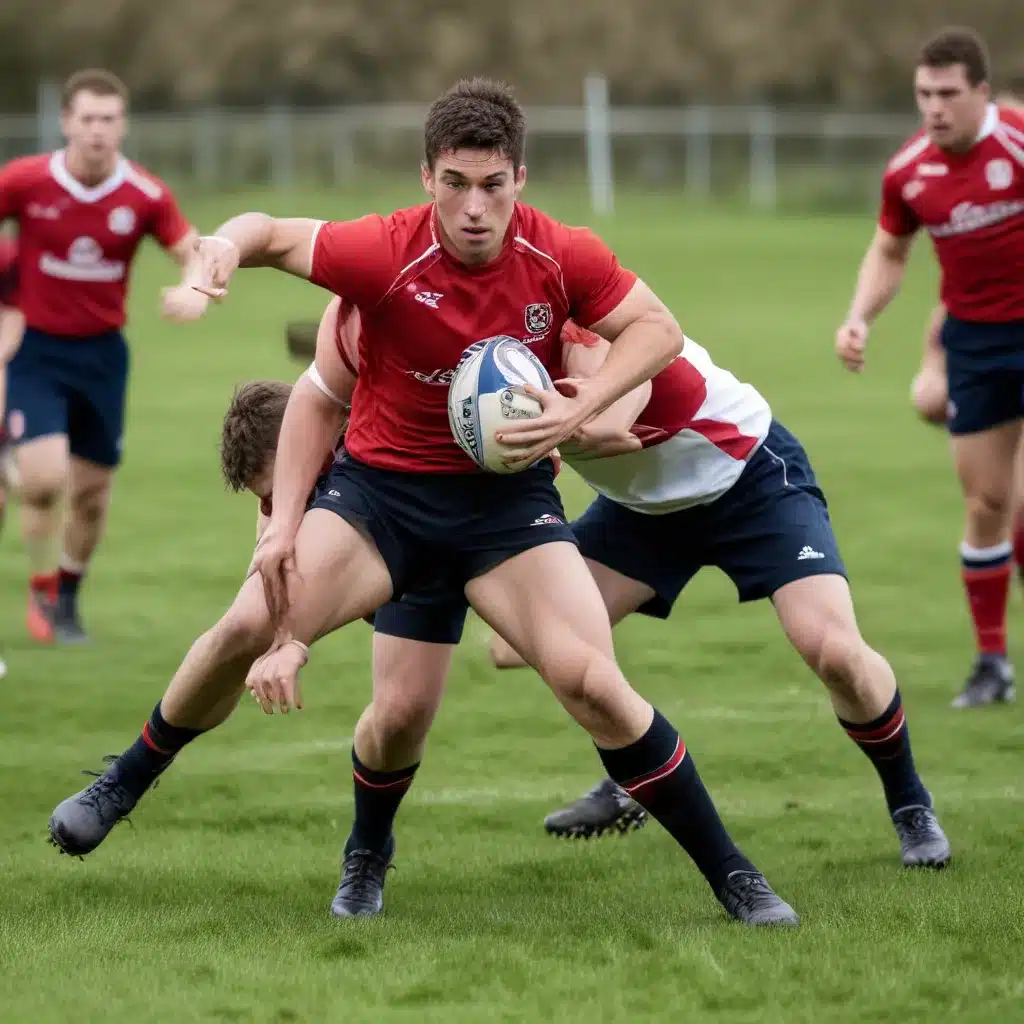
The Importance of Agility in Rugby
Agility is an essential skill for rugby players at all levels. In the fast-paced, high-contact environment of the rugby pitch, the ability to quickly change direction, accelerate, decelerate, and react to dynamic situations can be the difference between making a decisive break or getting tackled. Effective agility allows players to evade defenders, support their teammates, and quickly adapt to the ebb and flow of the game.
At its core, rugby-specific agility is about more than just raw speed or change of direction (COD) ability. It encompasses a blend of physical attributes, cognitive skills, and technical proficiency that enable players to navigate the chaos of a rugby match. The true masters of agility not only possess lightning-quick feet and powerful acceleration, but also the keen anticipation, decision-making prowess, and body control to execute elusive maneuvers with precision.
Agility Development Considerations
Developing well-rounded agility in rugby players requires a multifaceted approach that addresses both the physical and cognitive components. Let’s explore some of the key factors to consider:
Physical Factors
Strength and Power: A solid foundation of lower-body strength and power is crucial for generating the force needed to accelerate, decelerate, and change direction effectively. Compound exercises like squats, deadlifts, and plyometric drills should be staples in any rugby-specific training program.
Coordination and Footwork: Agile movement patterns require exceptional body control and coordination. Drills that challenge players to navigate through ladders, cones, and other obstacles can help refine their footwork and kinesthetic awareness.
Flexibility and Mobility: Maintaining adequate joint range of motion and muscle flexibility allows players to execute sharp cuts, explosive starts, and sudden stops without compromising technique or increasing injury risk.
Cognitive Factors
Decision-Making: Agility in rugby is as much a mental skill as a physical one. Players must quickly process environmental cues, anticipate opponents’ actions, and make split-second decisions on the best course of action.
Perceptual-Cognitive Skills: The ability to scan the field, track multiple moving targets, and react appropriately to visual stimuli is crucial for excelling in reactive agility situations.
Pattern Recognition: Experienced rugby players often develop an innate ability to recognize and respond to familiar movement patterns, allowing them to make faster, more informed decisions.
Rugby-Specific Agility Drills
Incorporating a variety of agility-focused drills into your training regimen is essential for developing well-rounded abilities. Here are some examples of effective exercises:
Agility Ladder Drills
Agility ladders are a versatile tool for improving footwork, coordination, and rapid changes of direction. Some examples include:
- Lateral ladder drills: Players move side to side, stepping in and out of the rungs.
- Zig-zag patterns: Players weave in and out of the ladder, changing direction at each rung.
- Forward and backward movements: Players step forward and backward through the ladder, maintaining proper body positioning.
Cone Drills
Cone-based drills challenge players to navigate through a series of markers, testing their acceleration, deceleration, and COD skills. Popular options include:
- T-drill: Players sprint forward, backpedal, and then sprint laterally to the left and right.
- Pro-agility (5-10-5) drill: Players sprint 5 yards, then 10 yards in the opposite direction, and finally 5 yards back to the starting point.
- Shuttle runs: Players sprint back and forth between two cones, changing direction at each end.
Game-Based Drills
Integrating agility practice into small-sided games and rugby-specific scenarios can help players develop reactive decision-making and transfer their skills to the match environment. Examples include:
- Small-sided games: Conditioned games with reduced numbers, emphasizing quick decision-making and agile movements.
- Reactive agility exercises: Players respond to visual or auditory cues by changing direction, accelerating, or performing other evasive maneuvers.
- Plyometric exercises: Explosive movements like lateral bounds, box jumps, and hurdle hops that build power and improve COD abilities.
Training Periodization for Agility
Effectively developing rugby-specific agility requires a thoughtful approach to training periodization, with distinct focuses during the in-season and off-season phases.
In-Season Training
During the competitive season, the primary goal is to maintain and refine players’ agility abilities. This can be achieved by:
- Integrating agility drills into practice sessions, ensuring they are specific to the demands of the sport.
- Emphasizing technical proficiency and decision-making over pure speed, as players must be able to execute agile movements under pressure.
- Monitoring players’ workloads and adjusting drills accordingly to prevent overtraining and injury.
Off-Season Training
The offseason presents an opportunity to place a greater emphasis on the physical development of agility. Coaches can:
- Dedicate more training time to improving the foundational physical qualities, such as strength, power, and mobility.
- Implement progressive agility-specific training protocols, gradually increasing the complexity and intensity of drills.
- Incorporate sport-science testing to measure players’ progress and inform the design of future training programs.
Monitoring and Assessing Agility
Regularly evaluating players’ agility performance is crucial for tracking progress, identifying areas for improvement, and informing training adaptations. Some key considerations include:
Performance Metrics
- Change of direction speed tests: Standardized tests like the Pro-Agility Shuttle or T-Test provide objective measures of COD abilities.
- Agility tests: Assessments like the Illinois Agility Test or the reactive agility test developed by Serpell et al. (2010) evaluate both physical and cognitive components of agility.
Feedback and Adaptation
- Analyze test results to identify individual strengths, weaknesses, and areas for development.
- Incorporate player feedback to better understand their subjective experiences and perceptions of agility training.
- Adjust training programs based on assessment data, focusing on specific areas that require more attention.
Injury Prevention and Agility
Agility training not only enhances players’ on-field performance but also plays a crucial role in injury prevention. By addressing the biomechanical and neuromuscular factors associated with agile movements, coaches can help mitigate the risk of common rugby-related injuries.
Biomechanical Considerations
- Emphasize proper body mechanics and technique during agility drills to ensure safe movement patterns.
- Develop core stability, lower-body strength, and balance to provide a solid foundation for agile movements.
- Incorporate mobility and flexibility exercises to maintain adequate joint range of motion.
Injury Risk Mitigation
- Integrate injury prevention exercises, such as plyometrics, balance training, and neuromuscular control drills, into the overall training program.
- Address common rugby-related injuries, such as ankle sprains, knee ligament tears, and hamstring strains, through targeted rehabilitation and prehabilitation strategies.
- Monitor players’ fatigue levels and adjust training loads to avoid overuse injuries, which can compromise agility performance.
By adopting a holistic approach to agility development, rugby coaches and athletes can unlock the true potential of this essential skill. Through targeted training, thoughtful periodization, and comprehensive monitoring, players can enhance their ability to evade defenders, create scoring opportunities, and contribute to their team’s success on the pitch.