
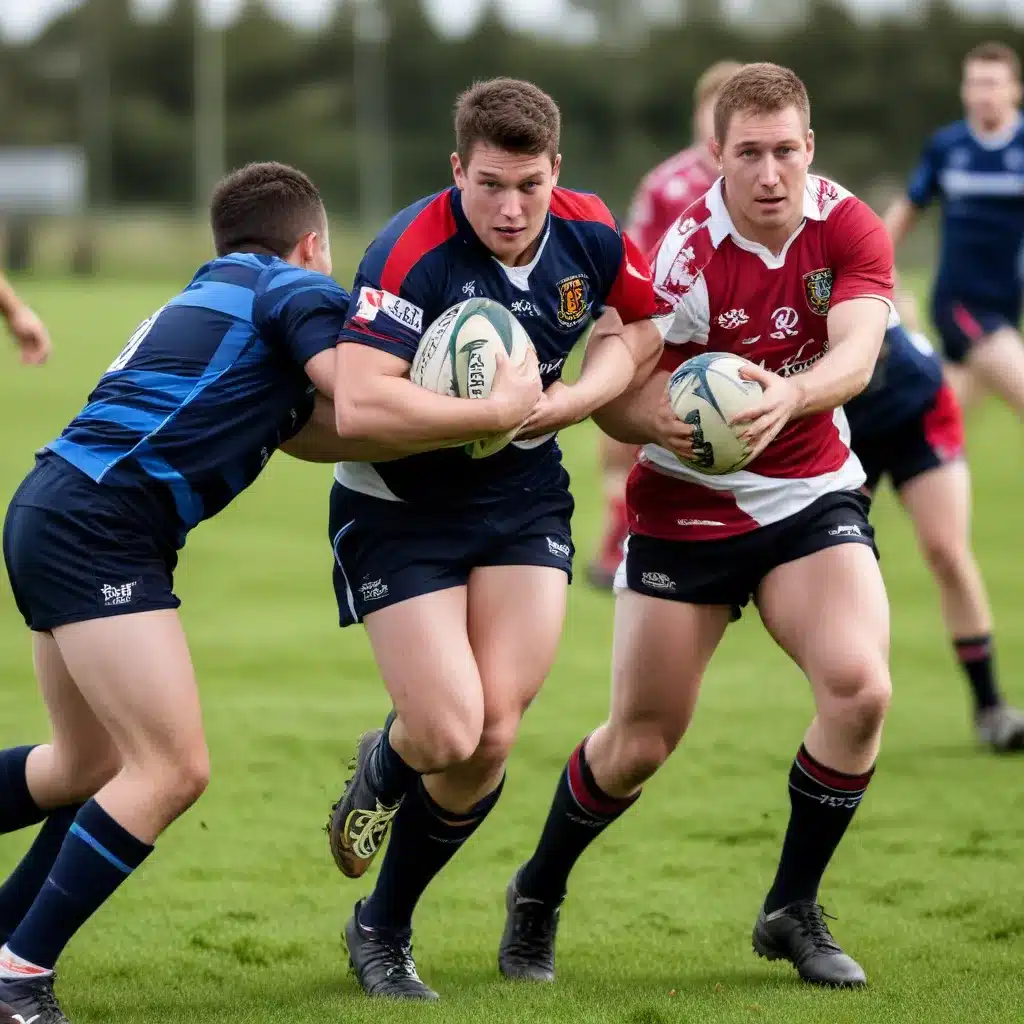
Rugby Laws and Regulations
As an experienced rugby professional, I know how important it is for newcomers to the sport to have a solid understanding of the fundamental laws and regulations that govern the game. After all, adhering to these rules is what allows the sport to flow seamlessly and ensures a safe, fair experience for all players.
Let’s start by examining the rugby rulebook itself. This comprehensive document outlines everything from how the ball can be handled and passed, to the various ways points can be scored, to the responsibilities of match officials. While the full rulebook may appear daunting at first, I encourage beginners to start by focusing on the most essential guidelines.
One critical area is understanding the roles of the referee, touch judges, and other match officials. The referee is the primary authority figure on the pitch, responsible for enforcing the laws, managing player conduct, and making key decisions like penalizing infringements and awarding points. The touch judges, positioned on the sidelines, assist the referee by monitoring the touchlines and flagging any issues the referee may have missed. Becoming familiar with these positions and respecting the officials’ authority is crucial for maintaining the integrity of the game.
Essential Rugby Positions
Now that we’ve covered the fundamentals of the rules, let’s dive into the various positions found on a rugby team. The sport is often divided into two main groups: the forwards and the backs.
The forwards, also known as the pack, are typically the larger, more physically imposing players. They are responsible for winning possession of the ball through set pieces like scrums and lineouts, as well as providing power and strength in the contact areas. Positions in the forward pack include props, hookers, locks, and flankers, each with their own specialized skills and responsibilities.
In contrast, the backline players are often more agile and focused on ball handling and running. This includes the scrumhalf, flyhalves, centers, wingers, and fullback. These positions require exceptional vision, decision-making, and the ability to create and exploit gaps in the opposition’s defense.
Understanding the unique roles and attributes of each position is essential for beginners to not only appreciate the game’s complexity, but also to identify the areas where their own strengths and skills might best contribute to the team.
Mastering Rugby Skills and Techniques
Of course, no discussion of rugby fundamentals would be complete without delving into the core skills and techniques that players must develop. At the most basic level, this includes mastering ball handling, passing, and kicking.
Proper ball handling is crucial, as players must be able to securely catch, carry, and pass the ball in a variety of game situations. Techniques like the “pop pass” and “spin pass” allow for quick, accurate distribution to teammates. Kicking skills, whether for clearing, tactically finding touch, or scoring points through penalties and conversions, are also essential.
Equally important are the defensive skills, particularly tackling. Beginners must learn safe, effective tackling techniques to bring down opposition players and regain possession. This includes everything from low, driving tackles to more dynamic “chop” tackles.
Mastering these core skills through repetitive drills and game-like scenarios is the foundation for players to confidently contribute to their team’s success, both in attack and defense.
Rugby Equipment and Gear
Another key area for rugby beginners to understand is the specialized equipment and gear required for the sport. The most obvious piece is the rugby ball itself – an oval-shaped leather ball that requires a unique handling technique compared to other sports.
Beyond the ball, players must also invest in the proper uniform and protective equipment. This includes a sturdy jersey, shorts, socks, and studded boots or cleats to provide traction on the pitch. Crucially, players must also wear a mouthguard to protect their teeth and jaw, as well as other optional protective gear like headgear, shoulder pads, or padded shorts.
Ensuring players have the correct, well-maintained equipment is not only a matter of safety, but also helps them feel confident and empowered on the field.
The Rugby Pitch and Field
Of course, no discussion of rugby fundamentals would be complete without exploring the playing field itself. Rugby is contested on a rectangular pitch, usually between 94-100 meters long and 68-70 meters wide, with distinct zones and markings that players must familiarize themselves with.
At each end of the pitch are the try zones, where players aim to ground the ball to score points. Between these zones lie the 22-meter lines, which create important strategic areas for kicking, defending, and attacking. The halfway line and various other markings help define the boundaries and structure the gameplay.
Understanding the dimensions, zones, and overall layout of the rugby pitch is crucial for beginners to develop a solid grasp of field position, tactics, and game flow.
Rugby Gameplay Essentials
With the rules, positions, skills, and field layout covered, let’s now turn our attention to the core elements of rugby gameplay itself. The flow of the game is punctuated by various “phases,” including the kick-off, scrums, lineouts, rucks, and mauls, each with their own unique dynamics and strategic considerations.
Perhaps the most iconic phase is the scrum, where the forward packs contest for possession by pushing against each other. Lineouts, where the ball is thrown in after it has gone into touch, also play a vital role in establishing field position and winning back the ball.
Of course, the ultimate objective in rugby is to score points, which can be achieved through tries (grounding the ball in the try zone), conversions, penalties, and drop goals. Mastering the nuances of when and how to execute these scoring plays is a key part of developing one’s rugby IQ.
Rugby Training and Physical Preparation
To excel at rugby, players must not only master the technical and tactical aspects of the game, but also dedicate themselves to comprehensive physical training and conditioning. This includes building strength, power, speed, agility, and endurance through a variety of exercises and drills.
A typical rugby training regimen might involve weight-room sessions to develop muscular strength, field-based drills to hone skills and game-specific movements, and high-intensity interval training to improve cardiovascular fitness. Proper recovery, nutrition, and injury prevention protocols are also essential components of a well-rounded training program.
By investing time and effort into their physical preparation, rugby players can not only reduce their risk of injury, but also perform at their absolute best when it matters most on the pitch.
Tactics and Strategies in Rugby
While the fundamentals of ball handling, tackling, and scoring are critical, the true mastery of rugby comes from understanding and executing effective tactical and strategic approaches. This involves analyzing the strengths and weaknesses of one’s own team, as well as identifying and exploiting vulnerabilities in the opposition.
On the offensive side, teams might employ various attacking patterns and plays to create space and scoring opportunities. These could include set-piece plays, phase-based progressions, or more free-flowing, improvisational styles of play. Defensively, teams must organize their players into cohesive systems to shut down the opposition’s attack and regain possession.
Successful rugby teams are often those that can seamlessly blend technical execution with smart, adaptable tactical decision-making. As a beginner, developing this holistic understanding of the game’s strategic elements can elevate your performance and contribute to your team’s success.
Coaching and Instructing Rugby Beginners
Of course, no discussion of rugby fundamentals would be complete without acknowledging the vital role of coaches and instructors in guiding newcomers to the sport. These experienced individuals are responsible for not only teaching the technical skills and tactical nuances, but also fostering a positive, supportive environment for players to learn and grow.
Effective coaches of beginner rugby players will typically start by instilling a solid foundation in the game’s core principles, such as safety, sportsmanship, and teamwork. From there, they’ll systematically introduce and refine the essential skills, gradually increasing the complexity as players demonstrate proficiency.
Equally important is the coach’s ability to tailor their teaching methods to suit the learning styles and needs of each individual player. This might involve breaking down concepts into manageable chunks, providing visual demonstrations, or encouraging collaborative problem-solving among the team.
By prioritizing both the technical development and the holistic growth of their players, rugby coaches play a pivotal role in nurturing the next generation of passionate, well-rounded athletes.
Joining a Rugby Club
For those new to the sport, finding the right rugby club to call home is a crucial next step. Aberdeenshire RFC, for example, offers a welcoming, community-driven environment where players of all skill levels can come together to learn, train, and compete.
When researching potential clubs, beginners should consider factors like the coaching staff’s expertise, the quality of the facilities, and the overall culture and values of the organization. Equally important is gauging whether the club’s player development pathways and competitive aspirations align with your own goals and interests.
Once you’ve identified the right fit, reaching out to the club and expressing your desire to get involved is the first step. Many clubs have dedicated beginner-friendly programs, complete with introductory sessions and mentorship opportunities, to help ease the transition into the sport.
Becoming an active, engaged member of a local rugby club not only accelerates your learning and improvement as a player, but also connects you to a vibrant community of like-minded individuals who share your passion for the game.
Rugby History and Heritage
While mastering the fundamentals of rugby is undoubtedly the primary focus for newcomers, it’s also valuable to have an appreciation for the rich history and heritage that underpins the sport. After all, understanding the origins and evolution of rugby can provide valuable context and inspiration as you embark on your own journey.
The modern game of rugby union can be traced back to 1823, when a young student at Rugby School in England, William Webb Ellis, is said to have defied the rules of the day by picking up the ball and running with it, giving birth to the distinct rugby style of play. From those humble beginnings, the sport quickly spread throughout the United Kingdom and beyond, establishing a global footprint.
Over the decades and centuries that followed, rugby has been shaped by the contributions of legendary players, coaches, and innovators, each leaving an indelible mark on the game’s development. Figures like Dave Gallaher, the pioneering captain of the ‘Originals’ All Blacks team, or the iconic Scottish full-back Ken Scotland, have cemented their place in rugby’s pantheon of greats.
Embracing this rich history not only deepens one’s appreciation for the sport, but also instills a sense of tradition and belonging that can fuel a lifelong passion for rugby.
The Culture of Rugby
Ultimately, rugby is not just a sport – it’s a way of life, defined by a unique culture and community that transcends the boundaries of the pitch. At the heart of this culture lies a profound sense of sportsmanship, camaraderie, and mutual respect that sets rugby apart from many other athletic pursuits.
Whether it’s the post-match handshakes and celebrations, the shared rituals and traditions, or the unbreakable bonds forged through the common experience of hard-fought competition, the culture of rugby is truly special. Newcomers to the sport quickly come to appreciate the importance of values like teamwork, discipline, and resilience, which are not just prized on the field, but also carry over into everyday life.
Indeed, the rugby community is renowned for its inclusiveness, welcoming players of all backgrounds, ages, and skill levels. This spirit of unity and support is perhaps best exemplified by the sport’s deep-rooted ethos of the “rugby family,” where individuals are embraced and celebrated as part of a larger, global community.
As you embark on your rugby journey, I encourage you to not only master the technical and tactical aspects of the game, but also to immerse yourself in the rich tapestry of rugby culture. It is this holistic experience that truly transforms the sport into a lifelong passion.
Conclusion
In conclusion, the fundamentals of rugby encompass a vast and multifaceted array of skills, knowledge, and cultural elements. From understanding the laws and regulations that govern the game, to developing mastery of the core technical abilities, to embracing the sport’s rich history and vibrant community – there is a wealth of information and experience to be gained.
For beginners, the path to becoming a well-rounded rugby player can seem daunting, but with the right guidance, dedication, and an open mindset, the journey is an incredibly rewarding one. By immersing yourself in the sport’s fundamentals, you’ll not only elevate your own performance on the pitch, but also forge lasting connections and memories that will enrich your life far beyond the game.
So whether you’re a complete newcomer or an experienced player looking to refine your skills, I encourage you to embrace the challenge of mastering rugby’s fundamentals. With the right approach and the support of a welcoming rugby community like Aberdeenshire RFC, the rewards will be immeasurable.