
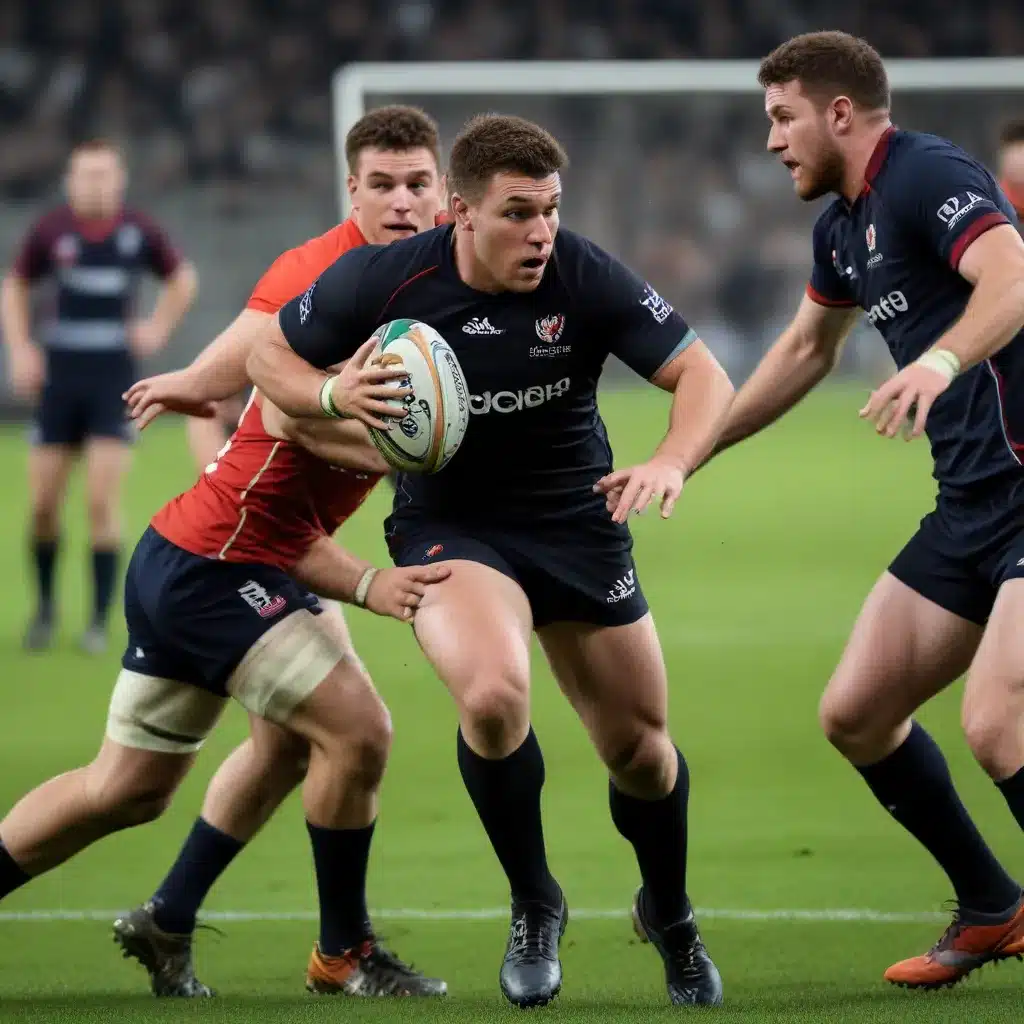
Rugby Skills and the Power of Video Feedback
As a seasoned rugby professional, I’ve seen firsthand how the game has evolved over the years – both in terms of the physical demands on players and the tactical sophistication required to succeed at the highest levels. One of the most significant advancements has been the integration of video analysis into player development and team strategy.
Video analysis is transforming the way we approach skill improvement in rugby. By capturing detailed footage of training sessions and matches, we can provide players with invaluable, objective feedback on their technique, decision-making, and overall performance. This visual medium allows us to break down complex skills, identify areas for refinement, and empower players to become active participants in their own development.
Passing Precision and Mechanics
Arguably one of the most fundamental skills in rugby is passing – the ability to quickly and accurately transfer the ball to a teammate. Video analysis offers coaches a unique window into a player’s passing mechanics. We can scrutinize the position of the body, the angle of the throwing arm, the timing of the release, and countless other technical details that contribute to an effective pass.
Perhaps more importantly, video allows us to provide players with immediate, personalized feedback. By reviewing footage together, we can highlight specific aspects of their passing technique that need improvement, whether it’s keeping the elbow high, following through fully, or improving their ball placement. This level of granular feedback is instrumental in helping players ingrain proper muscle memory and technique.
Tackling Technique and Intensity
Tackling is another fundamental skill that benefits immensely from video analysis. The sheer speed and intensity of tackles in modern rugby mean that players must develop near-perfect technique to be effective and, crucially, to minimize the risk of injury.
Video footage allows us to dissect a player’s tackling form – their body position, their head placement, their point of contact, and their ability to drive through the tackle. By reviewing this footage, we can identify technical flaws and work with players to refine their technique. This ultimately translates to more dominant, safer tackles that set the tone for the entire team.
Moreover, video analysis enables us to monitor the intensity and consistency of a player’s tackling over the course of a match or training session. By tracking metrics like tackle count, missed tackles, and tackle effectiveness, we can ensure players are maintaining their discipline and intensity throughout the game.
Kicking Finesse and Execution
In a sport where possession and field position are so crucial, the ability to kick accurately and tactically is paramount. Video analysis gives us the tools to scrutinize a player’s kicking technique, from their approach and plant foot positioning to their follow-through and ball trajectory.
By reviewing footage, we can identify small technical adjustments that can improve a player’s kicking consistency and distance. Perhaps a player is dropping their head too soon or failing to follow through completely. Video analysis allows us to pinpoint these nuances and provide targeted feedback to refine their kicking mechanics.
Additionally, video can help us analyze the strategic elements of a player’s kicking game. We can review how they choose to kick in different game situations, whether it’s a probing grubber, a booming clearance, or a testing cross-field kick. This insight allows us to work with players on their decision-making and tactical awareness, elevating their overall kicking effectiveness.
The Power of Video Analysis in Rugby
The integration of video analysis into rugby has been a game-changer, both for individual skill development and for optimizing team tactics and strategy. By capturing detailed footage and leveraging the power of visual feedback, we can empower players to take a more active role in their own improvement.
Motion Capture and Biomechanical Analysis
One of the most powerful applications of video analysis in rugby is the ability to conduct detailed biomechanical assessments of player movements. By utilizing motion capture technology, we can track the precise kinematics and kinetics of skills like passing, tackling, and kicking.
This granular data allows us to identify technical flaws, imbalances, and areas for improvement that may not be immediately visible to the naked eye. For example, we might discover that a player’s passing technique is causing unnecessary strain on their shoulder joint, increasing their risk of injury. Armed with this information, we can work with the player to refine their mechanics and optimize their movement patterns.
Game Footage Review and Tactical Insights
In addition to player-specific skill development, video analysis plays a critical role in our team’s tactical preparation and in-game decision-making. By reviewing footage of our own matches, as well as those of our upcoming opponents, we can gain invaluable insights into team formations, defensive patterns, and scoring opportunities.
This level of tactical analysis empowers us to develop more effective game plans and adjust our strategies in real-time. We can identify the opposition’s strengths and weaknesses, allowing us to exploit their vulnerabilities and neutralize their threats. Equally, reviewing our own game footage helps us recognize areas where we can improve our team cohesion, discipline, and execution.
Unlocking the Potential of Player Evaluation
Perhaps one of the most significant benefits of video analysis in rugby is its ability to provide objective, data-driven player evaluations. By capturing comprehensive footage of both training and matches, we can assess a player’s performance across a range of metrics, from their work rate and tackle effectiveness to their decision-making and skill execution.
This holistic approach to player evaluation allows us to identify each individual’s strengths and weaknesses, and to develop tailored training programs and feedback mechanisms to help them reach their full potential. It also enables us to make more informed decisions when it comes to team selection, player development, and succession planning.
Coaching Strategies and Video Analysis
As a coach, I firmly believe that video analysis is a critical component of any effective player development and team performance program. By integrating video into our coaching strategies, we can enhance player engagement, optimize training sessions, and ultimately drive sustainable improvements in rugby skills and team cohesion.
Implementing Video-based Training
One of the key ways we leverage video analysis is by incorporating it directly into our training sessions. By recording drills and game simulations, we can provide players with immediate, visual feedback on their performance. This allows them to quickly identify areas for improvement and make adjustments in real-time, rather than relying solely on verbal cues from the coaching staff.
Moreover, video analysis enables us to tailor our training to the specific needs of each player. We can review footage with individuals or small groups, addressing their unique technical and tactical challenges. This personalized approach empowers players to take ownership of their development and fosters a growth mindset that is essential for long-term success.
Enhancing Player Engagement and Accountability
Video analysis also plays a crucial role in enhancing player engagement and accountability within our program. By involving players in the review process, we encourage them to become active participants in their own improvement.
When players can see themselves performing the skills we’re working on, they’re more likely to take ownership of their development and to buy into the coaching strategies we’re implementing. This heightened engagement leads to greater accountability, as players hold themselves and their teammates to a higher standard of performance.
Furthermore, the objective nature of video analysis helps to eliminate any subjectivity or bias in our player evaluations. Players can see for themselves where they are excelling and where they need to improve, fostering an environment of transparency and trust.
The Impact of Video Analysis on Rugby Performance
The integration of video analysis into rugby has had a profound impact on both individual player development and overall team performance. By providing detailed, objective feedback, we’ve been able to drive sustainable improvements in key skills and elevate the tactical sophistication of our game.
Improving Individual Skills and Technique
Perhaps the most tangible benefit of video analysis is its ability to help players refine their individual skills and techniques. By reviewing footage and receiving personalized feedback, we’ve seen our players make significant strides in areas like passing accuracy, tackle efficiency, and kicking consistency.
The visual nature of video analysis allows players to clearly identify the specific technical adjustments they need to make, whether it’s keeping their elbow high during a pass or ensuring proper body position when executing a tackle. This targeted approach to skill development has translated to measurable improvements in player performance on the pitch.
Optimizing Team Tactics and Strategies
In addition to individual skill improvement, video analysis has been instrumental in helping us optimize our team tactics and strategies. By reviewing footage of our own matches, as well as those of our opponents, we can identify patterns, tendencies, and vulnerabilities that inform our game planning and in-game decision-making.
This deep understanding of team dynamics and opposing strategies allows us to develop more effective game plans, exploit mismatches, and make timely adjustments during matches. Our players are empowered to make smarter decisions on the pitch, whether it’s choosing the right moment to kick for territory or recognizing opportunities to launch an attacking raid.
Challenges and Considerations in Video Analysis
While the benefits of video analysis in rugby are clear, it’s important to acknowledge that there are also some challenges and considerations to keep in mind when implementing these technologies.
Technical Limitations and Practical Considerations
One of the primary challenges is the technical limitations of the available video analysis systems. While the technology is constantly evolving, there can still be issues with factors like camera coverage, data processing speed, and wireless connectivity that can impact the quality and timeliness of the feedback we’re able to provide to players.
Additionally, the practical considerations of deploying video analysis systems in a rugby environment, such as the physical setup, maintenance, and integration with other performance data, can present logistical hurdles that require careful planning and coordination.
Data Privacy and Ethical Considerations
Another important consideration is the issue of data privacy and ethics surrounding the use of video analysis in rugby. As we collect and analyze increasingly detailed performance data on our players, we must be diligent in ensuring that we’re respecting their privacy and using the information in a responsible and transparent manner.
This includes obtaining informed consent from players, safeguarding sensitive data, and being mindful of how the insights from video analysis are communicated and used to evaluate performance. Striking the right balance between using the power of data and technology and maintaining the trust and well-being of our players is an ongoing challenge that we must navigate carefully.
Embracing the Future of Rugby with Video Analysis
As a rugby professional, I’m truly excited by the transformative potential of video analysis. By harnessing the power of this technology, we can elevate the technical, tactical, and physical capabilities of our players, driving sustainable improvements in individual and team performance.
While there are certainly challenges to overcome, I believe that the benefits of video analysis far outweigh the obstacles. By providing players with detailed, objective feedback, empowering them to take ownership of their development, and optimizing our team strategies, we can unlock new levels of excellence in rugby.
As we continue to push the boundaries of what’s possible with video analysis, I’m confident that we’ll see even more remarkable advancements in the years to come. Whether it’s the integration of cutting-edge motion capture systems, the application of artificial intelligence and machine learning, or the development of even more intuitive and user-friendly feedback tools, the future of rugby is undoubtedly intertwined with the power of video.
So, let’s embrace this exciting chapter in our sport’s evolution. By leveraging the insights and opportunities presented by video analysis, we can elevate the game we love, inspire the next generation of rugby superstars, and cement our club’s legacy as a true powerhouse in the sport. The future is bright, and it’s time to bring it into focus.