
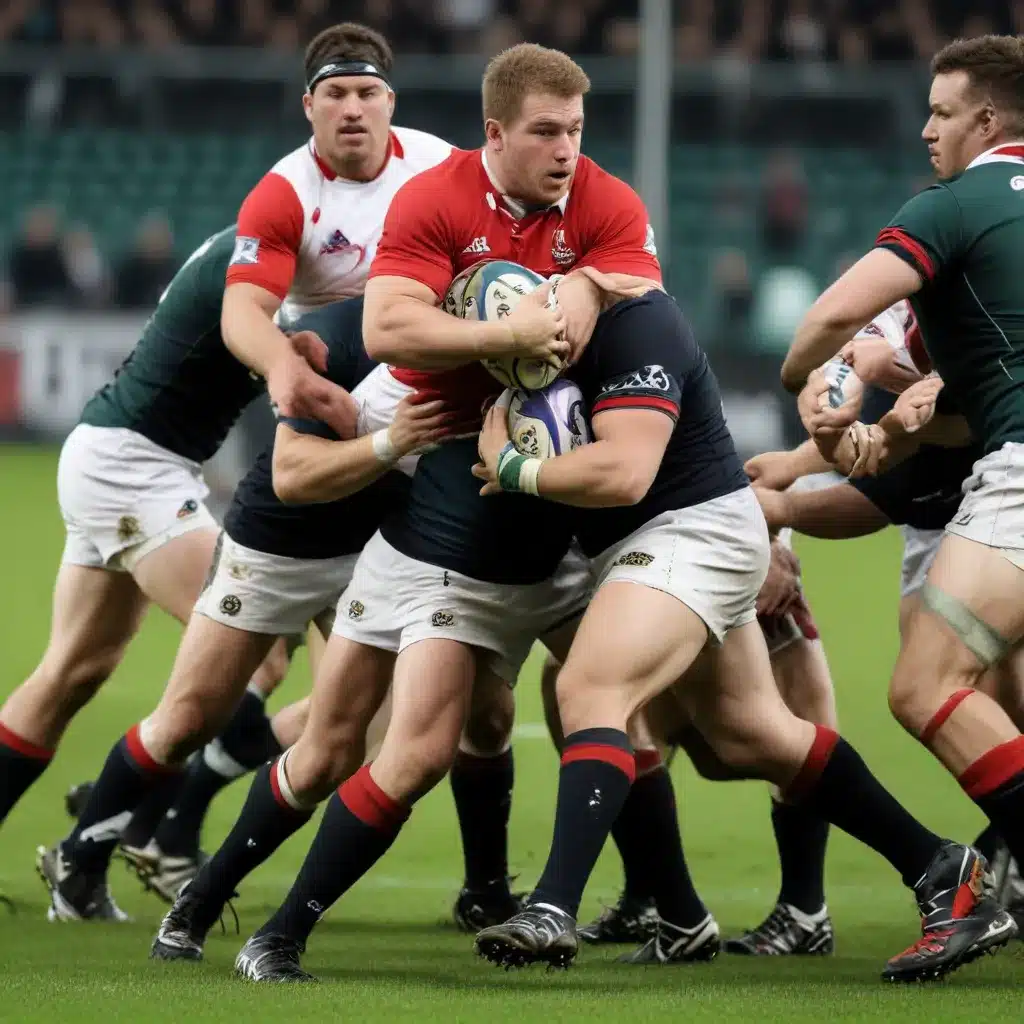
Backs in Rugby Union
As a seasoned rugby professional, I’ve had the privilege of witnessing the game’s evolution and the critical role that backs play in shaping the outcome. In rugby union, the backs are the athletes positioned behind the forward pack, responsible for orchestrating the team’s attacking prowess and ensuring defensive solidity. Their diverse skill sets, positional awareness, and tactical acumen are the driving forces that can make or break a team’s performance.
To truly excel as a back, one must first understand the unique characteristics and demands of the position. The backs, comprising the fullback, wingers, centers, fly-half, and scrum-half, are the lightning-quick, agile, and instinctive players who ignite the team’s offensive spark. Their primary objectives revolve around creating and exploiting space, making decisive passes, executing clinical finishes, and maintaining a resolute defensive structure.
Positional awareness is a fundamental prerequisite for any aspiring back. Knowing your designated role and responsibilities within the backline is essential for seamless teamwork and effective communication. Whether you’re the last line of defense as the fullback, the finisher on the wing, the creative playmaker at fly-half, or the linking pin at scrum-half, each position carries its own unique challenges and opportunities.
Positioning and Responsibilities of Backs
Fullback
Occupying the position furthest behind the backline, the fullback assumes the role of the team’s defensive sweeper. Their primary responsibilities lie in providing the last line of defense against opposition attacks. With their exceptional aerial skills, fullbacks are often entrusted with the task of safely gathering up high balls and launching counterattacking forays.
In the defensive phase, the fullback must be a resolute tackler, possessing the ability to snuff out attacking threats and thwart opposition advances. Their keen positioning and anticipation allow them to read the game and make timely interventions. Crucially, fullbacks must also be adept at kicking for territory, relieving pressure, and initiating counterattacks from deep within their own half.
Offensively, the fullback can be a valuable asset, offering an extra option in the backline and providing support for the wingers or centers. Their ability to join the attacking line, make incisive runs, and link up with their teammates can create scoring opportunities and catch the opposition off guard.
Wings
Stationed on the outer edges of the field, the wingers are often regarded as the finishers of the backline. Their primary duty is to capitalize on scoring opportunities by using their exceptional pace and agility to exploit the space out wide. Wingers must possess a keen eye for the try line, the awareness to read the defensive patterns, and the ability to execute clinical finishes.
While their attacking prowess is paramount, modern wingers have also evolved to become more involved in the game’s broader aspects. Increasingly, we see wingers coming off their designated touchline to offer support in the midfield, get involved in defensive duties, and contribute to the team’s overall play.
Defensively, wingers must be diligent in their tracking and tackling, ensuring they maintain their position to cover the outer channels and prevent opposition advancements. Their aerial skills are also crucial, as they are often called upon to contest high balls and secure possession.
Centers
Occupying the positions closest to the fly-half, the centers – the inside center and outside center – are the powerful, physical, and dynamic players who form the heartbeat of the backline. Their roles are multifaceted, encompassing both offensive and defensive responsibilities.
In attack, the centers are tasked with breaching the opposition’s defensive line, creating overlaps, and providing direct running lines. Their ability to read the game, identify gaps, and distribute the ball effectively is paramount. The inside center often showcases greater creativity and playmaking abilities, while the outside center typically brings more pace and the ability to offload the ball swiftly to the wingers.
Defensively, the centers must be solid tacklers, organizing the defensive structure and ensuring the backline maintains its integrity. Their physicality and positional awareness are essential in nullifying the opposition’s attacking threats and denying them the space to operate.
Fly-Halves
Considered the most influential position in rugby union, the fly-half is the team’s playmaker, orchestrating the backline’s attacking plays and dictating the tempo of the game. As the heartbeat of the team, the fly-half’s primary responsibilities revolve around decision-making, tactical awareness, and strategic execution.
In possession, the fly-half must possess exceptional ball-handling skills, the ability to read the defensive patterns, and the vision to identify and exploit opportunities. Their decision-making is crucial, as they must determine when to pass, kick, or carry the ball forward, often under immense pressure from the opposition.
Defensively, the fly-half plays a vital role in marshaling the backline, ensuring effective coverage and alignment. Their tactical kicking prowess is essential in relieving pressure, finding touch, and pinning the opposition deep in their own half. Fly-halves must also be adept at tackling and thwarting opposition attacks through their positional awareness and decision-making.
Fly-halves are often designated as the team’s primary goal-kickers, responsible for slotting penalty kicks, conversions, and drop goals – a skill that can have a significant impact on the outcome of a match.
Skill Sets for Successful Backs
To excel as a back in rugby union, a diverse range of skill sets is required. At the forefront of these skills is proficient ball-handling and passing ability. Backs must be able to receive, control, and distribute the ball with precision, often under intense pressure and in confined spaces.
Acceleration and agility are also essential attributes, allowing backs to exploit gaps, evade defenders, and create scoring opportunities. The ability to change direction quickly, maintain balance, and accelerate through the defensive line are hallmarks of successful backs.
Moreover, decision-making and game understanding are critical skills that separate the good backs from the great. Possessing the ability to read the game, anticipate defensive patterns, and make split-second decisions is a fundamental requirement for any aspiring back. This level of tactical awareness and decision-making can be the difference between a well-executed play and a missed opportunity.
Tactics and Strategies for Backs
Effective positioning and tactical awareness are the cornerstones of a successful backline. Backs must be adept at exploiting space and identifying mismatches in the opposition’s defense. This may involve a combination of direct running, creative passing, and tactical kicking to create scoring chances and keep the opposition guessing.
Seamless communication and teamwork within the backline are also crucial. Backs must be able to coordinate their movements, share information, and support one another in both attack and defense. This level of cohesion and understanding can be the difference-maker in tight matches.
Adaptability is another key trait for backs. The ability to adjust to different game scenarios, make in-the-moment adjustments, and execute contingency plans can be the defining factor in a team’s success. Backs must be prepared to adapt their tactics and strategies based on the opposition’s strengths, the match situation, and the evolving dynamics of the game.
Maximizing Performance as a Back
To reach the pinnacle of performance as a back in rugby union, a comprehensive approach to player development is essential. This encompasses not only the mastery of technical and tactical skills but also the physical and mental aspects of the game.
Physical conditioning and fitness are paramount. Backs must possess the speed, agility, and endurance to sustain their high-intensity contributions throughout the match. Targeted strength and conditioning programs, tailored to the unique demands of the position, can help backs develop the necessary physical attributes to thrive.
Equally important is the mental preparation and focus required for the back’s role. Visualizing game scenarios, honing decision-making skills, and developing the ability to remain calm under pressure are crucial in unlocking a back’s full potential. Incorporating mental skills training, such as pre-match routines and in-game coping strategies, can provide the necessary mental edge.
Continuous skill development is also a hallmark of successful backs. Dedicating time to refining ball-handling, passing, kicking, and tactical awareness through deliberate practice and feedback can help backs consistently improve their game-day performance.
At the Aberdeenshire RFC, we understand the importance of developing well-rounded backs who can thrive in the modern game. Through a combination of position-specific coaching, holistic player development, and a relentless pursuit of excellence, we aim to empower our backs to reach their full potential and make a lasting impact on the field.