
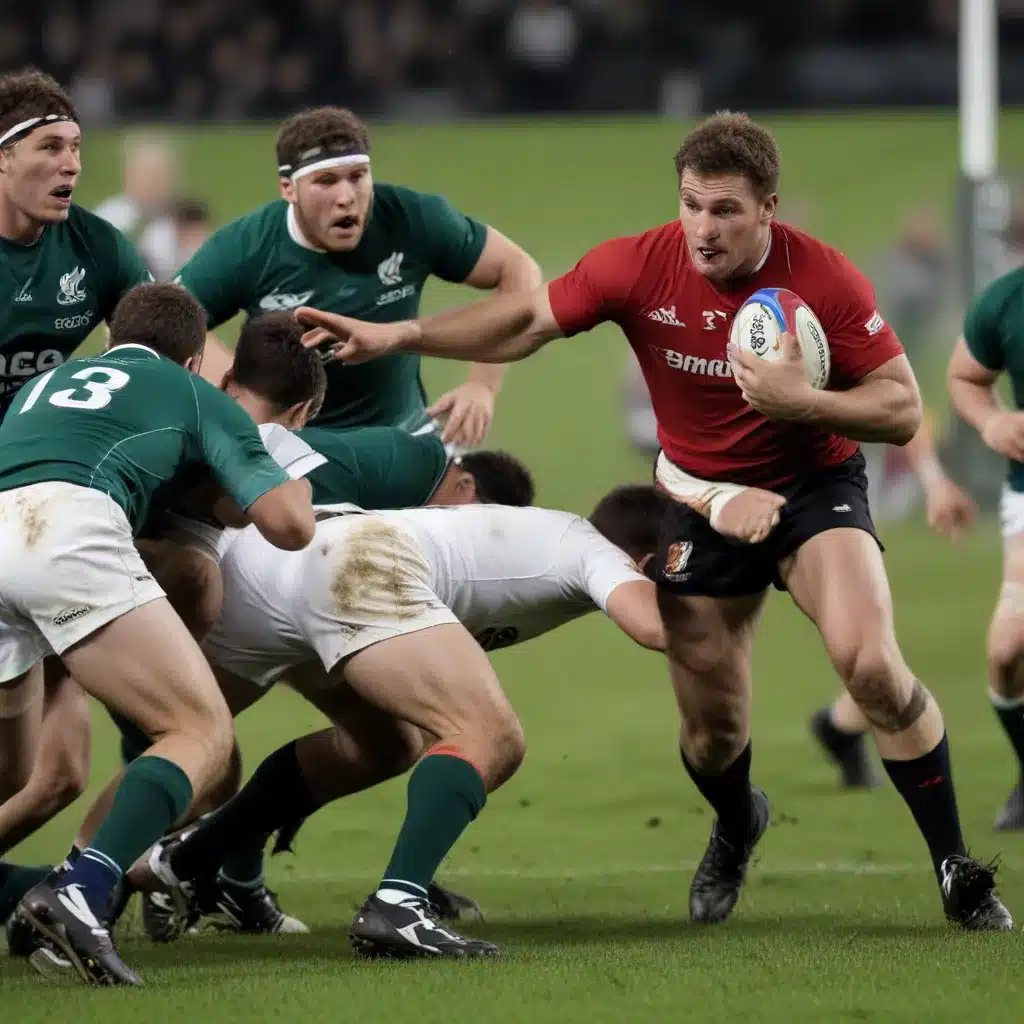
Rugby Counterattacks: Seizing the Moment
In the fast-paced, high-intensity world of rugby, opportunities can arise in an instant, shifting the momentum of the game with a single decisive play. At the heart of these game-changing moments lie turnovers – those precious moments when possession switches from one team to the other. For seasoned rugby professionals, mastering the art of the counterattack, and exploiting turnover opportunities, is a crucial skill that can mean the difference between triumph and defeat.
The Importance of Turnovers
A turnover in rugby occurs when the attacking team loses possession of the ball, handing it over to the defending team. This shift in possession can be a pivotal moment, offering the defending team a chance to launch a swift counterattack and catch the opposition off guard. As rugby analyst James Doherty from Aberdeenshire RFC explains, “Turnovers are game-changing events that can instantly swing the momentum and put your team on the front foot. The ability to recognize and capitalize on these opportunities is a hallmark of elite rugby teams.”
When a turnover occurs, the defending team must be poised and ready to pounce, transitioning seamlessly from defense to attack. This requires exceptional situational awareness, decision-making, and execution – qualities that separate the good teams from the great.
Recognizing Turnover Opportunities
Effective counterattacking begins with the ability to anticipate and identify turnover opportunities. Defenders must be acutely attuned to the opponent’s attacking patterns, looking for vulnerabilities and potential mistakes that can be exploited.
“One of the key things we focus on is our defensive alignment,” says Aberdeenshire RFC head coach, Emma Johnstone. “By maintaining a disciplined, organized defensive line, we’re able to put the attacking team under immense pressure and force errors. When they inevitably occur, we’re ready to pounce and transition quickly.”
Experienced players also develop a keen sense of game awareness, recognizing the subtle cues that signal an impending turnover. Whether it’s a hesitant pass, a loose carry, or a gap in the defensive line, these astute observers can seize the moment and turn the tide of the match.
Exploiting Turnover Opportunities
Rapid Ball Handling and Support
When a turnover is secured, the defending team must act with lightning-fast reflexes. As Rugby Coach Weekly explains, “The speed of transition from defense to attack is critical. As soon as possession changes hands, the defending team must shift their mindset and execute a swift transition.”
This means getting the ball into the hands of the backs and utilizing the element of surprise before the opposition can regroup. Support play is crucial, with players positioning themselves to receive offloads or passes, maintaining the momentum of the counterattack.
“Communication is paramount during these high-pressure situations,” emphasizes Johnstone. “Players need to convey their intentions clearly, calling plays and signaling for passes to ensure everyone is on the same page and can capitalize on the turnover.”
Decisive Running and Kicking
Once the counterattack is underway, the focus shifts to decisive ball-carrying and tactical kicking. Identifying and exploiting gaps in the opposition’s defensive line is key, as players must have the courage and skill to attack the space and stretch the defense.
“It’s about recognizing the weaknesses in the other team’s setup and punishing them,” explains Doherty. “Whether it’s isolating a defender, hitting an overlap, or finding space in the backfield, our players are trained to make split-second decisions and execute with precision.”
Tactical kicking can also play a crucial role in counterattacking. By using the boot to either gain territory or turn the defense, teams can continue to disrupt the opposition and maintain the momentum of the counterattack.
Coordinated Defensive Organization
While the counterattack is the primary focus, it’s essential that the defending team maintains a cohesive defensive structure. As Conversational Rugby points out, “Covering defensive lines and slowing down the opponent’s ruck are crucial in ensuring the counterattack is sustained.”
Players must be in the right position to provide cover and support, anticipating the flow of the game and reacting accordingly. This coordinated defensive effort not only protects against the opponent’s attacks but also allows the counterattacking team to maintain possession and continue their offensive push.
Momentum-Shifting Counterattacks
Capitalizing on Opponent’s Fatigue
Effective counterattacking can have a profound impact on the momentum of a rugby match. By exploiting turnovers and catching the opposition off guard, teams can gain a significant psychological and physical advantage.
“When you’re able to create a turnover and immediately launch a counterattack, it can be incredibly demoralizing for the other team,” explains Doherty. “Suddenly, they’re on the back foot, struggling to recover and reorganize their defense. That’s when you can really capitalize on their fatigue and continue to stretch them.”
Sustaining the counterattack becomes crucial in these situations, as the defending team must maintain their composure and discipline to prevent the opposition from regaining control.
Creating Scoring Opportunities
The ultimate goal of any counterattack is to create scoring opportunities and capitalize on them. By identifying the weak points in the opposition’s defensive structure and targeting them with precision, teams can put themselves in prime position to cross the try line.
“It’s not enough to just win the turnover and gain territory,” says Johnstone. “Our players are trained to recognize the moments when they can really turn the screw and turn a counterattack into points on the board. Whether it’s an overload, a missed tackle, or a gap in the defense, we’re always looking for ways to maximize our scoring chances.”
Finishing with composure and accuracy is crucial, as teams must maintain their focus and execution in the high-pressure moments that often accompany a successful counterattack.
Mastering the Rugby Counterattack
Developing Counterattack Mindset
Effective counterattacking in rugby requires a particular mindset and skillset. Players must be constantly alert, anticipating the ebb and flow of the game and prepared to pounce on any opportunity that presents itself.
“It’s all about cultivating a sense of urgency and decisiveness,” emphasizes Doherty. “Our players know that when a turnover occurs, they have to be ready to spring into action, making the right decisions and executing with pinpoint precision. It’s a mindset that’s developed through endless hours of training and game experience.”
Anticipation and awareness are key, as players must be able to read the game and identify the potential for a counterattack. Quick decision-making and flawless execution are also essential, as the smallest hesitation or mistake can be the difference between a game-changing play and a lost opportunity.
Integrating Counterattack into Team Tactics
Successful counterattacking is not just an individual skill; it requires a deep integration into the team’s overall tactical approach. Coaches and players must work together to align their defensive and attacking strategies, ensuring that everyone is on the same page and ready to capitalize on turnover opportunities.
“It’s about creating a cohesive system that allows us to seamlessly transition from defense to offense,” explains Johnstone. “We spend a lot of time in training, drilling our players on the decision-making processes, communication, and support play required to make our counterattacks effective. It’s a team-wide effort, and when we get it right, the results can be truly spectacular.”
Incorporating counterattack training into the team’s overall development plan is crucial, as players must be constantly challenged and exposed to game-like scenarios that hone their skills and decision-making abilities.
Whether it’s through rigorous defensive drills, decision-making challenges, or full-field scrimmages, the focus remains on preparing players to recognize, seize, and exploit turnover opportunities, turning the tables on their opponents and leaving a lasting impact on the game.