
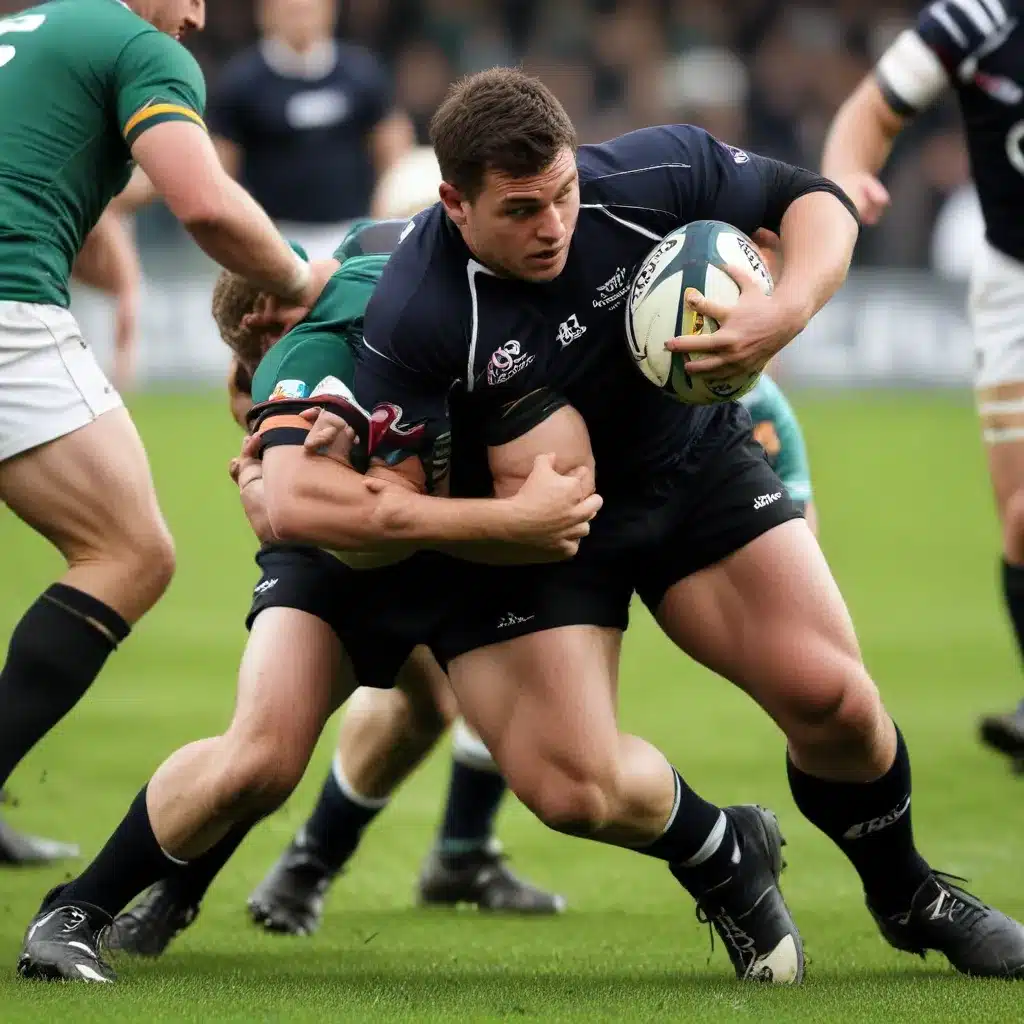
Fundamentals of Tackling
To be an effective rugby player, mastering the art of the tackle is an absolute necessity. Whether you’re a hulking forward or a nimble back, the ability to execute a proper, decisive tackle can make all the difference in the ebb and flow of a match. As a seasoned rugby professional, I’ve witnessed the transformative power of well-honed tackling skills, both in terms of defensive solidity and team morale.
At the heart of a successful tackle lie two key elements: defensive technique and offensive technique. On the defensive side, it’s all about body position, timing, and anticipation. You need to be low, balanced, and ready to absorb the impact, with your head positioned safely to the side of the ball carrier. Offensively, it’s about taking the initiative, driving through the contact, and using your momentum to unsettle the opposition.
Getting the fundamentals right – the setup, the initial contact, and the follow-through – is crucial. Approach the tackle with confidence, keep your eyes on the target, and drive your feet on contact. Maintain a solid base, engage your core, and finish the tackle with a powerful leg drive. These basic tenets will form the foundation for your tackling prowess.
Tackle Types and Execution
Now, let’s delve into the different tackle types and how to execute them with precision. The front-on tackle is a classic, where you square up to the ball carrier and drive through the contact. The side-on tackle requires precise timing and body positioning, as you seek to cut off the carrier’s running line. The chop tackle, where you target the legs, can be an effective way to halt the momentum of a larger opponent. And the shoulder tackle, when executed properly, can be a real game-changer, disrupting the carrier’s balance and stability.
Regardless of the tackle type, the setup is crucial. Maintain a low, balanced stance, with your eyes fixed on the ball carrier’s hips. As they approach, take a slight step forward, ensuring your feet are shoulder-width apart and your weight evenly distributed. This stable base will allow you to generate maximum force on impact.
The initiation of the tackle is where the rubber meets the road. Timing is essential – you want to meet the ball carrier at the optimal moment, neither too early nor too late. Explode into the contact, driving with your legs and keeping your head to the side. Wrap your arms securely around the carrier’s torso, locking them in place.
The all-important follow-through is what separates the good tacklers from the great ones. Once you’ve made contact, drive through the tackle, using your momentum to drive the ball carrier backwards or to the ground. Maintain that leg drive, keeping your hips low and your core engaged, until the play is fully completed.
Improving Tackle Effectiveness
Now, let’s talk about maximizing the impact and effectiveness of your tackles. Generating momentum is key – take a few quick steps before contact, building up speed and power. This forward propulsion will add real force to your hits, unsettling the ball carrier and creating turnovers.
Maintaining balance and leg drive is also crucial. Avoid the common mistake of twisting or leaning back on impact – stay low, drive through with your legs, and keep your center of gravity forward. This will not only enhance the power of your tackle but also reduce the risk of injury.
The moment of impact is where you can really make a statement. Ensure that you strike with your shoulder, using the full surface area to maximize the force transferred. Tuck your head safely to the side, and drive your hips through the contact. This combination of power and technique will leave a lasting impression on both your opponents and your teammates.
Prioritizing Tackle Safety
While the physicality of rugby is undeniable, player safety must always be the top priority. Proper technique and discipline are essential to minimizing the risk of injury, both for yourself and your opponents.
Head position is critical – keep your eyes open, your chin tucked, and avoid leading with the crown of your helmet. This “head to the side” approach protects your neck and ensures your tackle is safely executed. Maintain this neck alignment throughout the entire process, from setup to follow-through.
Injury prevention strategies should also be at the forefront of your mind. Warm up thoroughly, develop a robust strength and conditioning program, and listen to your body’s signals. Work closely with your coaching staff and medical team to identify areas for improvement and implement appropriate safeguards.
Remember, being a dominant tackler is not just about raw power and aggression. It’s about mastering the nuances of technique, timing, and safety. By perfecting the art of the tackle, you’ll not only enhance your individual game but also contribute to the overall defensive prowess of your team.
At Aberdeenshire RFC, we pride ourselves on our commitment to player development and welfare. Our training programs place a strong emphasis on tackling technique, with drills and coaching designed to reinforce the fundamentals and foster a culture of safety. Whether you’re a seasoned veteran or a newcomer to the sport, we welcome you to join us on this journey of tackling mastery.
So, embrace the challenge, trust the process, and let’s elevate the art of the tackle to new heights, both on the pitch and in our thriving rugby community.