
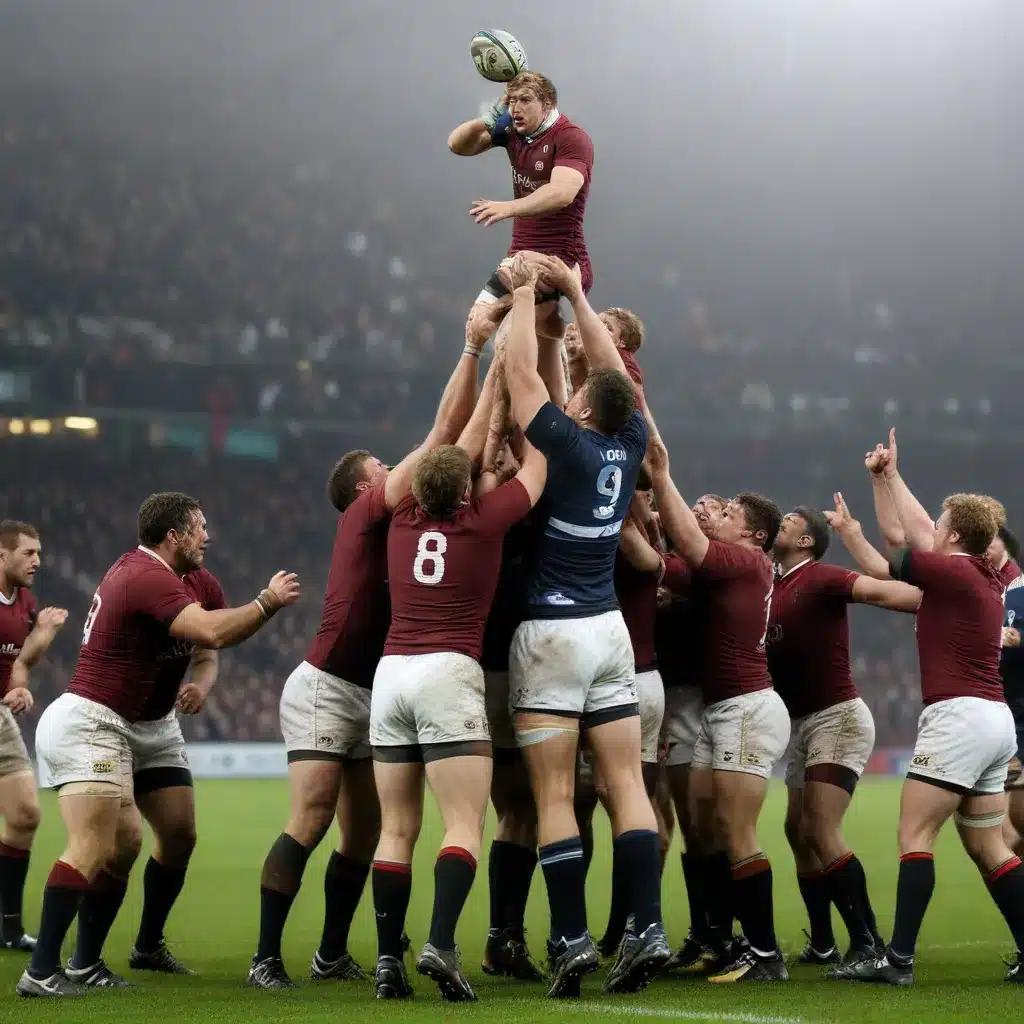
The Lineout: A Critical Rugby Set Piece
As a seasoned rugby professional, I’ve had the privilege of coaching and competing at the highest levels of the game. Throughout my career, I’ve come to appreciate the sheer importance of the lineout – a set piece that can make or break a team’s fortunes. The lineout is often referred to as the “engine room” of rugby, where possession and field position are fiercely contested. Mastering the lineout can provide a significant strategic advantage, allowing teams to consistently generate attacking opportunities and stifle the opposition’s momentum.
The Importance of the Lineout
In the modern game, the lineout has become an increasingly vital aspect of a team’s tactical repertoire. As the source of a significant portion of a team’s possession, the lineout is a pivotal battleground where the fight for territory and dominance is waged. A well-executed lineout not only secures precious ball possession but can also serve as a launching pad for devastating attacking plays, mauls, and set-piece moves.
Conversely, a poorly executed lineout can quickly turn the tide of a match, gifting the opposition valuable field position and opportunities to counterattack. This delicate balance underscores the importance of honing lineout skills and strategies, as they can directly influence the outcome of a game.
Lineout Strategies and Tactics
The lineout is a complex set piece that requires meticulous planning, coordination, and execution. Successful teams have developed a deep understanding of various lineout strategies and tactics, tailoring their approach to the specific strengths and weaknesses of their opponents.
One such strategy is the use of specialized lineout calls and formations. By employing a diverse array of lineout setups, teams can create confusion and uncertainty in the opposition, making it challenging for them to effectively disrupt the throw and contest the ball. This flexibility allows teams to exploit mismatches, target specific opposition jumpers, or set up preplanned plays.
Additionally, effective communication and decision-making at the lineout are crucial. Hookers must develop a keen understanding of their jumpers’ abilities and preferences, enabling them to deliver precise, well-timed throws. Likewise, the lineout callers and jumpers must work in seamless harmony, anticipating and reacting to the opposing team’s defensive actions.
Lineout Formations and Player Positioning
Standard Lineout Formations
At the most fundamental level, the lineout typically features a standard 2-3-2 formation, with two hookers, three jumpers, and two lifters. This basic setup provides a solid foundation for a variety of lineout strategies and tactics.
However, teams may choose to employ more specialized formations to suit their strengths or counter the opposition’s tactics. For example, some teams may opt for a 3-4-1 formation, with three jumpers and a single lifter, emphasizing height and aerial prowess. Conversely, a 2-2-3 setup might be utilized to create more dynamic options for mauls and driving plays.
The positioning of players within the lineout is equally important. Hookers must be adept at delivering precise, consistent throws, while jumpers must time their leaps with pinpoint accuracy to secure possession. Lifters, on the other hand, play a crucial role in providing the necessary support and momentum to outmaneuver the opposition.
Specialized Lineout Setups
As the game of rugby continues to evolve, teams have become increasingly innovative in their approach to the lineout. Specialized setups, such as the “umbrella” formation or the “two-man” lineout, have emerged as strategic responses to specific challenges or opportunities.
The “umbrella” formation, for example, features a single jumper flanked by multiple lifters, creating a protective “umbrella” to shield the ball from the opposing team’s reach. This setup can be particularly effective against teams that rely on aggressive lineout defense or have a significant height advantage.
Conversely, the “two-man” lineout, with just two players, can be used to create a rapid, unpredictable throwing option, catching the opposition off guard and potentially generating quick attacking opportunities.
Mastering these specialized lineout setups requires a deep understanding of the game, an ability to read the opposition’s tendencies, and a willingness to experiment and adapt. Successful teams are those that can seamlessly incorporate these specialized formations into their overall tactical repertoire, keeping their opponents guessing and consistently gaining the upper hand at the set-piece.
Lineout Throwing Techniques
The Hooker’s Role
At the heart of a well-executed lineout lies the hooker’s ability to deliver accurate, consistent throws. As the key link between the forwards and the jumpers, the hooker’s technique and decision-making are crucial.
Hookers must develop a precise, repeatable throwing motion, ensuring that the ball reaches the desired target with pinpoint accuracy. This involves mastering the mechanics of the throw, from the grip and body positioning to the release and follow-through. Consistent practice and feedback from coaches are essential in refining and honing these skills.
Furthermore, a hooker’s decision-making process at the lineout is equally important. They must quickly assess the opposition’s defensive setup, identify potential mismatches or weaknesses, and then select the appropriate throwing option to maximize the chances of a successful outcome.
Accurate Lineout Throwing
Accuracy is the hallmark of an elite lineout thrower. Hookers must develop the ability to consistently deliver the ball to their jumpers, even in the face of intense pressure and unpredictable conditions.
One key aspect of accurate throwing is the development of a consistent release point. By establishing a reliable release point, hookers can ensure that the ball is delivered at the perfect height and trajectory, making it easier for their jumpers to secure possession.
Additionally, hookers must be adept at reading the opposition’s defensive alignment and adjusting their throwing accordingly. This may involve varying the speed, trajectory, or even the timing of the throw to create favorable matchups or exploit weaknesses in the opposition’s lineout.
Mastering the art of accurate lineout throwing is a never-ending pursuit, as hookers must continuously refine their technique and decision-making to stay ahead of the competition.
Lineout Jumping and Lifting Skills
Timing the Jump
Successful lineout play is not solely dependent on the hooker’s throwing ability; the timing and execution of the jumpers’ leaps are equally critical. Jumpers must develop an innate sense of timing, enabling them to synchronize their movements with the hooker’s throw and the opposition’s defensive actions.
Effective jumpers possess an acute spatial awareness, constantly scanning the lineout and anticipating the trajectory of the ball. They must be able to time their jump to perfection, reaching the apex of their leap as the ball arrives, giving them the best chance of securing possession.
This requires consistent practice, close collaboration with the hooker, and a deep understanding of the game’s tempo and rhythms. Jumpers who can consistently time their jumps to perfection often become invaluable assets to their teams, setting the stage for dominant set-piece play.
Effective Lifting Techniques
Complementing the jumpers’ aerial prowess are the crucial lifting skills of the forwards tasked with providing the necessary support and momentum. Effective lifting is a complex, nuanced skill that requires both physical strength and precise coordination.
Lifters must develop the ability to generate significant upward force, propelling their teammates into the air with power and control. This involves proper body positioning, leg drive, and timing, all while maintaining balance and stability in a highly congested environment.
Moreover, lifters must be able to adapt their techniques to the specific requirements of the situation, adjusting their approach to accommodate different jump heights, opposition pressure, or the need for maneuvering and repositioning during the lineout.
Investing in the development of these lifting skills can pay dividends for a team, as it allows them to consistently win their own ball and potentially disrupt the opposition’s lineout.
Defending the Lineout
Disrupting the Lineout
While the focus often falls on the offensive aspects of the lineout, effective defensive strategies are equally crucial to a team’s overall success. Mastering the art of disrupting the opposition’s lineout can be a game-changing skill.
Defensive teams must closely study the tendencies and patterns of their opponents’ lineout, identifying potential weaknesses or predictable behaviors. This intelligence-gathering process allows them to develop targeted strategies to disrupt the throwing, jumping, and lifting capabilities of the opposition.
Tactics such as aggressive jumping, well-timed lifts, and strategic placement of defenders can all contribute to disrupting the opposition’s lineout. By denying the opposition’s ball or forcing them into undesirable outcomes, teams can gain valuable possession and field position, shifting the momentum of the match.
Counterattacking from the Lineout
However, the defensive responsibilities at the lineout extend beyond simply disrupting the opposition’s possession. Savvy teams recognize the potential for counterattacking opportunities that can arise from winning or stealing the ball at the lineout.
By anticipating the opposition’s lineout plans and positioning their players accordingly, teams can seize the initiative and launch rapid, incisive counterattacks. This might involve swift ball transfers to the backline, well-coordinated mauls, or even quick-tapped lineout throws to catch the defense off guard.
Mastering the art of counterattacking from the lineout not only denies the opposition’s attacking momentum but also creates opportunities to gain valuable territory and territory, potentially leading to points on the scoreboard.
Lineout Variations and Innovation
Quick Lineout Throws
As the game of rugby continues to evolve, teams are constantly seeking new ways to gain an edge at the lineout. One such innovation is the use of quick lineout throws, a tactic that can catch the opposition off guard and create immediate attacking opportunities.
Quick lineout throws, executed with precision and timing, allow teams to quickly restart play, bypassing the traditional lineout setup. This can be particularly effective against teams that struggle to reorganize their defensive structure or fail to anticipate the rapid restart.
Successful execution of quick lineout throws requires exceptional communication, decision-making, and technical skill from the hooker and the designated thrower. The ability to identify opportune moments and deliver the ball accurately to a teammate in space can be a game-changing weapon in a team’s arsenal.
Lineout Mauls and Drives
Another strategic development in the lineout is the effective use of mauls and driving plays. By carefully orchestrating their lineout setups and timing their movements, teams can create powerful mauls that generate significant momentum and territory.
The lineout maul, when executed with precision and coordination, can be a devastating attacking tool. Forwards must work in unison, using their collective strength and body positioning to propel the maul forward, maintaining control and stability throughout.
Alternatively, teams may opt to use the lineout as a launching pad for driving plays, where the jumpers and lifters work in harmony to generate forward momentum and drive the opposition backward. These driving lineouts can be particularly effective in creating favorable field position or scoring opportunities.
Mastering the intricacies of lineout mauls and driving plays requires a deep understanding of pack dynamics, as well as the ability to anticipate and react to the opposition’s defensive adjustments.
Optimizing Lineout Execution
Pre-Game Preparation
Consistent excellence at the lineout does not happen by chance; it is the result of meticulous preparation, diligent practice, and a deep understanding of the game’s nuances. Successful teams invest significant time and resources into refining their lineout strategies and execution.
Pre-game preparation is a crucial aspect of this process. Coaches and players meticulously analyze their opponents’ tendencies, studying their lineout formations, throwing patterns, and defensive strategies. This intelligence-gathering exercise allows teams to develop tailored game plans and specialized setups to exploit the opposition’s weaknesses.
Additionally, teams prioritize dedicated lineout training sessions, where hookers, jumpers, and lifters hone their individual skills and work on seamless coordination. These sessions focus on repetition, problem-solving, and adaptability, ensuring that players are well-equipped to handle the demands of the game.
In-Game Adjustments
However, the true test of a team’s lineout proficiency manifests during the heat of the match. Successful teams exhibit the ability to make real-time adjustments, adapting their lineout strategies and tactics to the ever-evolving game situation.
Throughout the match, coaches and players closely monitor the opposition’s responses, making subtle tweaks to their lineout setup or throwing options. This agility and responsiveness allows them to maintain a tactical advantage, constantly keeping the opposition guessing and off-balance.
Additionally, skilled teams are adept at recognizing and capitalizing on opportunities that arise during the game. Whether it’s identifying a favorable matchup, exploiting a temporary defensive lapse, or seizing upon a favorable set-piece scenario, the ability to recognize and act upon these moments can be the difference between victory and defeat.
Ultimately, the mastery of the lineout is a continual journey, one that requires a relentless pursuit of perfection, a deep understanding of the game, and a willingness to adapt and innovate. Teams that can consistently execute their lineout strategies with precision and adaptability often find themselves in a position of dominance, commanding the set-piece battle and dictating the flow of the match.
As you strive to elevate your own lineout performance, whether as a coach, player, or rugby enthusiast, I encourage you to embrace the challenge and immerse yourself in the rich tapestry of this critical set-piece. By honing your skills, expanding your tactical repertoire, and fostering a culture of excellence, you too can become a master of the lineout, empowering your team to reach new heights on the rugby pitch.
For more insights and resources on the art of rugby, I invite you to visit the Aberdeenshire RFC website at www.aberdeenshirerfc.org.uk. There, you’ll find a wealth of information, training materials, and a vibrant community of rugby enthusiasts, all dedicated to the pursuit of excellence in this magnificent sport.