
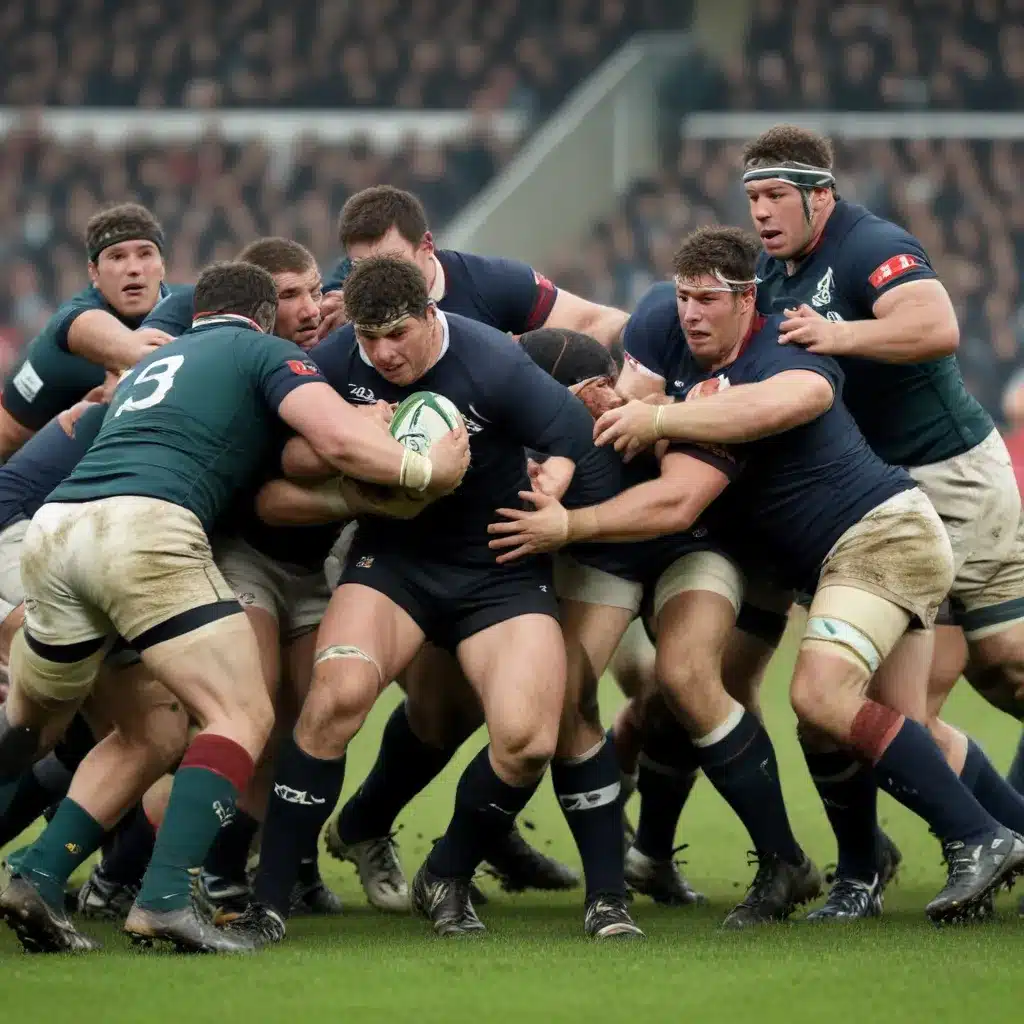
Maul Mechanics and Dynamics
As a seasoned rugby professional, I’ve seen the maul evolve over the years into a critical weapon in the modern game. The maul is a uniquely dynamic element of rugby union, requiring precise technique, unwavering commitment, and a deep understanding of its intricate mechanics.
At its core, the maul is a contest of power, leverage, and technique. Forming and maintaining a stable, cohesive maul is an art form in itself. The forwards must work in seamless unison, using their collective strength to drive forward, protect the ball, and prevent the opposition from disrupting the momentum.
Mobility and adaptability are also key – the maul must be able to shift direction, counter defensive adjustments, and exploit any gaps or weaknesses that arise. This requires constant communication, exceptional body positioning, and the ability to react instinctively to the ebbs and flows of the contest.
Stability and control are paramount – a wobbling, disorganized maul is easily sapped of its momentum and can quickly become a liability. The forwards must work tirelessly to establish a solid base, lock their hips, and drive with purpose, while the halfbacks provide critical tactical direction and decision-making.
Possession and Continuity
Retaining possession through the maul is a fundamental aspect of dominating the territorial battle. By stringing together phases of play and maintaining momentum, teams can systematically wear down the opposition, dictate the tempo, and create opportunities to attack.
The maul is a crucial tool in this regard. It allows teams to methodically grind out meters, keep the ball off the ground, and deny the opposition opportunities to contest possession. Effective mauling can help a team control field position, build pressure, and ultimately tilt the scoreboard in their favor.
Continuity is key – the ability to transition seamlessly from one phase to the next, without surrendering the ball, is what separates the elite teams from the rest. The maul plays a pivotal role in this, providing a stable platform to launch the next wave of attack or reset the defensive line.
Momentum is the lifeblood of rugby – a team that can establish and maintain a rhythm through their maul work is often able to dominate possession and territory, wearing down the opposition both physically and mentally.
Tactical Considerations
Dominating the possession battle through the maul requires a multifaceted tactical approach. Set-piece dominance is a critical foundation – a team that can consistently win their own lineouts and scrums is in a prime position to launch effective mauling drives.
Contested-ball scenarios are where the maul can truly shine. When the ball is up for grabs, the team that can quickly secure possession and transition into a cohesive maul often gains a decisive advantage. This requires exceptional awareness, decision-making, and the ability to react in the moment.
Moreover, the maul can be used to exploit defensive weaknesses. By identifying gaps in the opposition’s defensive structure or alignment, teams can target specific areas with their maul and create opportunities to break the line or draw in defenders, freeing up space elsewhere.
The Maul’s Role in Attack and Defense
The maul is a formidable weapon in both attack and defense. As an attacking tool, it allows teams to methodically grind out meters, wear down the opposition, and create scoring opportunities. The sheer physical and psychological toll of repeatedly having to stop a well-executed maul can sap the energy and resolve of the defending team.
However, the maul is not merely a blunt instrument. Skilled teams can use the maul to create subtle mismatches, draw in defenders, and then transition into a different phase of play, whether it’s a backline move, a pop pass, or a clever kick. The maul’s versatility and unpredictability make it a valuable component of any attacking arsenal.
Defensively, teams must be adept at disrupting the maul, using a combination of strategic positioning, technical excellence, and sheer determination. Maintaining discipline, staying low, and targeting weak points in the maul’s structure are all crucial elements of an effective defensive strategy.
The breakdown is where the battle for the maul often reaches its crescendo. Teams must be willing to commit bodies, contest the ball, and deny the opposition the chance to establish momentum. Discipline and decision-making are paramount – a lapse in concentration or a moment of indiscipline can quickly undo all the hard work.
Conclusion
The rugby maul is a fascinating and complex aspect of the game, one that requires a deep understanding of its mechanics, dynamics, and tactical applications. By mastering the art of the maul, teams can gain a significant advantage in the possession battle, dictate the tempo of the game, and ultimately position themselves for success.
As a seasoned professional, I’ve seen the maul evolve over the years, with teams constantly seeking new ways to refine their techniques and exploit defensive vulnerabilities. It is a facet of the game that demands unwavering commitment, exceptional skill, and a relentless pursuit of perfection.
For the Aberdeenshire RFC community, embracing the maul as a critical weapon in your arsenal can be a game-changer. By honing your skills, developing a cohesive maul unit, and incorporating it seamlessly into your overall game plan, you can gain a significant edge over your opponents and position yourselves for sustained success.
The journey to maul mastery is a demanding one, but the rewards are immense. I encourage the Aberdeenshire RFC community to embrace the challenge, push the boundaries of what’s possible, and become true masters of the rugby maul.