
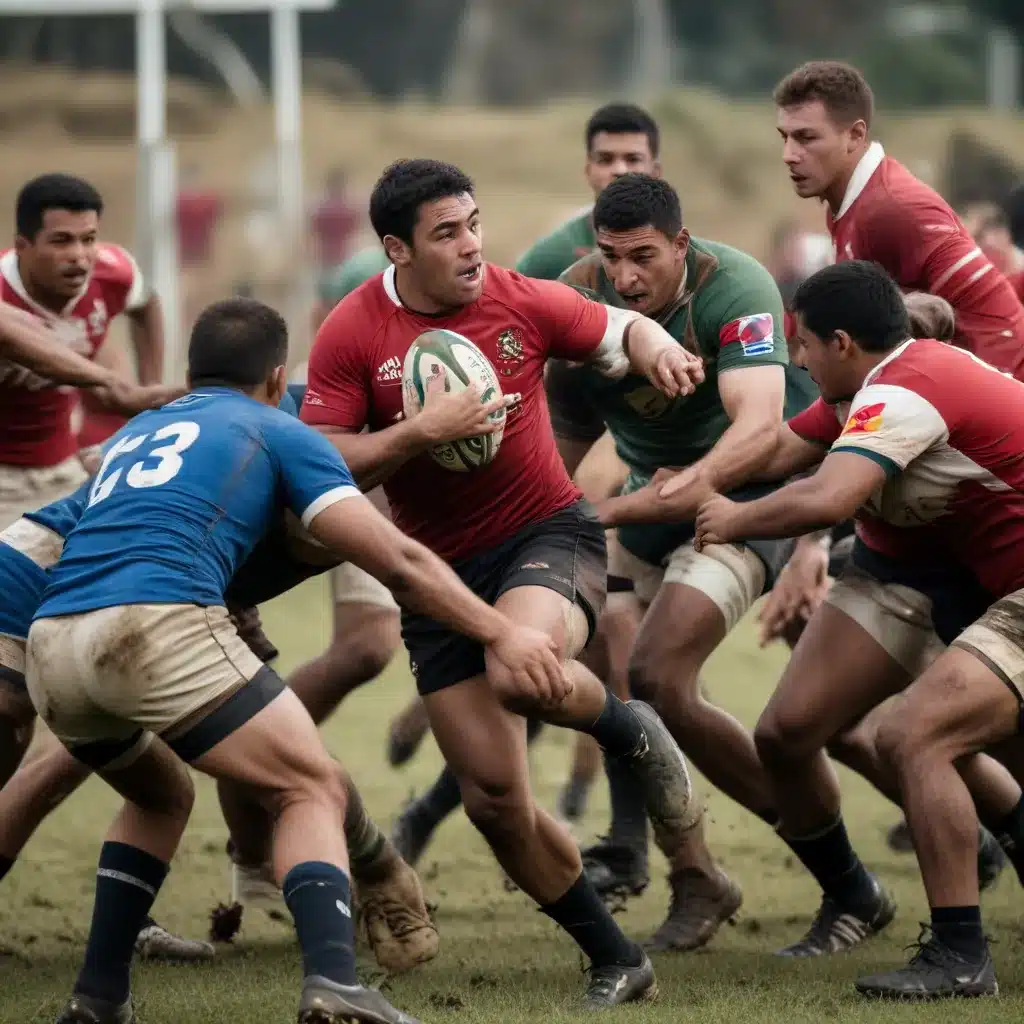
The Expansion of Rugby into Conflict-Affected Regions
As a seasoned rugby professional, I’ve had the privilege of witnessing the game’s remarkable growth and transformative impact in some of the most challenging regions around the world. From the remote Pacific Islands to war-torn corners of Africa, rugby has proven to be a powerful tool for fostering community resilience, promoting reconciliation, and empowering marginalized populations.
Challenges and Opportunities in Fragile Contexts
One of the most inspiring aspects of rugby’s global expansion is its ability to thrive even in the face of formidable sociopolitical instability. In conflict-affected regions, where the social fabric has been torn apart by violence and unrest, rugby has emerged as a unifying force, capable of bringing divided communities together in a shared pursuit of excellence.
Take, for example, the work being done by organizations like Generations for Peace in areas like South Sudan and northern Uganda. By introducing rugby programs that engage youth from different ethnic and religious backgrounds, they have been able to create safe spaces for dialogue, build trust, and nurture a spirit of cross-cultural understanding. As one young participant in South Sudan shared, “Rugby has taught me to see the humanity in people I once saw as my enemy.”
Rugby’s Role in Peacebuilding and Community Resilience
The power of rugby in peacebuilding and community resilience cannot be overstated. In regions plagued by protracted conflicts, the sport has become a catalyst for intercommunal dialogue and the restoration of social cohesion. By fostering inclusive environments where participants can connect, collaborate, and celebrate their shared passions, rugby programs have proven instrumental in breaking down barriers and fostering a sense of collective identity.
As research has shown, the positive impact of rugby extends beyond the playing field, manifesting in improved mental health, increased engagement in civic life, and the development of transferable skills that can be applied to various aspects of personal and professional growth. By empowering individuals and communities to become agents of change, rugby has the potential to play a pivotal role in achieving the United Nations’ Sustainable Development Goals, particularly those related to peace, justice, and strong institutions.
The Transformative Power of Rugby
Empowering Marginalized Groups
One of the most remarkable aspects of rugby’s global expansion is its ability to empower marginalized groups, particularly women and girls. In regions where traditional gender norms and sociocultural barriers have long hindered female participation in sports, rugby has emerged as a powerful platform for challenging these entrenched perceptions.
Organizations like Women Win have been at the forefront of this effort, leveraging rugby as a tool for promoting gender equity and social inclusion. Through their programs, young women in conflict-affected areas have not only developed their physical and leadership skills but also gained a newfound sense of confidence, self-worth, and agency.
As one participant in a Women Win program in the Democratic Republic of Congo shared, “Rugby has shown me that I can be strong, independent, and capable of achieving anything I set my mind to. It has changed the way my community sees me and the way I see myself.”
Promoting Education and Personal Development
Beyond its impact on physical and mental well-being, rugby has also proven to be a powerful catalyst for education and personal development. In many conflict-affected regions, the disruption of formal schooling and the lack of accessible recreational activities can contribute to high rates of youth disengagement and risk-taking behaviors.
Rugby programs, however, have been instrumental in addressing these challenges, providing young people with opportunities to not only develop their athletic skills but also acquire vital life skills, such as teamwork, communication, and problem-solving. Through comprehensive curriculum-based initiatives, these programs have also been able to support academic achievement, offering scholarships, tutoring, and mentorship to ensure that participants can fulfill their educational aspirations.
As one coach working with a rugby-based education program in northern Uganda remarked, “We don’t just teach them how to play the game; we empower them to become leaders, critical thinkers, and agents of positive change in their communities.”
Sustainable Development through Rugby
Aligning with the United Nations Sustainable Development Goals
The profound impact of rugby’s expansion into conflict-affected and fragile regions can be directly aligned with the United Nations Sustainable Development Goals (SDGs). From promoting good health and well-being (SDG 3) to ensuring quality education (SDG 4) and fostering peace, justice, and strong institutions (SDG 16), the sport has emerged as a powerful tool for driving sustainable development in some of the world’s most challenging contexts.
By providing safe spaces for physical activity, rugby programs have been instrumental in addressing the mental health crisis exacerbated by the trauma of conflict, while also encouraging healthy lifestyle choices. Moreover, the emphasis on life skills and leadership development within these programs directly supports the achievement of quality education, empowering young people to become active citizens and contributors to their communities.
Perhaps most significantly, rugby’s role in fostering intercommunal dialogue, promoting social cohesion, and building resilient communities aligns with the crucial SDG of peace, justice, and strong institutions. As the Chatham House has noted, “Sport can be a powerful tool for conflict resolution and peacebuilding, breaking down barriers and bringing people together in a shared pursuit of excellence.”
Building Partnerships and Funding Mechanisms
To ensure the sustainability and scalability of rugby’s impact in conflict-affected regions, it is essential to cultivate robust partnerships and innovative funding mechanisms. Corporate social responsibility initiatives, for instance, have been instrumental in providing the necessary resources and expertise to support the development of rugby programs in fragile contexts.
Organizations like Aberdeenshire RFC have been at the forefront of this effort, leveraging their global network and organizational expertise to empower grassroots rugby initiatives around the world. Through targeted fundraising campaigns and collaborative efforts with local communities, these partnerships have helped to unlock the transformative potential of rugby, ensuring that the sport’s benefits can be accessed by those who need it most.
As the demand for rugby-based development programs continues to grow, innovative funding sources, such as crowdfunding platforms and impact investing, will play an increasingly vital role in sustaining these initiatives and driving long-term change.
The Global Reach of Rugby
Exploring Regional Variations and Cultural Adaptations
While the core values and principles of rugby remain consistent across the globe, the game has also demonstrated an remarkable adaptability, seamlessly integrating with diverse cultural contexts and traditions. In the Pacific Islands, for instance, rugby has become deeply intertwined with local communities, with the sport serving as a unifying force and a source of immense pride.
Similarly, in Africa, the growth of rugby has been characterized by a unique blend of global and local influences, with the sport serving as a catalyst for youth empowerment, education, and community development. As research has shown, the cultural adaptations of rugby in these regions have not only enriched the game but also fostered a greater sense of ownership and investment among local stakeholders.
Emerging Rugby Powerhouses and their Impact
As rugby continues to expand its global footprint, the rise of unexpected powerhouses has been a testament to the sport’s transformative potential. In Japan, for example, the country’s successful hosting of the 2019 Rugby World Cup and the subsequent growth of the sport at the grassroots level have had a profound impact, inspiring a new generation of athletes and catalyzing broader societal change.
Similarly, the steady progress of nations like Georgia and Romania in the international rugby arena has not only challenged the traditional hierarchies of the sport but also served as a source of immense pride and unity for their respective communities. By providing opportunities for young people to excel, these emerging rugby powerhouses have been able to nurture a sense of belonging and self-belief, which can have far-reaching implications for the overall development and resilience of their societies.
As I reflect on the global expansion of rugby, I am reminded of the words of one young player in South Sudan, who encapsulated the transformative power of the sport: “Rugby has given me a sense of purpose, a community to belong to, and the belief that I can achieve anything I set my mind to. It has truly changed the trajectory of my life.”