
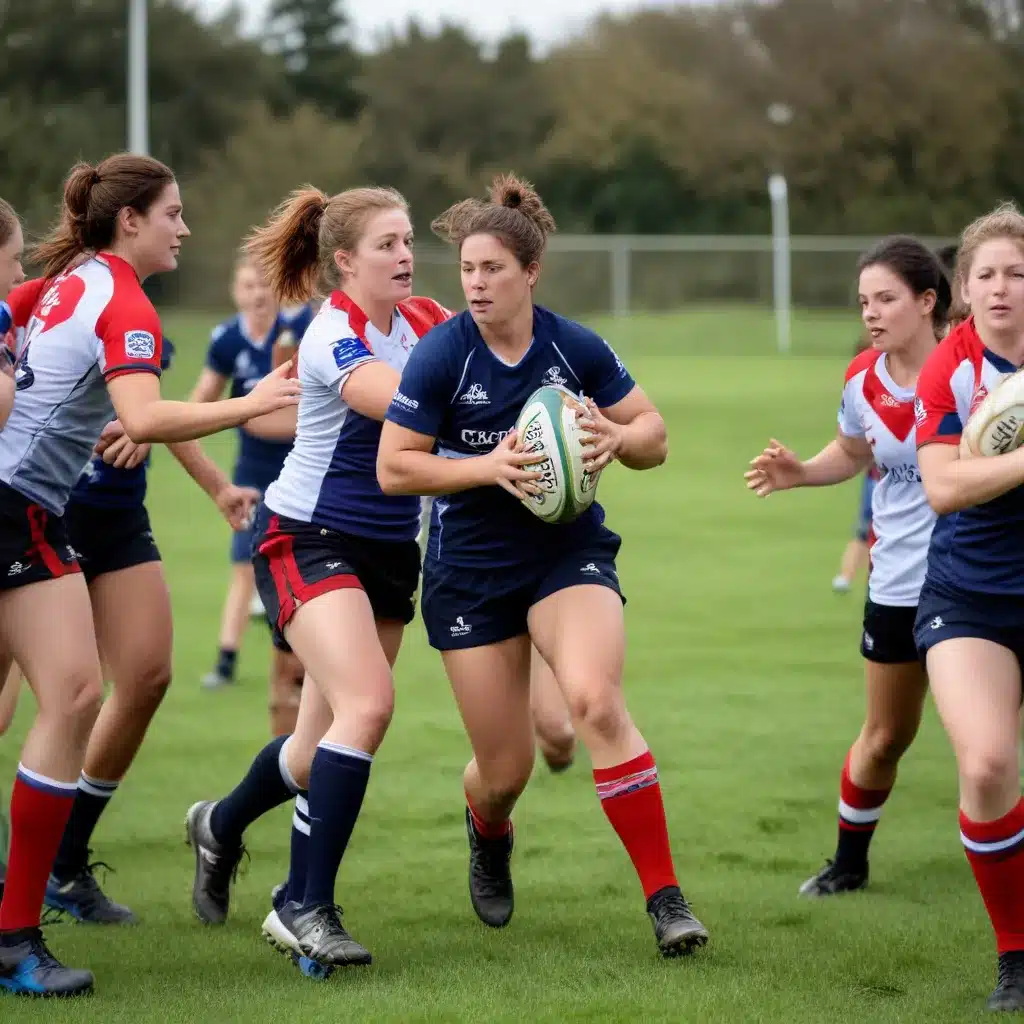
Grassroots Participation and Empowerment
In recent years, the spotlight on gender equality in sports has shone brighter than ever before. Companies like E.ON are stepping up to make a tangible difference, supporting initiatives that empower women in rugby from the grassroots level upwards. Through partnerships and targeted programs, they are not only elevating female athletes but also creating a more inclusive and equitable playing field for future generations.
One such initiative is ChildFund Rugby’s Grassroots to Global Forum, a vibrant community where women coaches, players, and advocates come together to sharpen their leadership skills, network with like-minded peers, and confront the unique challenges they face in the sport. “Grassroots to Global shows what’s possible when we empower girls and women in rugby,” says Megan Knight, Deputy Director at ChildFund Rugby. “The initiative reveals both the challenges they face – from financial barriers to discrimination – and what keeps them engaged: especially the vital role of female coaches and community role models.”
These forums provide a hands-on approach to help emerging female leaders in rugby pinpoint the ups and downs they encounter, enabling them to create action plans that drive social change and make the sport more inclusive for women and girls. The transformative power of these sessions is evident, with nearly 500 female leaders already participating and new initiatives blossoming in previously untouched regions like Cambodia and Brazil.
Gallagher’s High-Performance Academy (GHPA) has joined forces with ChildFund Rugby to host these impactful forums, underscoring their commitment to expanding opportunities for women in rugby. “By providing a platform for female coaches to thrive, the GHPA is contributing to the advancement of women in rugby and setting the stage for a more diverse future in the sport on the international stage and at the grassroots level,” says Christopher Mead, Gallagher’s Chief Marketing Officer.
Equality and Leadership in Women’s Rugby
Beyond grassroots participation, the conversation around gender equality in rugby must extend to the upper echelons of the sport – the coaching and administrative ranks. Historically, these areas have been male-dominated, but a growing number of organizations are taking proactive steps to bridge the gap.
Mastercard, a long-standing partner of World Rugby, has appointed two dynamic women as rugby ambassadors: Piwokuhle Nyanda, a Springbok and Golden Lions Women’s Rugby player, and Chanel Alberts, the head coach of the Pirates Women’s Rugby Team. “As a historically male-dominated contact sport, women have until recently not really had the opportunity to consider rugby as a hobby, let alone a career option,” says Alberts. “But the benefits of the organised game are hugely beneficial for women, whether its playing at a grassroots or national level, or coaching a women’s rugby team.”
Through these ambassadorships, Mastercard aims to raise the visibility and appeal of women’s rugby, inspiring more females to take on leadership roles both on and off the pitch. “By investing significantly in women’s rugby – both at a grassroots and global level – we have an opportunity to directly impact the lives of athletes and help build sustainable programmes to which girls and women can aspire,” says Suzanne Morel, Country Manager at Mastercard, South Africa.
Initiatives like the Grassroots to Global Forum and Mastercard’s ambassador program are not just about adding more women to the roster; they’re about creating a network where participants can swap ideas, learn from each other, and ultimately expand female involvement in rugby leadership. As World Rugby Chief of Women’s Rugby, Sally Horrox, aptly states, “To grow the game of rugby, we need more women in leadership roles both on and off the pitch.”
Community Engagement and Outreach
Grassroots initiatives aimed at empowering women in rugby go beyond just developing skills and fostering leadership. They also extend to community engagement and outreach, leveraging the power of the sport to drive positive change.
In Kwale County, Kenya, the TWALENGA Women in Sports program, run by Kwale Sports Excellence CBO, is doing just that. Halima Gongo, a passionate martial artist and constructive journalism expert, is part of this initiative, which focuses on inclusion in sports while supporting young women to represent Kenya internationally. “Together with Kwale Sports Excellence CBO and British Olympian, Rowan McKellar, we are dedicated to elevating women’s sports standards through vital themes like social causes, education, safety, nutrition (highlighting indigenous foods), and mental health,” says Gongo.
By collaborating with local partners like the Kwale County Government, Base Titanium Ltd, Swahili Beach Resort, and Kombani Dishes, the TWALENGA program is not only promoting peace in the community but also empowering future champions. “Constructive Journalism Expert // Human Rights Defender I am honored to be part of TWALENGA Women in Sports,” Gongo proudly shares, “As a martial artist enthusiast, I am not only encouraging inclusion in sports but also supporting young women in Kwale County to represent internationally!”
Initiatives like TWALENGA demonstrate the transformative potential of community-driven programs that leverage sports to address social challenges and improve overall well-being. By fostering partnerships and engaging with local stakeholders, these grassroots efforts are creating a more inclusive and empowering environment for women in rugby.
Funding and Resources for Women’s Rugby
The success of grassroots initiatives aimed at empowering women in rugby hinges on securing sustainable funding and resources. Organizations are increasingly seeking innovative ways to support these programs and ensure their long-term viability.
E.ON, a leading energy company, has stepped up to the plate, partnering with Veloce Racing and its female drivers, Jamie Chadwick and Molly Taylor, to promote sustainability and gender diversity in motorsport. This collaboration not only highlights E.ON’s commitment to green energy initiatives but also its dedication to championing women in sports.
“We know there are still barriers and challenges that need to be addressed to help to build an environment where everyone can thrive,” says Helen Bradbury, Chief People Officer at E.ON UK. “We must continue to lift up these voices in all areas, including sport.”
Beyond private sector partnerships, grassroots programs are also tapping into public funding sources and leveraging global platforms to amplify their messages. As the Global Social Impact Partner for the Women’s Rugby World Cup 2025, ChildFund Rugby is harnessing the power of this prestigious event to drive positive change in communities around the world.
“It’s fantastic to see ChildFund Rugby’s Grassroots to Global series announce over 30 more forums as we enter this crucial period in the lead-up to the Women’s Rugby World Cup 2025,” says World Rugby Chief of Women’s Rugby, Sally Horrox. “To grow the game of rugby, we need more women in leadership roles both on and off the pitch. It’s great to have ChildFund Rugby and Gallagher onboard who share a common goal to recruit more girls and women into coaching from the grassroots community level right the way through to the elite end of the game, through training, coaching, and mentoring.”
By leveraging a diverse array of funding sources and strategic partnerships, grassroots initiatives are securing the resources needed to empower women in rugby and pave the way for a more inclusive and equitable future in the sport.
Visibility and Recognition for Women’s Rugby
Alongside the practical empowerment of women in rugby, grassroots initiatives are also focused on increasing the visibility and recognition of their achievements. By amplifying the voices of female athletes, coaches, and leaders, these programs are challenging societal perceptions and inspiring the next generation.
In South Africa, the appointments of Piwokuhle Nyanda and Chanel Alberts as Mastercard’s women rugby ambassadors send a powerful message. “As a historically male-dominated contact sport, women have until recently not really had the opportunity to consider rugby as a hobby, let alone a career option,” says Alberts. “But the benefits of the organised game are hugely beneficial for women, whether its playing at a grassroots or national level, or coaching a women’s rugby team.”
These ambassadorships not only elevate the profiles of Nyanda and Alberts but also shine a light on the incredible contributions women are making to the sport. By partnering with Mastercard, they gain a platform to engage with cardholders, deliver Priceless Surprises, and inspire more women and girls to get involved in rugby.
Similarly, the TWALENGA Women in Sports program in Kwale County, Kenya, is advocating for the empowerment of women through sports, with a particular focus on martial arts. Halima Gongo, a member of the program, shares, “I am not only encouraging inclusion in sports but also supporting young women in Kwale County to represent internationally!”
These grassroots initiatives are not just about developing skills and fostering leadership – they’re about challenging the status quo and redefining the narrative around women in sports. By amplifying the achievements and stories of female rugby players, coaches, and leaders, they are inspiring the next generation and paving the way for a more equitable future in the sport.
Overcoming Challenges and Barriers
While the grassroots initiatives highlighted in this article are making significant strides in empowering women in rugby, there are still challenges and barriers that need to be addressed. From cultural and societal perceptions to financial and structural obstacles, the path to true gender equality in the sport remains arduous.
One of the key barriers that grassroots programs are tackling head-on is the gender imbalance in coaching and administration. As World Rugby Chief of Women’s Rugby, Sally Horrox, notes, “To grow the game of rugby, we need more women in leadership roles both on and off the pitch.” Programs like ChildFund Rugby’s Grassroots to Global Forum and Mastercard’s ambassador program are working to bridge this gap by providing training, mentorship, and visibility for female leaders in the sport.
Another challenge is the persistence of cultural and societal norms that can discourage women from participating in rugby. Initiatives like the TWALENGA Women in Sports program in Kenya are addressing this by fostering a supportive and inclusive environment, while also advocating for policy changes and public awareness campaigns.
Financial barriers also pose a significant hurdle, as many grassroots programs struggle to secure sustainable funding. However, the partnerships forged by organizations like E.ON, Mastercard, and ChildFund Rugby demonstrate the power of collaboration in overcoming these challenges. By leveraging private and public funding sources, as well as global platforms like the Women’s Rugby World Cup, these initiatives are securing the resources needed to drive long-term change.
Ultimately, the success of grassroots initiatives in empowering women in rugby hinges on their ability to tackle these multifaceted challenges head-on. By addressing cultural perceptions, securing funding, and fostering inclusive leadership, these programs are paving the way for a more equitable and empowered future in the sport.
As the Aberdeenshire RFC community continues its journey towards greater inclusivity and diversity, the inspirational stories and best practices highlighted in this article can provide valuable insights and inspiration. By embracing the transformative power of grassroots initiatives, the club can play a pivotal role in empowering women in rugby and driving positive change within its own community and beyond. Together, we can create a more inclusive and equitable playing field, where all athletes – regardless of gender – have the opportunity to thrive.