
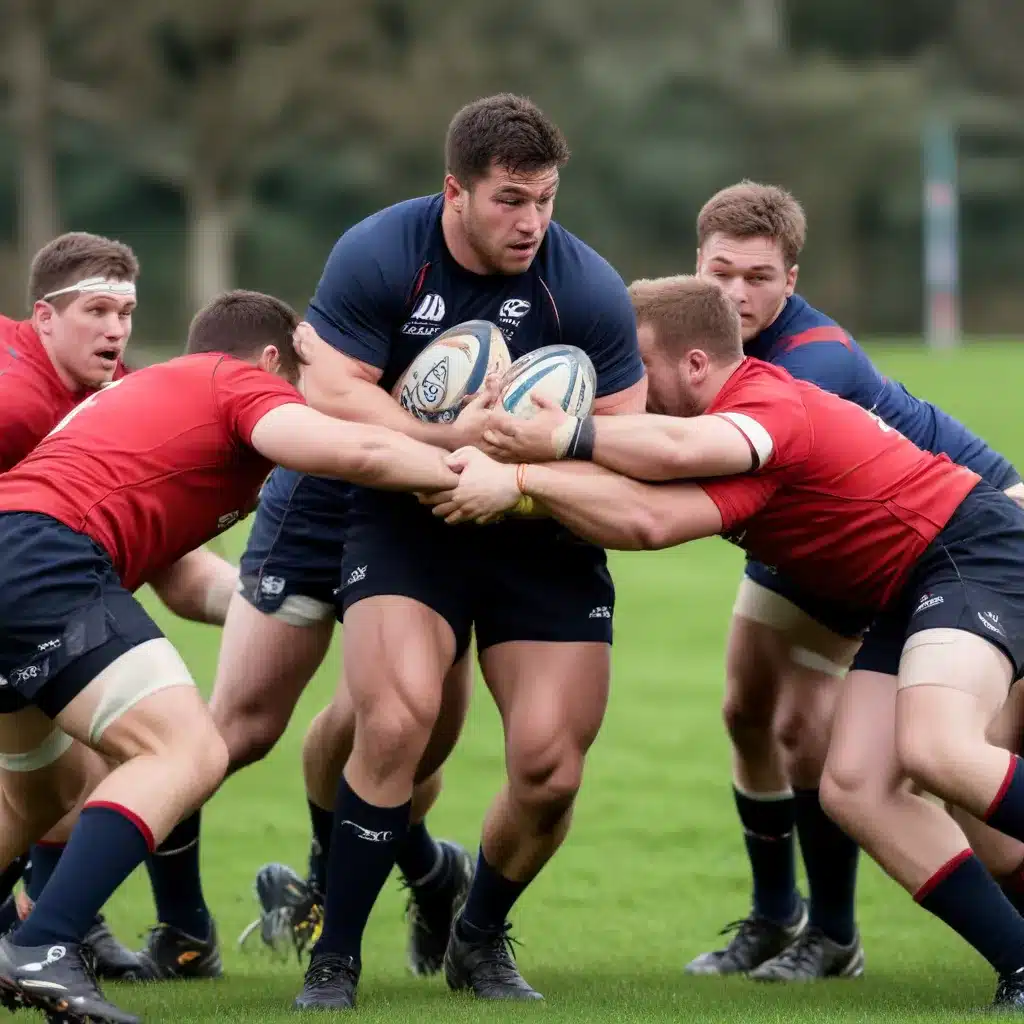
Ruck Dynamics
The rugby ruck is a critical phase of play that often determines the outcome of a match. As a seasoned rugby professional, I’ve seen firsthand how teams that dominate the ruck can gain a decisive advantage over their opponents. At its core, the ruck is a contest for possession, where both teams strive to secure the ball and maintain control of the phase.
Proper Ruck Formation
Forming the ruck correctly is the first step towards mastering this vital skill. Players must bind onto their teammates, creating a strong, cohesive unit that can withstand the opposition’s challenge. Maintaining a low body position, with knees bent and hips driven forward, is essential for generating the necessary power and leverage. Timing is also crucial, as players must commit to the ruck at the precise moment the ball carrier is tackled, ensuring they can quickly engage with the opposition and secure the ball.
Securing the Ball at the Ruck
Once the ruck is formed, the focus shifts to retaining possession. This requires a combination of technical skill and sheer determination. Players must be adept at ‘jackling’ – the art of slowing down or stealing the ball from the opposition. This involves adopting a strong, balanced stance, with hands positioned low and ready to pounce on the ball. Timing is critical here, as players must react quickly to the opposition’s efforts to clear the ruck.
Clearing Out Opponents
Equally important is the ability to clear out opposing players from the ruck. This requires a blend of physical aggression and technical prowess. Players must drive through the ruck with intent, using their momentum and leverage to dislodge and remove the opposition. A well-timed and executed clear-out can not only secure possession but also disrupt the opposition’s defensive structure.
Maul Mechanics
The rugby maul is another phase of play that can be a game-changer when executed effectively. Unlike the ruck, the maul involves a coordinated, forward-moving effort by a group of players, with the aim of driving the ball carrier towards the try line.
Initiating and Maintaining the Maul
Initiating a maul requires excellent timing and communication among the players involved. The ball carrier must be supported by a cohesive group of teammates, who bind together and drive forward with purpose. Maintaining the momentum of the maul is crucial, as the opposition will invariably attempt to disrupt and collapse the structure.
Transitioning from Ruck to Maul
Transitioning seamlessly from a ruck to a maul can be a powerful tactic, catching the opposition off guard. Players must be alert and ready to adapt quickly, sensing the opportune moment to transition and committing to the new phase of play with conviction.
Defending the Maul
Defending the maul is a challenging task that requires both individual and collective effort. Players must be disciplined in their body positioning, maintaining a low center of gravity and using their legs to drive the opposition backwards. Effective communication and coordinated efforts are essential, as the defense must work together to disrupt the momentum of the maul and regain possession.
Technique for Effective Rucking and Mauling
Mastering the technical aspects of rucking and mauling is fundamental to achieving success in these crucial phases of play.
Body Position and Alignment
Maintaining a low, stable body position is crucial for both rucking and mauling. Players must keep their hips and knees bent, with their center of gravity lowered, to generate maximum power and leverage. Proper body alignment, with the shoulders square to the target and the head up, helps players maintain balance and control throughout the contact.
Leveraging Leg Drive
The power generated from the legs is essential in both the ruck and the maul. Players must drive through the contact with their legs, using their lower body strength to propel themselves forward and displace the opposition. Effective leg drive not only provides the necessary momentum but also helps players maintain their position and integrity within the contact area.
Timing and Coordination
Timing is paramount in both the ruck and the maul. Players must recognize the opportune moment to engage, committing themselves fully to the contest. This requires excellent situational awareness and the ability to synchronize their movements with their teammates. Coordinating the team’s efforts is crucial, as a well-timed and executed ruck or maul can be the difference between success and failure.
Positioning and Aggression
Effective positioning and a relentless, aggressive mindset are hallmarks of the top-performing teams in rugby.
Situational Awareness
Developing a keen sense of situational awareness is essential for players involved in the ruck and maul. By carefully reading the defensive line and identifying potential opportunities, players can position themselves to maximize their impact on the contest. This could involve recognizing the optimal moment to commit to the ruck, or anticipating the opposition’s tactics and adjusting their approach accordingly.
Aggressive Physicality
An unyielding, aggressive mindset is a must for players who excel in the ruck and maul. This physicality is not about reckless or undisciplined play, but rather a resolute determination to win the contact and gain the upper hand. Players must be willing to throw their bodies into the fray, driving forward with purpose and using their size, strength, and momentum to overwhelm the opposition.
Tactical and Strategic Considerations
The ruck and maul are not standalone elements of the game but rather integral components of a well-crafted team strategy.
Ruck and Maul within the Game Plan
Successful teams seamlessly integrate their ruck and maul tactics into the broader game plan. This might involve using the ruck and maul to create momentum, gain territory, or set up attacking opportunities in other phases of play. By aligning these crucial skills with the team’s overarching strategy, players can maximize their impact and contribute to the overall success of the squad.
Adjusting to Opposition Strategies
Adaptability is key when it comes to the ruck and maul. Teams must be capable of adjusting their approach based on the tactics and strengths of their opponents. This could involve employing different techniques, such as varying the angle of attack or adjusting the timing of the ruck and maul engagement. By maintaining a flexible mindset and being willing to adapt, teams can gain a tactical advantage and neutralize the opposition’s strengths.
Coaching and Team Development
Developing a team’s proficiency in the ruck and maul is a crucial aspect of a coach’s responsibilities. Fostering a culture of physicality and technical excellence is essential for success in these vital phases of play.
Drilling Ruck and Maul Fundamentals
Consistent, focused training on the technical and tactical aspects of the ruck and maul is crucial for player development. Coaches must devise drills and scenarios that challenge players to refine their skills, build their confidence, and develop the necessary instincts to excel in these areas.
Fostering a Culture of Physicality
Beyond the technical aspects, coaches must also cultivate a team culture that embraces and celebrates the physicality of the ruck and maul. By reinforcing the importance of these phases, encouraging an aggressive yet disciplined mindset, and recognizing the contributions of players who excel in these areas, coaches can instill a sense of pride and dedication that will translate to success on the field.
As a seasoned rugby professional, I’ve seen firsthand the transformative impact that mastering the ruck and maul can have on a team’s fortunes. By prioritizing these crucial facets of the game, players and coaches can unlock a new level of performance and elevate their team’s competitiveness. The journey towards ruck and maul mastery is one of constant refinement, adaptation, and a relentless pursuit of excellence. I encourage all players and coaches to embrace this challenge and unlock the full potential of their team through the mastery of these essential rugby skills.