
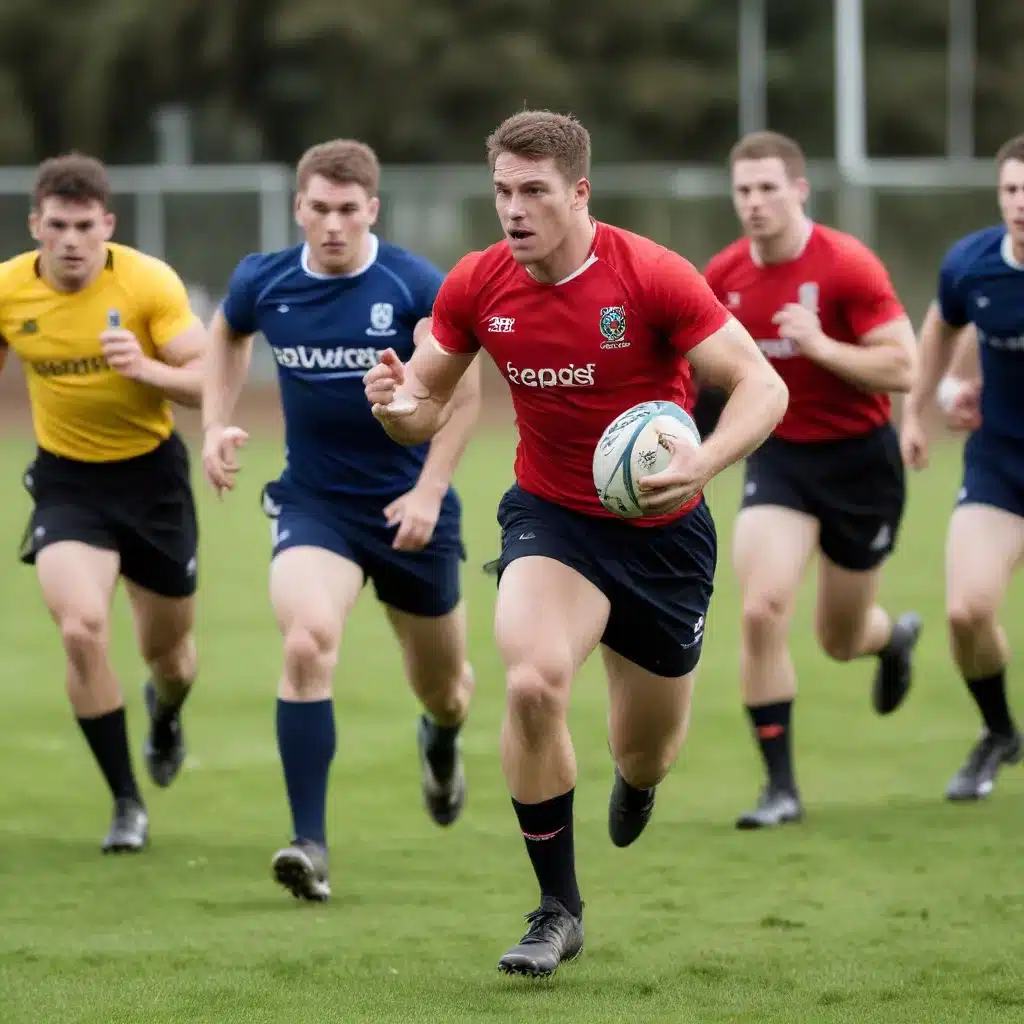
Importance of Endurance in Rugby
As a seasoned rugby professional, I know firsthand the crucial role that endurance plays in our sport. The physical demands of rugby are relentless – explosive sprints, grueling tackles, arduous breakdowns, and periods of intense pressure interspersed with brief recovery. To consistently perform at the highest level, players must possess well-developed aerobic and anaerobic capacities.
The ability to maintain a high work rate throughout the match is paramount. Rugby is a game of momentum, where the team with superior conditioning can assert their dominance, wear down the opposition, and seize control of the contest. Players need the endurance to execute the core skills of the game – passing, running, tackling – with pinpoint precision, even as fatigue sets in. And when the final minutes arrive, the fittest athletes are the ones who find an extra gear, making the decisive plays that secure victory.
Beyond the immediate benefits on match day, a robust conditioning base also enhances resilience and reduces injury risk. The high-intensity, collision-based nature of rugby places tremendous physical stress on the body. Players who have built up their aerobic and anaerobic reserves are better equipped to withstand the rigors of training and competition, recovering more quickly and sustaining peak performance over the course of a long season.
Interval-Based Conditioning Principles
When it comes to enhancing rugby-specific endurance, interval-based training should be the foundation of any comprehensive conditioning program. This style of training, characterized by repeated bouts of intense exercise interspersed with recovery periods, is ideally suited to the unique physiological demands of our sport.
High-Intensity Interval Training (HIIT) is a particularly potent stimulus for driving adaptations in both the aerobic and anaerobic energy systems. By pushing players to work at intensities equivalent to 85-95% of their maximum heart rate, HIIT sessions elicit a robust training response. The brief, maximal-effort intervals tax the fast-glycolytic system, while the recovery periods allow for the replenishment of depleted energy stores, preparing the body for the next bout of intense work.
Equally valuable are sprint-based interval protocols, where players complete all-out efforts lasting 10-30 seconds, separated by 1-5 minutes of active recovery. This style of training targets the specific movement patterns and energy demands of rugby, developing the capacity for repeated high-speed running and explosive actions.
The work-to-rest ratios employed in interval training are crucial. Longer work intervals (3-5 minutes) with shorter recoveries (1:1 work-to-rest) are optimal for improving maximal oxygen uptake (VO2max) and aerobic power. Conversely, shorter, supramaximal efforts (10-30 seconds) with longer recoveries (1:3 or greater) are more effective for enhancing anaerobic capacity and sprint-specific endurance.
Rugby-Specific Interval Protocols
When designing interval-based conditioning sessions for rugby players, it’s essential to closely mirror the sport-specific movement patterns, intensities, and durations. This ensures the training stimulus is as relevant and transferable as possible.
One of my favorite pitch-based interval sessions involves a series of shuttle runs. Players start at the halfway line, sprint to the 22-meter line, then jog back to the starting point. This is repeated for 3-5 reps, followed by a 2-3 minute recovery period. The short, intense efforts replicate the frequent sprints and accelerations required in rugby, while the active recovery mimics the brief rest periods during match play.
Another effective protocol combines high-speed running with rugby-specific movements. Players start at the corner flag, sprint diagonally to the opposite touchline at the halfway point, then backpedal to the starting position. This is followed by a set of forward and lateral shuffles, replicating the agility demands of the game. Repeat this sequence for 4-6 reps, with 90 seconds of recovery between sets.
To develop rugby-specific endurance, I also incorporate longer interval sessions on the pitch. For example, a workout might involve 4-6 repetitions of 2-3 minutes of high-intensity running, with 2 minutes of active recovery between each interval. The players maintain a pace equivalent to 85-90% of their maximum effort, simulating the sustained high-intensity periods encountered during matches.
Periodizing Interval Training for Rugby
Integrating interval-based conditioning into a comprehensive training program requires careful planning and periodization. The specific focus and volume of interval work will vary considerably between the pre-season and in-season phases.
During the pre-season, the emphasis is on building a robust aerobic and anaerobic base. Players can devote a greater proportion of their training time to high-volume interval sessions, with the aim of maximizing physiological adaptations. As the competitive season approaches, the focus shifts towards maintaining these fitness gains while sharpening rugby-specific skills and tactics.
In-season, interval training is balanced with other critical elements of the program, such as strength training, technical work, and recovery modalities. The interval sessions become more targeted, with a greater emphasis on sprint-based protocols and shorter, sharper work intervals. The overall training load is carefully managed to avoid overtraining and ensure players are fully prepared for the demands of match day.
Monitoring is crucial throughout the process. Subjective feedback from players, coupled with objective metrics like heart rate, GPS data, and performance tests, allows me to continually evaluate the efficacy of the interval training and make adjustments as needed. The goal is to optimize the training stimulus for each individual, ensuring they reach the pitch in peak physical condition, ready to dictate the tempo of the game.
Enhancing Rugby Performance through Interval-Based Conditioning
The benefits of interval-based conditioning for rugby players are substantial and far-reaching. By systematically developing both the aerobic and anaerobic energy systems, this training approach yields tangible improvements in on-field performance.
Interval training has been shown to elicit significant increases in VO2max, a critical determinant of endurance capacity. Players who have built up their aerobic power can sustain a higher work rate for longer, maintaining technical proficiency and decision-making even as fatigue sets in. This translates to greater dominance in the tackle area, more effective support play, and the ability to outpace opponents in the final minutes of the match.
Equally important are the enhancements in anaerobic capacity, which underpin a player’s ability to produce repeated high-intensity efforts. Sprint-based interval protocols have been found to dramatically improve repeated sprint ability, allowing players to sustain blistering pace and explosiveness throughout the game. This is a game-changing attribute, enabling players to consistently win the critical one-on-one battles that often decide the outcome.
Ultimately, the integration of interval-based conditioning into a comprehensive training program equips rugby players with the physical tools to thrive in our fast-paced, physically demanding sport. By developing a robust endurance base and honing their ability to repeatedly produce maximal-effort actions, players can maintain their edge over the opposition, imposing their will on the match and emerging victorious.
As I reflect on my own journey in the game, I’m reminded of the transformative impact that interval training had on my career. The sessions were undoubtedly grueling, pushing me to my limits, but the payoff was immense. I felt stronger, fitter, and more resilient than ever before, capable of dictating the tempo of matches and delivering decisive contributions when it mattered most. If there’s one piece of advice I can offer young rugby players, it’s to embrace interval-based conditioning as a cornerstone of their training – the rewards will be immense, both on and off the pitch.
Conclusion
In the relentless, high-octane world of rugby, the ability to maintain a punishing work rate over the course of 80 minutes is a non-negotiable. By incorporating interval-based conditioning into a well-rounded training program, players can develop the aerobic and anaerobic capacities needed to thrive in our sport.
From pitch-based shuttle runs to sprint-focused intervals, the training protocols outlined in this article are designed to closely mirror the unique demands of rugby. By periodizing this work across the pre-season and in-season phases, players can build a robust fitness foundation while ensuring they reach match day in peak physical condition.
The benefits of interval training are clear – enhanced endurance, improved repeated sprint ability, and the mental fortitude to push through the toughest moments. As players, coaches, and clubs, we must embrace this powerful training methodology, leveraging it to elevate our performance and cement our status as dominant forces in the rugby world.
So, whether you’re an elite professional or an aspiring youth player, I encourage you to dive into interval-based conditioning with unwavering commitment. It’s a gateway to unlocking your true potential, equipping you with the physical tools to excel on the pitch and cement your legacy in our beloved sport. The journey may be arduous, but the rewards are immense. Let’s get to work!