
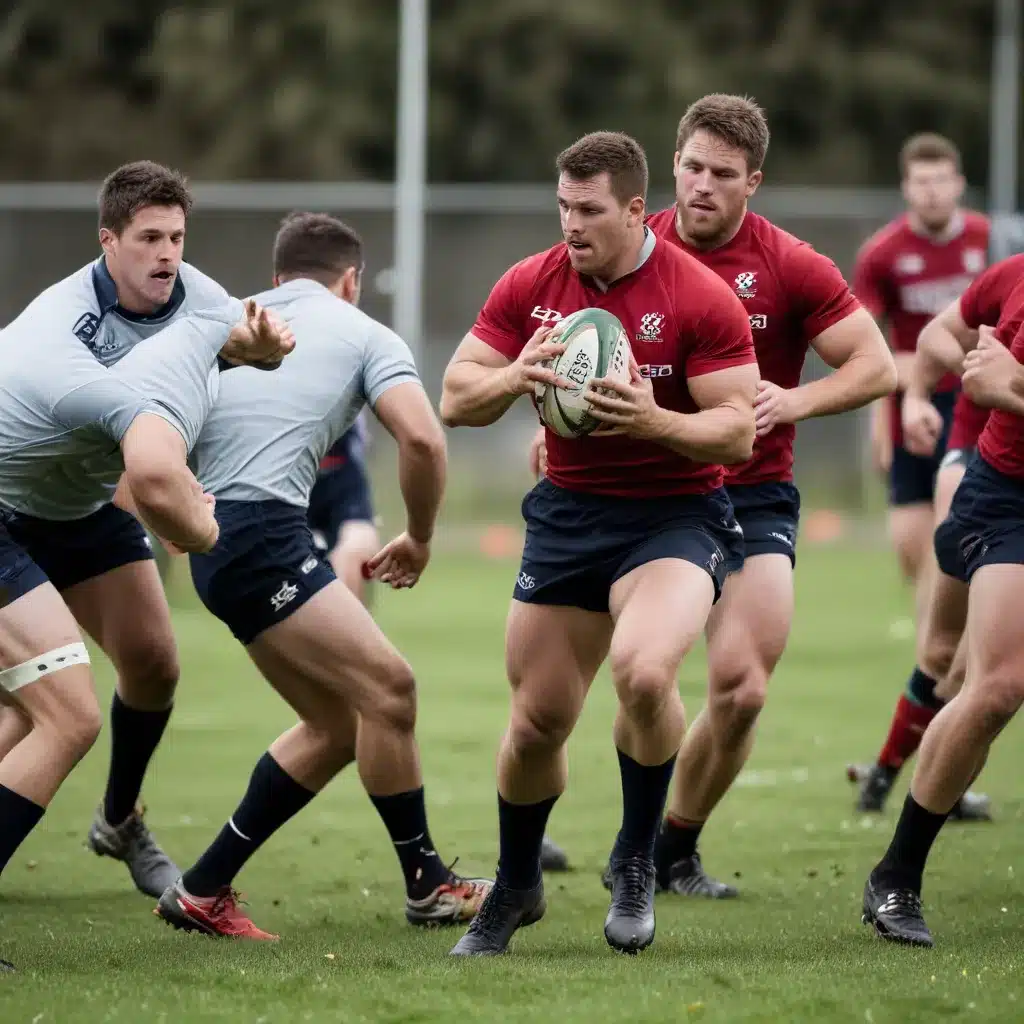
As a seasoned rugby professional, I’ve dedicated much of my career to developing high-performance training methods that give my athletes the competitive edge. One approach I’ve found particularly effective for enhancing rugby-specific power is the strategic application of complex training.
Integrating Resistance and Plyometric Exercises
The foundation of my complex training philosophy lies in seamlessly blending resistance and plyometric exercises. Research has consistently shown that this method, when programmed correctly, can lead to significant improvements in explosive power output – a crucial attribute for rugby players across all positions.
By pairing strength-focused movements like squats, deadlifts, and Olympic lifts with their plyometric counterparts (e.g., jump squats, box jumps, med ball throws), we create a powerful synergy. The heavy resistance work develops the underlying muscular strength and power capabilities, while the plyometric exercises directly train the stretch-shortening cycle – optimizing the body’s ability to produce rapid, forceful movements.
Importantly, the sequencing of these complex pairings is critical. Typically, I’ll have the athlete perform the strength exercise first, followed by the plyometric movement. This allows them to take advantage of post-activation potentiation – the transient increase in muscle contractile ability that occurs after a heavy load. By harnessing this phenomenon, we can amplify the explosive power output on the plyometric exercise.
Maximizing Neuromuscular Adaptations
Beyond just the movement pairings, I place a heavy emphasis on progressively overloading the neuromuscular system. This means methodically increasing training volume, intensity, and complexity over time to drive continued adaptations.
A well-structured periodization model is key here. I usually organize my athletes’ training into distinct phases – accumulation, intensification, and realization – each with a specific focus. During the accumulation phase, the goal is to prepare the body for the more demanding work to come, using lighter loads and longer durations. The intensification phase then ramps up the training stress, with heavier weights and shorter efforts aimed at maximal strength and power development. Finally, the realization phase centers on transferring these physical qualities into rugby-specific movements and skill execution.
Careful management of fatigue and recovery is paramount throughout this process. I’ve found that incorporating “easy” weeks, where volume and/or intensity are reduced, can help mitigate the risk of overtraining and allow for supercompensation. Additionally, the judicious use of active recovery modalities, like low-intensity interval runs, can help my athletes maintain freshness and responsiveness.
Enhancing Explosive Power Development
While developing a robust foundation of maximal strength is important, I believe the true secret to optimizing rugby-specific power lies in targeted plyometric training. These exercises, characterized by rapid stretch-shortening cycle actions, elicit key neuromuscular adaptations that translate directly to enhanced speed, acceleration, and overall athleticism on the pitch.
I’ve found that a diverse plyometric program, incorporating a range of unilateral and bilateral exercises, is most effective. This might include depth jumps, box jumps, hurdle hops, med ball throws, and reactive strength drills. The key is to progressively overload the stretch-shortening cycle, gradually increasing the intensity and complexity of the movements as my athletes’ capabilities grow.
Monitoring and adjusting plyometric training load is also crucial. I rely heavily on subjective feedback, as well as objective metrics like ground contact time and jump height, to ensure my players are handling the training stress appropriately. Striking the right balance between training stimulus and recovery is essential for maximizing adaptations and minimizing injury risk.
Periodization Principles for Rugby Power
When it comes to planning the overall training program, I adhere to well-established periodization principles. As mentioned earlier, I structure my athletes’ training into distinct phases, each with a specific emphasis.
During the initial accumulation phase, the focus is on building a foundation of muscular size, strength, and work capacity. This might involve higher-volume resistance training, supplemented with more general plyometric work. As we transition into the intensification phase, the training load increases, with a greater emphasis on maximal strength and power development through heavy compound lifts and more specific plyometric exercises.
Finally, the realization phase is where we really target the transfer of physical qualities into rugby-specific power. Here, we might see a shift toward more complex training, with a focus on explosive, high-velocity movements that mimic the demands of the sport. This could include things like resisted sprints, plyometric push-ups, and power cleans performed at maximal intent.
Importantly, I’ve found that managing the tapering process in the weeks leading up to competition is crucial for allowing my athletes to express their full power potential. A carefully planned reduction in training volume, coupled with the maintenance of intensity, can help them reach new heights of performance on game day.
Individualized Training Strategies
While the general principles of complex training and periodization remain consistent, I always strive to tailor my approach to the unique needs and demands of each individual rugby player. After all, the physical requirements for a tighthead prop can differ significantly from those of a fleet-footed winger.
For example, a forward may require a greater emphasis on maximal strength development, with a focus on compound lifts like squats and deadlifts. In contrast, a backline player might benefit more from a program centered around power development, incorporating a higher volume of Olympic lift variations and plyometric exercises.
Monitoring each athlete’s progress and making adjustments accordingly is essential. I rely on a combination of objective data (e.g., force plate measurements, sprint times) and subjective feedback to fine-tune the training prescription. This allows me to optimize power output while simultaneously addressing any weaknesses or imbalances that may be holding my players back.
Applying Complex Training Principles
When it comes to actually structuring a complex training session, I’ve found that a simple, yet effective approach works best. Typically, I’ll pair a heavy resistance exercise, such as a back squat or power clean, with a corresponding plyometric movement, like a jump squat or box jump.
The key is to ensure that the two exercises are biomechanically similar, allowing for positive cross-over effects. For example, pairing a heavy back squat with a jump squat, or a power clean with a med ball overhead throw. This helps to maximize the potential for post-activation potentiation and optimize the transfer of strength into explosive power.
I’ll usually have my athletes perform 3-4 sets of the resistance exercise first, using loads in the 80-90% 1RM range. This is followed immediately by 2-3 sets of the plyometric movement, executed with maximal intent. Rest periods between the complex pairs are kept relatively short, typically 2-3 minutes, to maintain the elevated neuromuscular state.
Over the course of a training block, I’ll often rotate the specific exercises used, ensuring that my players are exposed to a variety of movement patterns and stimuli. This not only helps to address individual strengths and weaknesses but also provides the necessary variety to keep them engaged and motivated.
Conclusion
As a rugby coach, my primary goal is to help my athletes reach their full potential. By strategically integrating complex training methods into a thoughtfully designed periodization plan, I’ve been able to consistently help my players develop the explosive power and athleticism required to excel at the highest levels of the sport.
Whether it’s a hulking forward or a lightning-quick backline player, the principles of complex training and power development remain the same. By carefully balancing the training stimulus, managing fatigue, and tailoring the program to individual needs, I’ve seen my athletes make remarkable strides in their physical capabilities.
Of course, the journey of optimizing rugby-specific power is an ever-evolving one, filled with both challenges and opportunities. But by staying at the forefront of the latest research and best practices, and drawing upon my extensive experience working with elite-level rugby players, I’m confident that I can continue to help my athletes reach new heights of performance, both on and off the pitch.
So, if you’re a rugby player or coach looking to take your power development to the next level, I encourage you to explore the complex training strategies I’ve outlined here. With the right approach and a commitment to consistent, high-quality training, I have no doubt that you can unlock your true explosive potential and become a dominant force on the rugby field.