
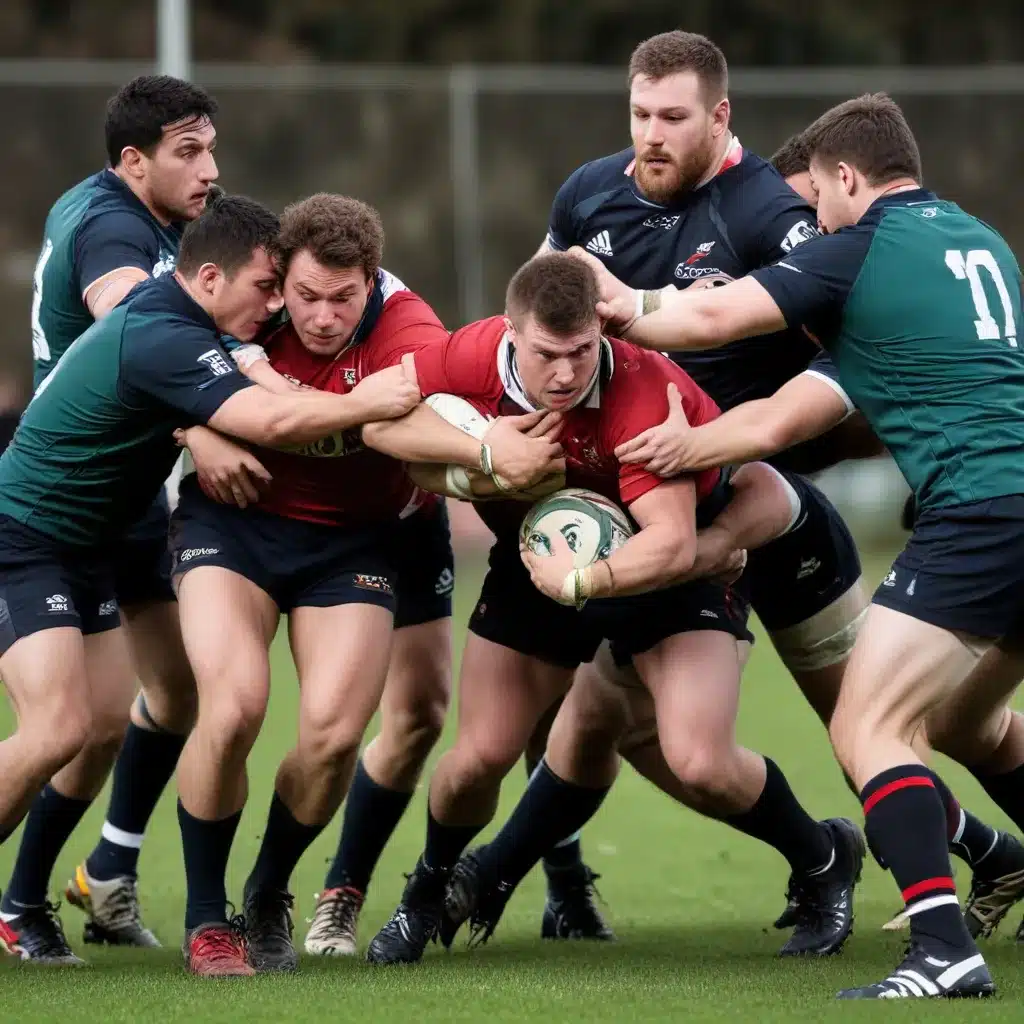
The Fundamentals of the Rugby Ruck
The rugby ruck lies at the very heart of the modern game. It’s where the hard yards are earned, possession is secured, and the battle for momentum is waged. As a seasoned rugby professional, I’ve seen the ruck evolve over the years, with teams constantly refining their techniques, positioning, and power generation to gain the upper hand.
Rugby Ruck Mechanics
At its core, the ruck is a dynamic, high-intensity collision between two opposing teams, all vying for the prized possession of the ball. The ruck is defined as an event that occurs when one or more players from each team, who are on their feet, close around the ball on the ground. The purpose is to securely retain the ball and protect it from the opposition, allowing your team to maintain momentum and continue the attack.
The ruck is a vital component of the game, as it allows teams to recycle possession, gain territorial advantage, and generate quick ball for their backline to exploit. A well-executed ruck can be the difference between a successful phase of play and a turnover, which can ultimately decide the outcome of a match.
Core Ruck Principles
There are three fundamental principles that underpin effective ruck play:
-
Maintaining Possession: The primary objective at the ruck is to retain possession of the ball for your team. This requires a combination of technical proficiency, physicality, and decision-making.
-
Securing the Ball: Once the ball carrier is tackled, it’s crucial to secure the ball, preventing the opposition from stealing it. This is achieved through body position, control of the ruck area, and effective jackaling techniques.
-
Protecting the Breakdown: Safeguarding the ruck area is essential, as it allows your team to control the tempo of the game and denies the opposition the opportunity to disrupt your attack. This involves establishing a dominant defensive presence and disrupting the opposition’s ability to poach the ball.
By mastering these core principles, teams can develop a reliable and effective ruck strategy that supports their overall game plan and provides a solid platform for success.
Ruck Technique: Mastering Body Position and Movement
The foundation of a dominant ruck performance lies in the technical proficiency of the individual players involved. Proper body positioning, efficient footwork, and precise hand placement are all critical elements that contribute to success at the breakdown.
Proper Body Positioning
Effective ruck work begins with an optimal body position. Players should maintain a bent-knee, bent-hip stance, with their center of gravity lowered to generate power and stability. The torso should remain upright, with the shoulders slightly forward, allowing for a powerful driving motion.
This body position serves multiple purposes:
- Lowered Center of Gravity: A bent-knee, bent-hip stance lowers the player’s center of gravity, providing a stable, grounded base from which to generate force and resist opposition.
- Upright Torso: Maintaining an upright torso, rather than leaning forward, allows for greater visibility of the ruck area and better control over the body’s movements.
- Shoulder Alignment: Positioning the shoulders slightly forward, in line with the hips, creates a more powerful driving motion and enables the player to better engage their core muscles.
Efficient Footwork
Effective ruck work requires dynamic and explosive footwork. Players should be light on their feet, ready to react to changes in the ruck area and adjust their positioning accordingly.
Key footwork techniques include:
- Lateral Movements: The ability to quickly shift left or right, adjusting the body’s alignment and angle of attack, is crucial for securing optimal positioning in the ruck.
- Explosive Steps: Short, powerful steps, generated from the legs, allow players to generate force and drive through the contact point.
- Maintaining Balance: Ensuring balance and stability throughout the ruck engagement is essential, as it prevents being knocked off the ball or pushed back by the opposition.
Hand Placement and Grip
The positioning and grip of the hands plays a vital role in controlling the ball and generating leverage at the ruck. Players should strive to maintain a firm, secure grip on the ball, with their hands positioned in a way that allows for maximum control and power transfer.
Some key considerations for hand placement and grip include:
- Securing the Ball: Wrapping the hands tightly around the ball, with the fingers and thumbs interlocked, ensures the ball is securely retained and protected from the opposition.
- Generating Push and Leverage: Positioning the hands in a way that allows the player to push, pull, and generate force through the contact point is crucial for winning the ruck battle.
By mastering these technical aspects of ruck work, players can develop the foundation necessary to dominate the ruck and set their team up for success.
Ruck Positioning: Aligning for Success
Effective ruck positioning is essential for securing possession, disrupting the opposition, and maintaining momentum. The strategic alignment of players in the ruck area can make the difference between a dominant performance and a costly turnover.
Ruck Alignment
Proper ruck alignment involves positioning players in relation to the ball, ensuring they can generate the maximum impact and influence the ruck outcome. The objective is to create a solid, organized defensive line that denies the opposition access to the ball while also providing a stable platform for the attacking team to recycle possession.
Key considerations for ruck alignment include:
- Positioning Relative to the Ball: Players should position themselves in close proximity to the ball, with their bodies angled to create a barrier against opposition encroachment.
- Angling for Maximum Impact: Positioning the body at an angle, rather than straight on, allows players to generate more force and leverage through the contact point.
Spacing and Spacing
Effective ruck positioning also requires an understanding of spacing and spacing, ensuring players are appropriately positioned in relation to their teammates.
- Appropriate Proximity to Teammates: Players should maintain a close, yet not overly crowded, proximity to their teammates in the ruck area. This allows for effective communication, coordination, and the ability to provide mutual support.
- Filling Gaps in the Defensive Line: Vigilant awareness of gaps in the defensive ruck line is crucial, as players must be ready to quickly fill these spaces and deny the opposition any opportunity to disrupt the ruck.
By aligning their positioning with precision and discipline, players can create a formidable ruck presence that frustrates the opposition, secures possession, and provides a solid platform for their team’s attacking game plan.
Ruck Power: Generating Dominant Force
The final piece of the ruck mastery puzzle is the ability to generate and transfer raw power through the contact point. Harnessing the strength and explosive potential of the body’s major muscle groups is essential for dominating the ruck and overwhelming the opposition.
Leg Drive and Explosion
The foundation of ruck power generation lies in the lower body, where the legs provide the primary source of force and momentum.
- Generating Power from the Lower Body: Players should drive powerfully through the legs, using their quadriceps, gluteals, and hip flexors to generate a surge of energy that can be transferred to the upper body.
- Transferring Power to the Upper Body: Seamlessly transitioning the force from the legs to the core and upper body muscles is crucial for delivering a dominant, sustained push through the ruck.
Hip and Torso Engagement
Complementing the leg drive, the engagement of the hips and torso is vital for maximizing power output and maintaining structural integrity during ruck encounters.
- Utilizing the Core Muscles: Activating the abdominal and lower back muscles, as well as the obliques, provides a stable, coordinated platform for power generation and transfer.
- Driving Through the Contact Point: By driving the hips forward and engaging the torso, players can maintain a powerful, aggressive posture throughout the ruck, denying the opposition the opportunity to disrupt or gain the upper hand.
By combining explosive leg drive, efficient power transfer, and core engagement, players can develop the physical attributes necessary to dominate the ruck and impose their will on the opposition. This combination of technical mastery, positioning, and raw power is the hallmark of a truly exceptional rugby player.
At the Aberdeenshire RFC, we pride ourselves on our ruck proficiency and the ability to win the battle at the breakdown. Through rigorous training, tactical analysis, and a deep understanding of the game’s fundamentals, our players have honed their ruck skills to a razor’s edge.
Whether you’re a seasoned rugby veteran or a newcomer to the sport, mastering the ruck is a crucial step in elevating your game and contributing to your team’s success. By focusing on technique, positioning, and power generation, you can develop the necessary tools to become a dominant force at the breakdown and lead your team to victory.
So, let’s dive deeper into the art of the ruck, explore the latest techniques and strategies, and discover how you can elevate your game to new heights. The rewards of ruck mastery are immense, both for individual players and the collective success of your team.