
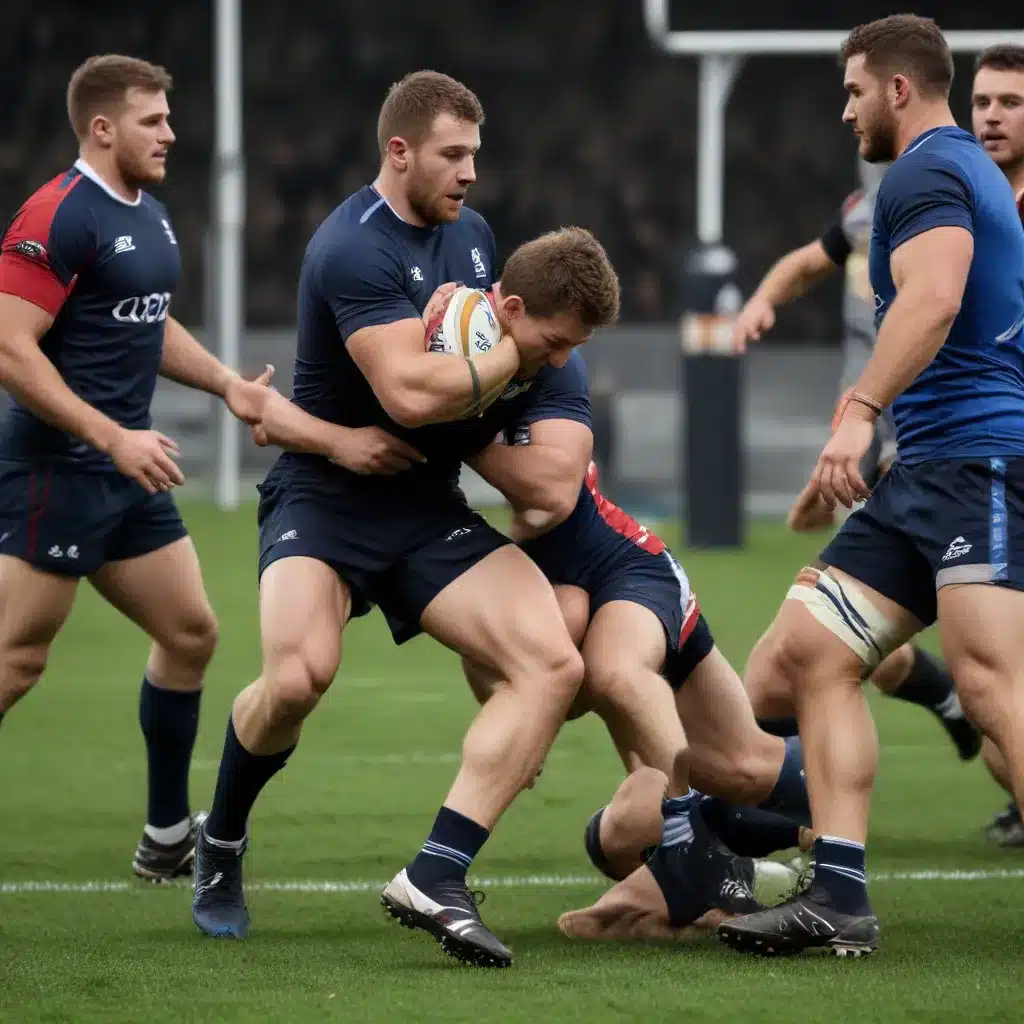
Enhancing Rugby-Specific Strength with Functional Movements
As a seasoned rugby professional, I’ve seen firsthand the importance of developing rugby-specific strength and power for optimal on-field performance. While traditional strength training plays a vital role, incorporating functional movements into your training regimen can provide the specific physical attributes needed to excel in this demanding sport.
The Importance of Strength Training for Rugby
In the rugged world of rugby, physical strength is not just a preference – it’s a necessity. Whether you’re a powerful forward driving through defenders or a fleet-footed back evading tackles, the ability to generate force and maintain structural integrity is paramount. Increased strength directly translates to improved power production, allowing players to generate explosive movements and withstand the punishing collisions inherent to the game.
Beyond pure performance enhancement, a well-rounded strength training program also serves as a crucial injury prevention strategy. The physical demands of rugby can take a significant toll on the body, but athletes who possess the muscular capacity to absorb and dissipate these forces are far less susceptible to debilitating injuries. By building resilient musculature and joint stability, you can not only elevate your on-field abilities but also prolong your career and minimize time lost to the dreaded physio’s table.
Functional Movements in Rugby Training
While traditional compound exercises like squats, deadlifts, and bench press form the foundation of any rugby player’s strength regimen, it’s the incorporation of functional movements that truly optimizes rugby-specific performance. These exercises mirror the multi-joint, full-body actions required on the pitch, allowing for seamless transfer of strength and power to the demands of the game.
Compound Exercises for Rugby
Squats and their numerous variations (front squats, box squats, jump squats) develop the essential lower-body strength needed to drive through tackles, while deadlifts and their derivatives (Romanian deadlifts, trap bar deadlifts) target the posterior chain, crucial for generating acceleration and momentum. Complementing these lower-body staples, push-pull movements like the bench press, pull-ups, and rows strengthen the upper body, enhancing the ability to dominate collisions and win those all-important one-on-one battles.
Power Development Exercises
To translate raw strength into rugby-specific power, Olympic lifts and their variations (power cleans, hang cleans, power snatches) should be incorporated. These explosive movements not only develop the rapid force production required for sprinting, change of direction, and ruck clearance, but also encourage proper full-body mechanics and coordination – vital assets for any aspiring rugby player.
Plyometric exercises like box jumps, bounding, and medicine ball throws further complement the power development process, allowing athletes to generate high levels of force in short time frames, a hallmark of successful rugby performance.
Integrating Functional Movements into Rugby Training
Periodization and Programming Considerations
Effectively blending functional movements into your rugby training regime requires a strategic, periodized approach. During dedicated strength-focused phases, place a greater emphasis on compound lifts and heavy, lower-rep training to build a robust foundation of maximal strength. As you transition into power-development phases, shift the focus towards Olympic lift variations, plyometrics, and ballistic exercises to translate that strength into rugby-specific explosiveness.
Throughout the season, maintain a degree of strength and power work, but adjust volumes and intensities to accommodate the game’s physical demands. This in-season “maintenance” strategy ensures you retain the physical capacities needed to excel on match day without excessive fatigue or overtraining.
Transferring Functional Strength to the Pitch
The true test of any strength training program lies in its ability to enhance on-field performance. By prioritizing functional, multi-joint movements in your training, you can seamlessly transfer those physical attributes to the demands of the rugby pitch.
The technical proficiency and full-body coordination developed through exercises like squats, deadlifts, and Olympic lifts directly translate to improved ball-carrying ability, tackle technique, and ruck clearance. And the explosive power harnessed through plyometric training? That’s the x-factor that allows you to break the line, outpace defenders, and dominate aerial contests.
Equally important, the injury-resilient musculature built through a functional training approach safeguards your body against the rigors of rugby. Robust joint stability, improved movement patterns, and enhanced core strength all work in concert to minimize the risk of debilitating injuries, keeping you on the pitch and performing at your best.
Addressing Rugby-Specific Physical Demands
Positional Differences in Rugby
While a solid foundation of functional strength is crucial for all rugby players, the specific physical attributes required can vary significantly based on your position. Forwards, who are often engaged in the physical battle of the set-piece and close-quarters collisions, may require greater emphasis on maximal strength and power to dominate their opponents. Backline players, on the other hand, may benefit more from a training focus on speed, agility, and reactive power to excel in open-field situations.
Tailoring your functional training to your positional demands is key to optimizing your performance and minimizing the risk of overuse injuries. Consult with your strength and conditioning coaches to develop a program that caters to your specific role within the team.
Injury Prevention Strategies
Injuries are an unfortunate yet unavoidable part of the rugby landscape, but a well-designed functional training program can significantly reduce your risk. Incorporating targeted mobility, stability, and neuromuscular control exercises into your regimen enhances joint integrity and movement quality, better equipping you to withstand the rigors of the game.
Equally important is the implementation of comprehensive monitoring and recovery protocols. By closely tracking your training loads, fatigue levels, and physical readiness, you and your support staff can make informed decisions to prevent overtraining and minimize the likelihood of injury setbacks. Prioritizing recovery modalities like proper nutrition, hydration, and active rest further bolsters your resilience and overall physical preparedness.
Optimizing Rugby-Specific Fitness with Functional Training
Concurrent Training Approaches
The demands of rugby require a unique blend of physical attributes – strength, power, speed, and endurance. Adopting a concurrent training approach, where you strategically incorporate all of these elements into your program, is crucial for optimizing your overall fitness and performance.
During dedicated strength and power phases, focus on compound lifts, Olympic lift variations, and plyometrics to build the foundation. Gradually transition into more rugby-specific conditioning drills, such as high-intensity interval training and small-sided games, to develop the aerobic and anaerobic capacities needed to thrive on the pitch.
Carefully managing the balance and sequencing of these training modalities is essential, as you must avoid the pitfalls of overtraining or diminished returns. Your coaching and performance staff can guide you in designing a periodized program that seamlessly blends functional strength, power, and sport-specific conditioning for maximal results.
Performance Monitoring and Feedback
Regularly evaluating your progress through a comprehensive testing battery is key to ensuring the effectiveness of your functional training program. Incorporate rugby-specific assessments, such as sprinting, change-of-direction, and intermittent endurance tests, to gauge your on-field readiness.
Complementing these performance measures, track relevant physical markers like strength, power output, and body composition to gain a holistic understanding of your development. Analyzing this data, in collaboration with your coaches and support staff, allows you to make informed adjustments to your training, nutrition, and recovery strategies, optimizing your rugby-specific fitness and minimizing the risk of plateaus or setbacks.
The pursuit of rugby excellence is a multifaceted endeavor, but by embracing a functional training approach, you can build the physical foundation necessary to thrive in this dynamic and demanding sport. From developing rugby-specific strength and power to enhancing injury resilience and optimizing your overall fitness, the integration of functional movements into your training regimen is a game-changing strategy that can propel you to new heights of performance. Remember, the path to rugby greatness is paved with hard work, dedication, and a commitment to continuous improvement. Now, let’s get to work!