
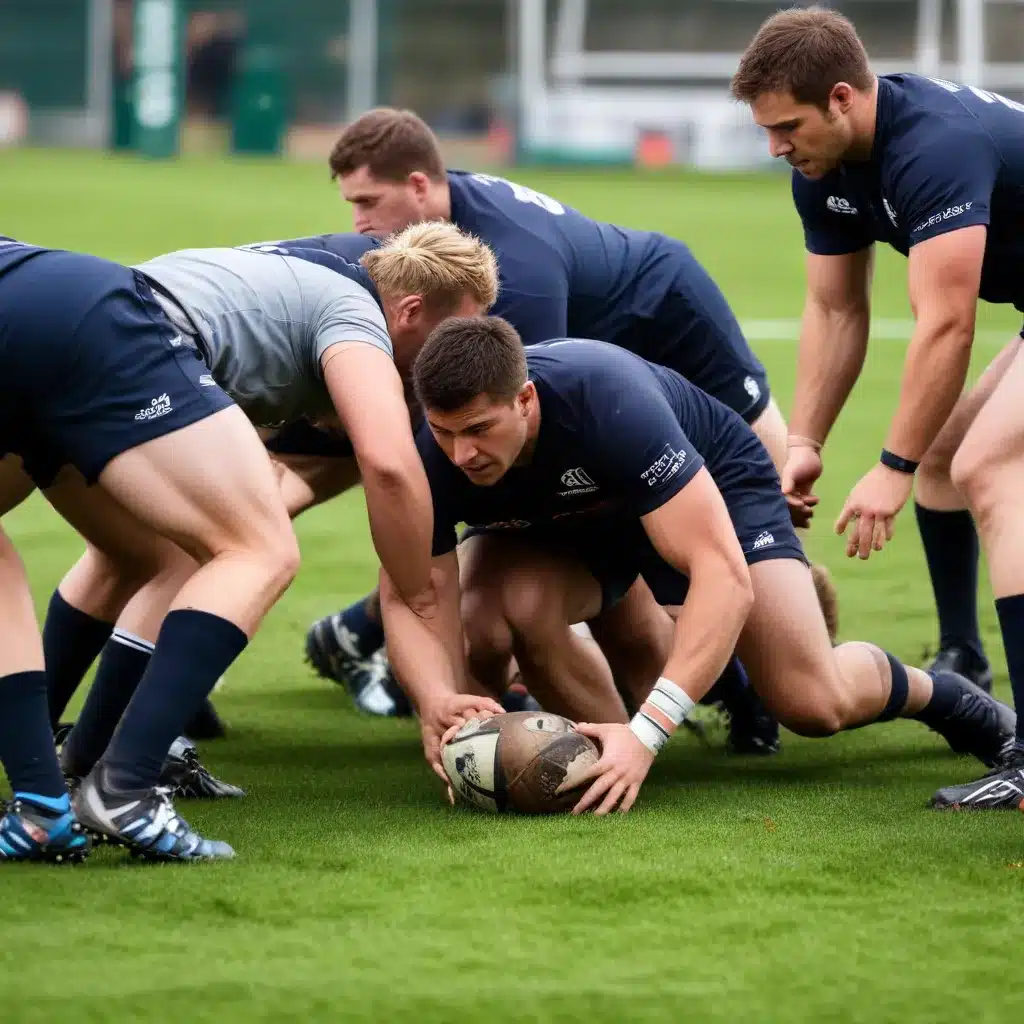
Muscular Power for Scrummaging
As a seasoned rugby professional, I’ve seen firsthand the importance of explosive power in the scrum. The scrum is a pivotal moment in the game where raw power, technique, and coordination all collide. And at the heart of a dominant scrum lies the development of muscular power.
At its core, explosive power is the ability to generate high amounts of force in a short period. For rugby scrummaging, this manifests in the players’ capacity to generate immense amounts of force through their legs, core, and upper body to drive the opposition backwards. Without this foundational power, a scrum can quickly deteriorate into a stalemate or even a retreat.
The key to developing this kind of explosive power lies in understanding the underlying muscle fiber composition and how to train them effectively. Rugby is a sport dominated by fast-twitch muscle fibers – the kind that allow for rapid, powerful contractions. These fast-twitch fibers are essential for the explosive bursts of energy required in scrums, tackles, and sprints.
Fast-Twitch Muscle Fibers
Fast-twitch muscle fibers, also known as type II fibers, are characterized by their ability to generate high amounts of force in a short time. These fibers are ideal for activities that require maximal effort over a brief duration, like the initial engagement and drive in a scrum. In contrast, slow-twitch (type I) fibers are better suited for endurance activities, providing a steady, sustained effort.
To develop the explosive power needed for scrummaging, the focus should be on training and strengthening those fast-twitch muscle fibers. This can be achieved through a well-designed strength training program that emphasizes exercises like Olympic lifts, plyometrics, and other power-focused movements.
Strength Training for Power
Compound exercises that engage multiple muscle groups, such as squats, deadlifts, and power cleans, are particularly effective for building the kind of full-body strength and power required in scrummaging. These lifts not only develop raw strength but also teach the body to utilize that strength explosively.
Incorporating plyometric exercises, like box jumps, medicine ball throws, and depth jumps, can further enhance the power output of those fast-twitch fibers. Plyometrics train the muscles to contract more forcefully and rapidly, translating directly to the explosive requirements of the scrum.
Strength Training for Scrummaging
When it comes to strength training for rugby scrummaging, the focus should be on developing a well-rounded, powerful physique. While heavy compound lifts are essential, complementary exercises that target specific scrum mechanics can also be incredibly beneficial.
Olympic Lifting Techniques
Olympic lifts, such as the clean and jerk and the snatch, are renowned for their ability to build explosive power. These technical movements require full-body coordination, core stability, and the ability to generate force rapidly. Mastering the proper technique of these lifts can have a profound impact on a player’s scrummaging ability.
Trap bar deadlifts, in particular, have become a staple in many rugby strength and conditioning programs. The trap bar allows for a more upright torso position, which better replicates the biomechanics of the scrummaging stance. By strengthening the posterior chain (glutes, hamstrings, and lower back), trap bar deadlifts can enhance the leg drive and stability needed in the scrum.
Compound Exercises
In addition to Olympic lifts, other compound exercises like squats, lunges, and step-ups should be a cornerstone of any rugby player’s strength training routine. These movements not only build lower body power but also emphasize the importance of proper body positioning and alignment – crucial elements for a dominant scrum.
Incorporating variations of these exercises, such as pause squats, box squats, and split squats, can help target specific weaknesses and ensure that the player is developing well-rounded strength and stability.
Progressive Overload
As with any strength training program, the principle of progressive overload should be applied. This means gradually increasing the load, volume, or intensity of the exercises over time to continually challenge the muscles and drive adaptation. By consistently pushing the boundaries of their strength, rugby players can develop the raw power necessary to excel in the scrum.
Scrum Engagement Mechanics
While raw power is undoubtedly crucial, the mechanics of scrum engagement are equally important. Proper body positioning, leg drive, and spine alignment are essential for maintaining scrum stability and generating maximum force.
Body Positioning Alignment
At the point of scrum engagement, players must ensure their bodies are aligned and balanced. This means maintaining a strong, upright torso position, with the shoulders back and the chest up. The feet should be shoulder-width apart, with the knees bent and the hips slightly back, creating a stable, athletic stance.
Leg Drive Technique
The drive from the legs is the primary source of power in the scrum. Players must learn to generate force through their legs, pushing the opposition backwards with a powerful, coordinated effort. This leg drive should be combined with a forward lean of the upper body, keeping the spine neutral and the core braced.
Spine Stability
Maintaining a stable, neutral spine throughout the scrum is crucial for transmitting force effectively and avoiding injury. Players must engage their core muscles to prevent excessive flexion, extension, or rotation of the spine, which can compromise power and stability.
Conditioning for Scrummaging
In addition to developing explosive power and perfecting scrum mechanics, rugby players must also focus on the overall physical conditioning required for scrummaging. This includes building anaerobic capacity, muscular endurance, and cardiovascular fitness.
Anaerobic Capacity Development
The scrum is a highly anaerobic event, with players needing to generate maximal effort over a short duration. Incorporating high-intensity interval training (HIIT) and sprint workouts can help players develop the anaerobic capacity to maintain their power and technique throughout the scrum.
Muscular Endurance Training
While explosive power is essential, rugby players must also have the muscular endurance to sustain their efforts over the course of a match. Incorporating resistance training circuits, isometric holds, and sustained effort exercises can help build the muscular endurance needed to dominate in the scrum.
Cardiovascular Fitness Considerations
Scrummaging is not solely a strength and power event; it also requires a strong cardiovascular system to recover between scrums and maintain high-intensity efforts throughout the game. Incorporating aerobic training, such as running, cycling, or rowing, can help improve the overall fitness and recovery capacity of rugby players.
Conclusion
Developing explosive power for rugby scrummaging is a multifaceted endeavor that requires a comprehensive training approach. By focusing on fast-twitch muscle fiber development, implementing a well-rounded strength training program, mastering scrum engagement mechanics, and addressing overall physical conditioning, rugby players can unlock the key to dominating the scrum.
Remember, building this kind of explosive power doesn’t happen overnight. It requires a sustained commitment to training, attention to detail, and a deep understanding of the physical demands of the sport. But with the right approach and the guidance of experienced coaches, any rugby player can become a force to be reckoned with in the scrum.
So, my fellow rugby enthusiasts, let’s get to work. Embrace the grind, master the techniques, and unleash the explosive power that will propel your team to victory. The scrum awaits, and with the right preparation, you’ll be ready to push through and emerge victorious.
For more expert insights and training resources, be sure to visit the Aberdeenshire RFC blog at www.aberdeenshirerfc.org.uk. Together, we’ll elevate our game and cement our status as a formidable force on the pitch.