
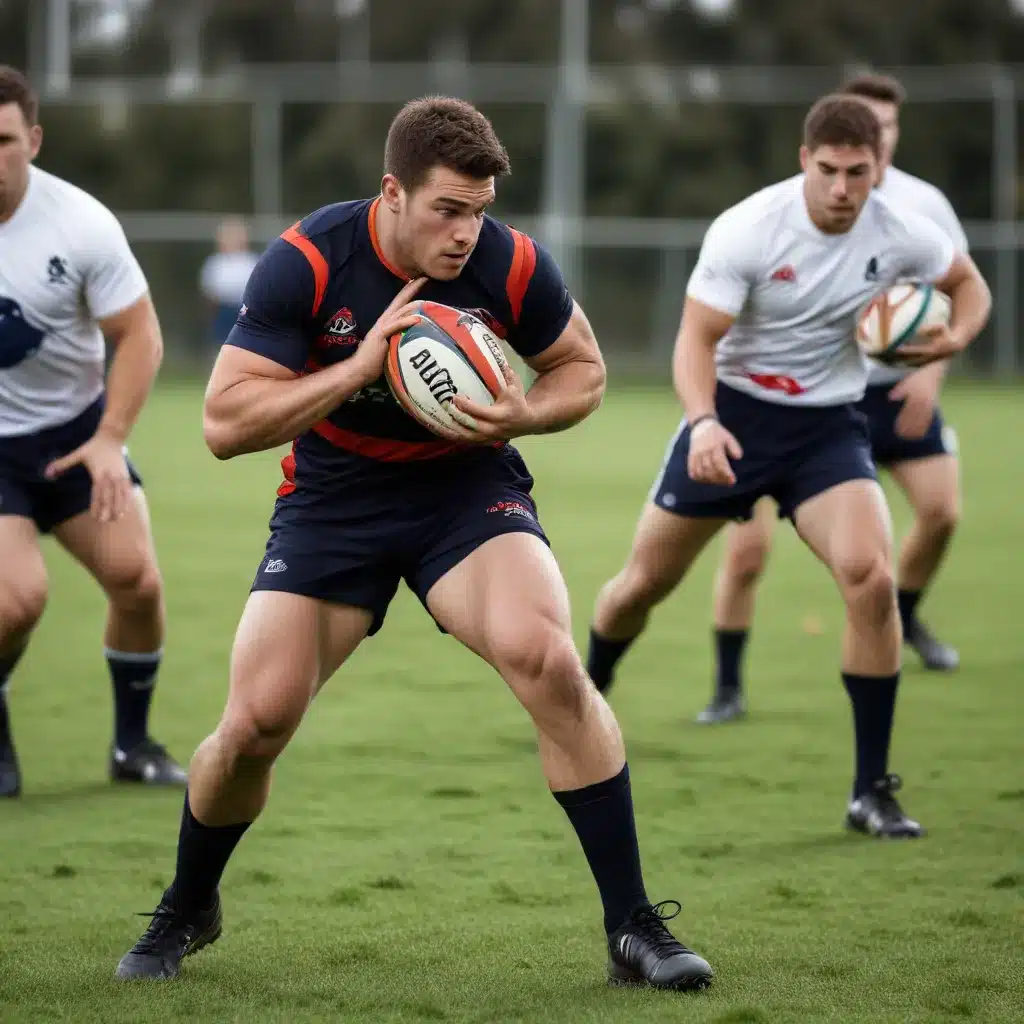
Optimizing Warm-Up and Cool-Down Routines for Rugby Players
The Importance of Proper Preparation and Recovery
As a seasoned rugby professional, I know firsthand the vital role that warm-up and cool-down routines play in optimizing player performance and minimizing injury risk. Whether you’re an elite international athlete or a passionate club player, prioritizing these essential pre- and post-training/match activities is crucial for enhancing your capabilities on the pitch.
Warm-ups serve a multifaceted purpose – they physically prepare the body for intense exercise by elevating muscle temperature, increasing blood flow, and activating the cardiovascular and respiratory systems. But just as importantly, they also have a crucial psychological component, helping players get mentally focused and ‘switched on’ for the upcoming challenge. By gradually building intensity and specificity, a well-designed warm-up can prime the neuromuscular system, potentiate subsequent power production, and reduce the likelihood of soft tissue injuries.
On the flip side, cool-downs are equally vital for facilitating post-exercise recovery. While the physical benefits, such as accelerating the clearance of metabolic by-products and reducing muscle soreness, are well-documented, the psychological impact cannot be overlooked. Allowing the body and mind to transition gradually from the intensity of competition or training back to a resting state can enhance readiness for the next session, improve sleep quality, and support long-term adaptation.
Optimizing the RAMP Warm-Up Approach
When it comes to structuring an effective warm-up routine, the RAMP (Raise, Activate & Mobilize, Potentiate) model developed by sports scientist Dr. Ian Jeffreys provides an excellent framework. Let’s dive into each phase and explore how rugby players can maximize the benefits:
Raise: The initial ‘raise’ phase aims to gradually increase muscle and core temperatures, heart rate, and blood flow. For rugby, this could involve light, dynamic movements like bodyweight lunges, high knees, and lateral shuffles – exercises that activate the major muscle groups while mimicking common movement patterns in the sport. The key is to avoid static stretching here, as research suggests it may actually impair subsequent power and speed performance.
Activate & Mobilize: Next, the ‘activate and mobilize’ phase targets neuromuscular activation and dynamic flexibility. This is where players can perform sport-specific drills, such as agility ladder work, change of direction exercises, and plyometric box jumps. Importantly, this phase should also include individualized mobility work to address any positional or individual limitations – for example, shoulder rotations for forwards or ankle dorsiflexion drills for backs.
Potentiate: The final ‘potentiate’ phase is all about priming the body for maximal performance. This is where players can incorporate explosive, high-intensity exercises that directly relate to the demands of rugby. Think resisted sprints, power cleans, or medicine ball throws. The goal is to induce a post-activation potentiation effect, where the neuromuscular system is ‘excited’ and ready to produce peak power output.
By progressing through these three distinct phases, rugby players can systematically prepare both their bodies and minds for the rigors of training or competition. Crucially, the duration and intensity of each phase should be tailored to the specific needs of the session or match – for example, a greater emphasis on the ‘raise’ phase prior to a long-duration running-based training, versus a heavier focus on ‘potentiation’ before a speed and power-oriented session.
Maximizing the Benefits of the Cool-Down
Just as a well-structured warm-up is essential, an effective cool-down routine can make a significant difference in how rugby players recover and prepare for their next outing. While the physical benefits are important, the psychological impact shouldn’t be overlooked.
The cool-down should involve a gradual transition from high-intensity exercise back to a resting state. Light, low-impact aerobic activity – such as easy cycling or low-speed running – can help flush out metabolic byproducts and promote blood flow to the working muscles. Incorporating static stretching for the major muscle groups can also enhance flexibility and range of motion, potentially reducing the severity of delayed-onset muscle soreness.
Interestingly, research suggests that active cool-downs may not always be superior to passive recovery (e.g., simply resting). The key is finding the right balance and tailoring the cool-down to the individual player’s needs. Some may respond better to more active recovery, while others may prefer a more passive approach. Monitoring subjective feedback and objective markers of recovery, such as heart rate variability, can help coaches and players determine the optimal cool-down strategy.
Beyond the physical aspects, the cool-down also provides a valuable opportunity for mental recovery and reflection. Encouraging players to engage in light, mindful activities – like deep breathing exercises or light mobility work – can help them transition from the heightened arousal of competition or training back to a more relaxed, parasympathetic state. This can support better sleep, enhance overall well-being, and prepare the mind for the next challenge.
Individualizing Warm-Up and Cool-Down Routines
As with any aspect of athletic preparation, a one-size-fits-all approach to warm-ups and cool-downs is rarely optimal. Each rugby player is unique, with their own physical characteristics, movement patterns, and personal preferences. Incorporating individualization is key to maximizing the benefits and minimizing the risks.
For example, a powerful, explosive forward may benefit from a longer ‘potentiate’ phase in their warm-up, with a greater emphasis on heavy resistance exercises and plyometrics. In contrast, a fleet-footed backline player might require more dynamic mobility work and change of direction drills to prepare for the demands of their position.
Similarly, recovery needs can vary significantly between players. Some may respond better to active cool-downs featuring light jogging and dynamic stretching, while others may prefer more passive approaches, such as foam rolling and static stretching. Monitoring player feedback and objective markers of recovery, such as heart rate variability and muscle soreness, can help inform these individual cool-down strategies.
Embracing this personalized approach can be challenging, especially for coaches working with larger squads. However, the potential payoffs in terms of enhanced performance, reduced injury risk, and improved long-term adaptation make it a worthwhile investment of time and effort.
Integrating Warm-Up and Cool-Down into the Rugby Season
Warm-up and cool-down routines shouldn’t be confined to individual training sessions or matches. Successful rugby programs recognize the importance of integrating these essential activities throughout the entire season, from pre-season preparation to in-season maintenance and even off-season recovery.
During the pre-season, when players are building a solid foundation of fitness and technical skills, the warm-up and cool-down routines can be more extensive and focused on specific areas of improvement. This might involve a greater emphasis on mobility work, injury prevention exercises, and gradually ramping up the intensity of the ‘potentiate’ phase.
As the season progresses, the warm-up and cool-down routines should evolve to align with the changing demands of training and competition. In-season, the focus may shift more towards maintenance, with a greater emphasis on active recovery, muscle activation, and neuromuscular priming. This ensures players are consistently prepared both physically and mentally, while also mitigating the cumulative fatigue associated with the rigors of the match calendar.
Even during the off-season, when players are taking a well-deserved break from the intensity of rugby, maintaining a consistent warm-up and cool-down routine can be beneficial. This can help players maintain a baseline level of mobility, flexibility, and overall readiness, facilitating a smoother transition back into more demanding training when the new season approaches.
Conclusion: Optimizing Player Welfare and Performance
In the fast-paced, physically demanding world of rugby, the importance of a comprehensive warm-up and cool-down routine cannot be overstated. By systematically preparing the body and mind for the rigors of training and competition, and then facilitating effective recovery, rugby players can not only enhance their immediate performance but also reduce their risk of injury and support long-term athletic development.
As a seasoned rugby professional, I’ve witnessed firsthand the transformative impact that well-designed warm-up and cool-down routines can have on player welfare and team success. By embracing the principles of the RAMP model, individualizing these essential activities, and integrating them seamlessly throughout the entire season, clubs can equip their players with the tools they need to reach new heights on the pitch.
Ultimately, the optimization of warm-up and cool-down routines is not just about physical preparation – it’s about empowering rugby players to be their best, both in the moment and over the long-term. By prioritizing these essential activities, we can unlock new levels of performance, resilience, and enjoyment for all those who share a passion for this incredible sport.